Black Holes Explained
Introduction to Black Holes
The Ultimate Point of No Return
Imagine throwing a ball so hard it never comes back down. That's the basic idea behind escape velocity, the speed needed to break free from a planet's or star's gravitational pull. For Earth, it's about 25,000 miles per hour. For the sun, it's over a million.
A black hole is an object where the escape velocity is greater than the speed of light. Since nothing in the universe can travel faster than light, nothing that crosses a black hole's boundary can ever get out. It's a one-way trip.
This boundary isn't a physical surface. It's an invisible border in space called the event horizon. Once you cross it, there's no turning back.
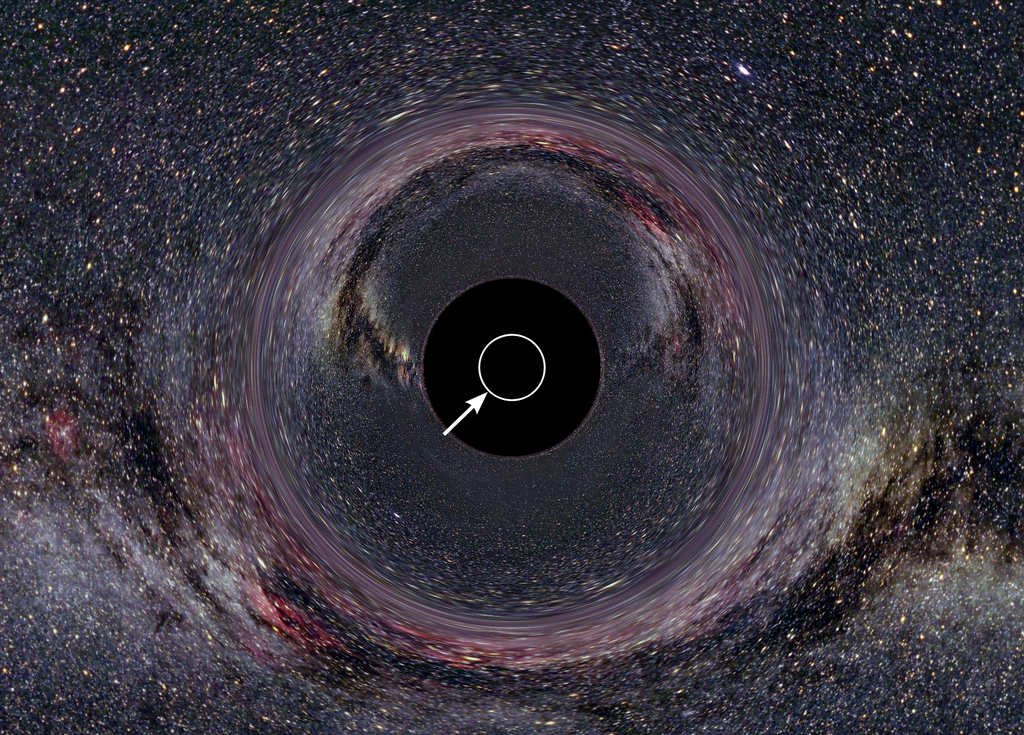
Event Horizon
noun
The boundary around a black hole beyond which events cannot affect an outside observer. It's considered the point of no return.
An Idea Ahead of Its Time
The concept of an object so massive that light couldn't escape has been around for centuries. In 1783, an English philosopher named John Michell wondered about "dark stars." He reasoned that if a star was dense enough, its gravitational pull would be strong enough to trap its own light, rendering it invisible.
His idea was intriguing but forgotten for over a century. It wasn't until Albert Einstein published his theory of general relativity in 1915 that the modern concept of a black hole began to take shape. Einstein showed that gravity isn't a force, but a curvature of space and time caused by mass and energy.
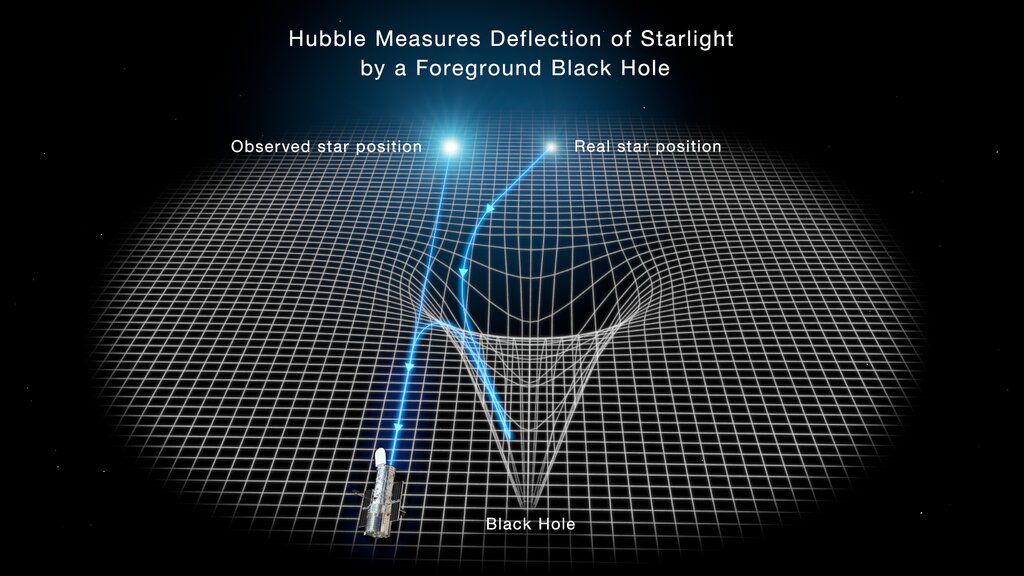
Just a year later, physicist Karl Schwarzschild found the first exact solution to Einstein's equations, describing the spacetime around a single, non-rotating spherical mass. His math predicted that if you compressed that mass into a small enough space, it would warp spacetime so extremely that it would create an event horizon. For decades, this remained a mathematical curiosity. Many physicists, including Einstein, were skeptical they could actually exist in nature. The term "black hole" itself wasn't even coined until 1967 by physicist John Wheeler.
Cosmic Engines
Black holes are far more than just cosmic oddities; they are fundamental to our understanding of the universe. Astronomers now believe that supermassive black holes, millions or billions of times the mass of our sun, reside at the center of nearly every large galaxy, including our own Milky Way.
These giants play a crucial role in how galaxies form and evolve. As they pull in surrounding gas and dust, the material heats up and shines brightly, sometimes outshining all the stars in the galaxy combined. This process can regulate star formation and shape the galaxy's structure over billions of years.
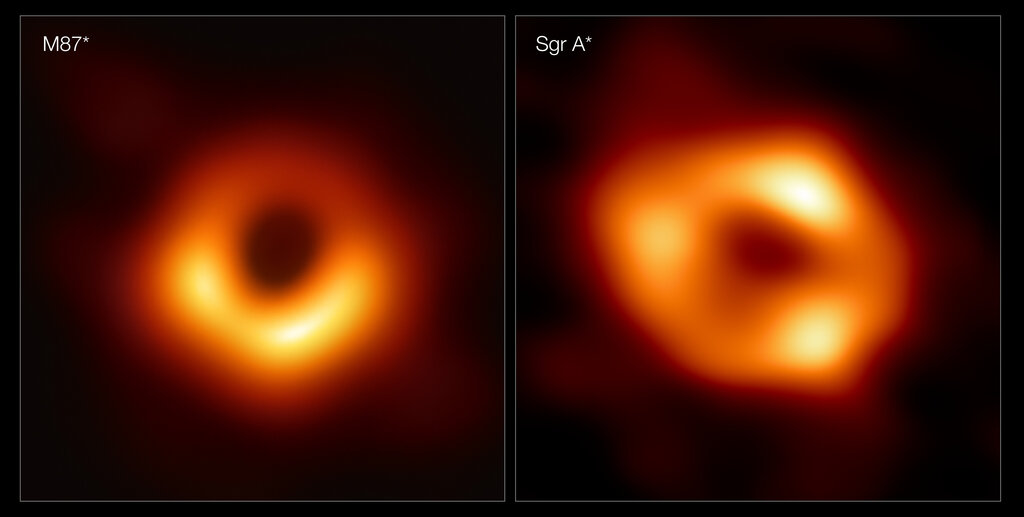
Black holes also provide a natural laboratory for testing the limits of physics. When two black holes merge, they send out ripples in spacetime called gravitational waves. Detecting these waves gives us a completely new way to observe the universe and probe the nature of gravity in its most extreme form.
From a forgotten 18th-century idea to a cornerstone of modern astrophysics, black holes challenge our intuition and push the boundaries of knowledge.