Bitcoin's Technical Architecture Explained
Introduction to Bitcoin
A New Kind of Money
In late 2008, as the global financial system was reeling, a paper appeared on a cryptography mailing list. It was titled “Bitcoin: A Peer-to-Peer Electronic Cash System” and was written by someone using the name Satoshi Nakamoto. To this day, no one knows who Nakamoto really is.
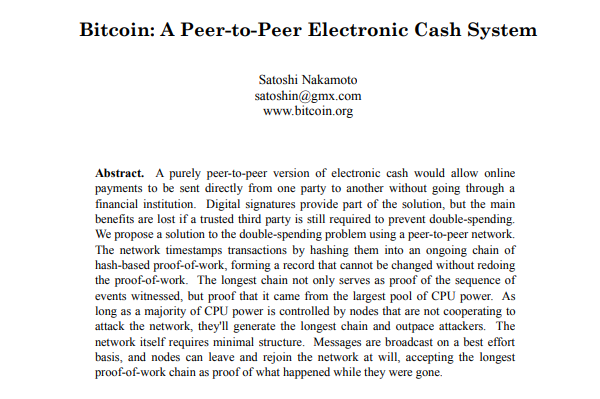
Nakamoto’s paper proposed a radical idea: a form of digital money that could be sent directly from one person to another without going through a financial institution like a bank. This was a direct response to the need for a financial system that didn’t rely on trust in traditional intermediaries, which had just proven fragile.
The goal was to create a system for online payments that worked like physical cash. When you hand someone a dollar bill, the transaction is direct and final. There's no bank involved. Bitcoin was designed to bring that same peer-to-peer quality to the digital world.
How Bitcoin Works
So how can you have digital cash without a central authority to prevent fraud, like people spending the same money twice? The answer lies in its core design. Bitcoin isn't run by a single company or government. It’s decentralized, meaning control is spread out among all its users.
decentralized
adjective
Not controlled by a single person, company, or government. Power and operations are distributed among many participants.
This network of users maintains a shared public ledger. This ledger is known as the blockchain. It's a complete, public record of every transaction ever made. Because everyone has a copy, it’s incredibly difficult for anyone to cheat the system.
Think of the blockchain as a digital receipt book that's shared and verified by a global network of computers. Once a transaction is recorded, it can't be altered.
The system is built from three simple components:
- Transactions: These are the basic building blocks. A transaction is a record of value being sent from one person to another, like a line item on a bank statement.
- Blocks: Transactions aren't added to the ledger one by one. Instead, they are bundled together into groups called blocks.
- Blockchain: Each new block of transactions is cryptographically linked to the previous one, forming a chain. This is the blockchain.
This structure is what makes Bitcoin secure. To change a past transaction, a bad actor would have to redo not only the block containing that transaction but also every single block that came after it. This would require an immense amount of computational power, making the ledger effectively tamper-proof.
Ready to check your understanding?
What was the primary problem Satoshi Nakamoto aimed to solve with the creation of Bitcoin?
In the Bitcoin system, what is the 'blockchain'?
Bitcoin was the first of its kind, and it introduced the world to the idea of a secure, decentralized digital currency. By understanding its basic components, you have the foundation to explore the wider world of cryptocurrencies.