Bitcoin's Global Geopolitical Impact
Bitcoin Fundamentals
A Mysterious Origin
In late 2008, as the world reeled from a major financial crisis, a paper appeared on a cryptography mailing list. Titled "Bitcoin: A Peer-to-Peer Electronic Cash System," it proposed a new kind of digital money that didn't rely on banks or governments. The author was a mysterious person or group known only as Satoshi Nakamoto.
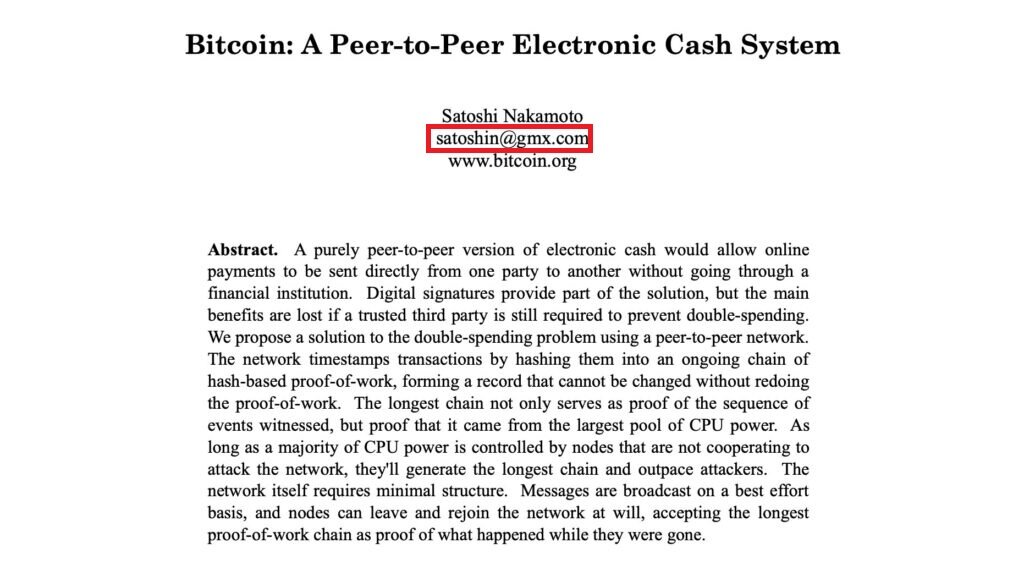
Nakamoto's identity remains a puzzle, but their creation was a direct answer to the perceived failures of the traditional financial system. The goal was to create a currency that was secure, transparent, and controlled by no single entity. To achieve this, Bitcoin introduced a groundbreaking technology: the blockchain.
The Blockchain Ledger
At its core, a blockchain is a digital ledger, much like a bank's record book. But instead of being held privately by one institution, this ledger is distributed across a global network of computers. Anyone can view it, but no one can alter it without the network's consensus.
The ledger is a growing chain of "blocks." Each block contains a batch of recent transactions. Once a block is filled, it's cryptographically linked to the previous one, forming a secure and chronological chain. This cryptographic link, called a hash, acts like a digital wax seal. If someone tried to change a transaction in an old block, the seal would break, and the network would instantly reject the fraudulent version.
This structure is what makes Bitcoin decentralized. No single person, company, or government controls the network. Instead, it's maintained by a community of volunteers around the world. This removes the need for a trusted middleman like a bank to verify transactions. The trust is built directly into the code and the network itself.
Sending and Securing Bitcoin
So how does a transaction work? Imagine Alice wants to send one bitcoin to Bob. She uses her private key—a secret, complex password—to authorize the transaction. This transaction is then broadcast to the entire network as an unconfirmed transaction.
This is where miners come in.
Mining
noun
The process by which new bitcoin transactions are verified and added to the blockchain. Miners use powerful computers to solve a complex mathematical puzzle, and the first one to solve it gets to add the next block of transactions to the chain.
Miners compete to bundle Alice's transaction, along with others, into a new block. To add their block to the chain, they must solve an incredibly difficult computational puzzle. This process is called "proof-of-work." It requires immense processing power, which secures the network from attack.
The first miner to solve the puzzle broadcasts their new block to the network. Other participants verify it's valid and add it to their copy of the ledger. Alice's transaction is now confirmed. For their work, the winning miner is rewarded with newly created bitcoin and the transaction fees from the block.
This mining process is the only way new bitcoins are created, and it's designed to get progressively harder over time.
This leads to a crucial feature of Bitcoin: digital scarcity. The protocol's rules state that there will only ever be 21 million bitcoins created. Unlike traditional currencies that can be printed at will by central banks, Bitcoin's supply is finite and predictable. This scarcity is a fundamental part of its design and a key reason people see it as a store of value, similar to gold.
Ready to test your knowledge on these core concepts?
Who is the pseudonymous creator of Bitcoin?
What is the primary purpose of the blockchain in the Bitcoin network?
Understanding these foundations—the blockchain ledger, decentralization, and digital scarcity—is the first step to grasping Bitcoin's place in the world.