Bitcoin Mining Explained
Introduction to Bitcoin
The Mystery of Bitcoin's Birth
In late 2008, the global financial system was in crisis. Trust in banks was at an all-time low. In the middle of this chaos, a paper appeared online, authored by a mysterious person or group named Satoshi Nakamoto. The title was simple: “Bitcoin: A Peer-to-Peer Electronic Cash System.”
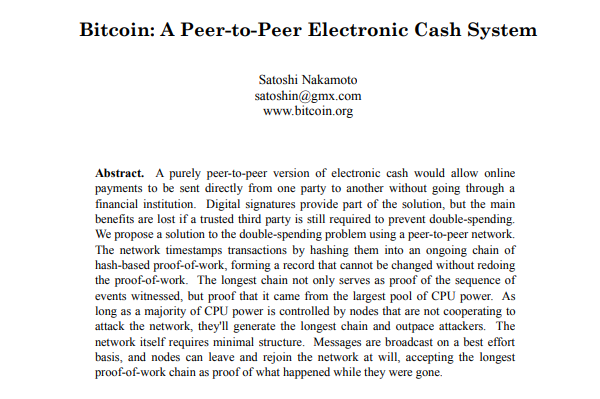
No one knows who Satoshi is to this day. But their idea was radical. They proposed a way to send money directly from one person to another, anywhere in the world, without needing a bank, a credit card company, or any other middleman. It would be a new kind of money, born on the internet.
Money Without Rulers
The core problem with traditional online payments is trust. How do you know the person you're paying will actually send you the goods? How does the seller know your payment is real? We solve this with trusted third parties, like banks and payment processors. They verify transactions, but they also take a cut and have complete control.
Bitcoin's goal was to replace that trust with cryptographic proof. It's built on a few key principles that make this possible.
Decentralization
noun
The transfer of control and decision-making from a centralized entity (individual, organization, or group) to a distributed network.
In the traditional banking system, a single entity holds the master ledger of all transactions. If that ledger is compromised, or if the bank decides to block a transaction, there's little you can do. Bitcoin is decentralized, meaning the ledger is shared and maintained by thousands of computers around the world. There is no central server or single point of failure.
This structure makes Bitcoin incredibly resilient. To take down the network, you'd have to shut down thousands of computers all at once. It also means no one can censor transactions or freeze your account.
Next is transparency. Every single Bitcoin transaction ever made is recorded on a public ledger called the blockchain. Anyone can view this ledger. However, names aren't attached to these transactions. Instead, they are tied to anonymous addresses, which look like long strings of letters and numbers. This creates a system that is transparent but pseudonymous.
Finally, security. The network is secured using powerful cryptography. This branch of mathematics ensures that transactions are authentic and that no one can spend bitcoins they don't own. It's the cryptographic links between transactions and blocks on the ledger that prevent fraud and make the system trustworthy without a central authority.
Bitcoin combines decentralization, transparency, and security to create a system for electronic cash that is controlled by no one and open to everyone.
Time to review what we've covered.
Let's check your understanding.
Who is the credited author of the Bitcoin whitepaper, “Bitcoin: A Peer-to-Peer Electronic Cash System”?
What fundamental problem in traditional online finance was Bitcoin designed to solve?
These core principles set the stage for how Bitcoin is created and maintained, a process we know as mining.