Bitcoin Mining Explained
Bitcoin Mining Basics
The Network's Accountants
When you hear the term "Bitcoin mining," you might picture someone digging for digital gold. The analogy is useful, but the reality is more like being a global accountant. Miners are the backbone of the Bitcoin network, and their job is to verify transactions and secure the entire system.
Every time someone sends Bitcoin, that transaction gets bundled with others into a list. Miners compete to be the one to verify this bundle, package it into a "block," and permanently add it to the blockchain, which is the public ledger of all transactions. Think of them as auditors, checking everyone's work and adding a new page to a constantly growing accounting book.
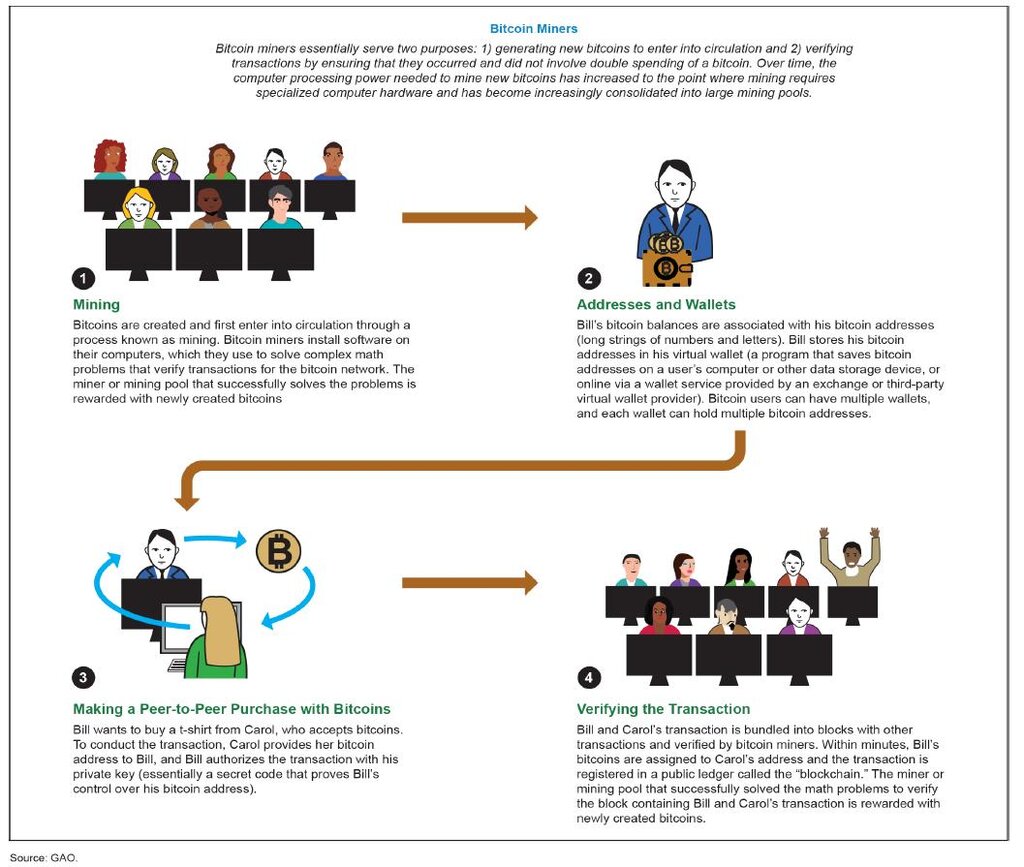
But why would anyone dedicate powerful computers to this task? Because the first miner to successfully add a block gets a reward. This process ensures that all transactions are legitimate and that no one can spend the same bitcoin twice.
Proof of Work
To prevent just anyone from adding blocks and to make the network secure, Bitcoin uses a system called Proof of Work (PoW). This is the core of the mining process. It requires miners to solve a difficult computational puzzle. It's not a complex math problem in the academic sense, but rather a brute-force guessing game that requires immense processing power.
Miners, who are participants in the network, compete to solve a complex mathematical puzzle to validate and add a new block of transactions to the blockchain.
Specifically, miners take the data from the block of transactions and run it through a cryptographic function called SHA-256. This function produces a fixed-length string of letters and numbers called a "hash." The goal is to find a hash that starts with a certain number of zeros. Because there's no way to predict the output, miners have to keep changing a small piece of data in the block, called a "nonce," and hashing it again and again until they get a valid result.
The first miner to find a valid hash broadcasts their solution to the network. Other miners quickly verify it, and if it's correct, the new block is officially added to the blockchain. This "work" proves that the miner spent significant computational resources, which secures the block and makes the entire chain trustworthy.
Rewards and Difficulty
Miners are compensated for their work in two ways. First, they receive newly created bitcoins. This is known as the "block reward," and it's how new bitcoins enter circulation. Second, they collect all the transaction fees from the transactions included in their block.
A crucial feature of Bitcoin is that the block reward is programmed to decrease over time. It gets cut in half approximately every four years in an event called the "halving." This controlled supply is what makes Bitcoin a deflationary asset, similar to a precious metal like gold.
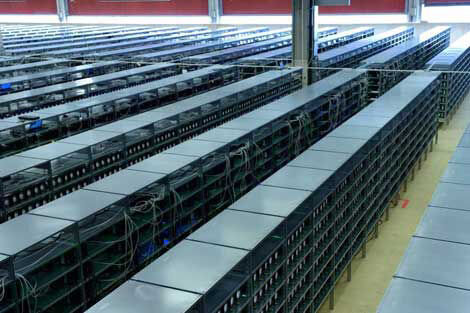
But what happens if more and more miners join the network? Wouldn't blocks be found much faster? To solve this, Bitcoin has a built-in feature called "mining difficulty."
The network is designed to produce a new block roughly every 10 minutes. To maintain this pace, the difficulty of the puzzle automatically adjusts every 2,016 blocks (about two weeks). If blocks are being found too quickly, the difficulty increases, requiring more zeros at the start of the hash. If blocks are being found too slowly, the difficulty decreases. This elegant system ensures the network remains stable and predictable, regardless of how many miners are participating.
What is the primary role of a Bitcoin miner in the network?
The Bitcoin network automatically adjusts its mining difficulty approximately every two weeks. What is the main goal of this adjustment?