Bitcoin Mining and Energy
Introduction to Bitcoin Mining
What Is Bitcoin Mining?
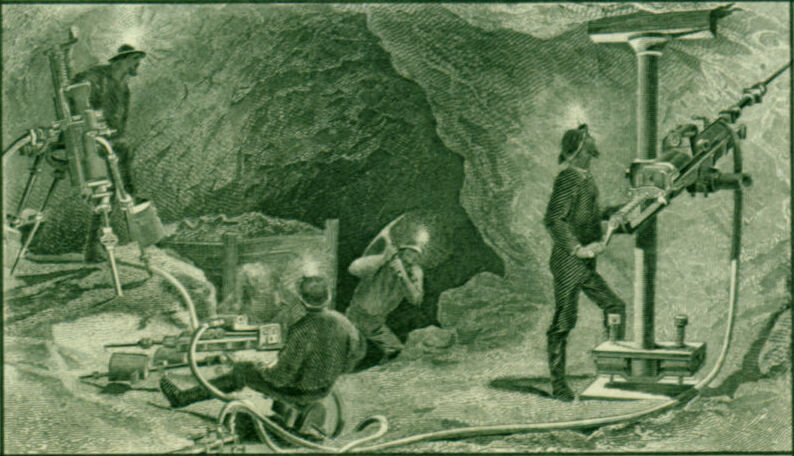
The term "mining" might make you think of digging for gold. In the world of Bitcoin, it’s not so different. Instead of digging in the earth, Bitcoin miners dig through complex math problems using powerful computers. Their goal is to verify transactions and add them to a public ledger called the blockchain.
Every time someone sends Bitcoin, that transaction gets bundled with others into a list. This list needs to be verified and added to the official record. Think of it like a global, digital bookkeeping system. Miners are the bookkeepers. They gather recent transactions into a "block" and compete to be the one to add it to the blockchain.
Mining is the process of verifying Bitcoin transactions and adding them to the public blockchain ledger. This is how new bitcoins are created.
Proof-of-Work
How does the network decide which miner gets to add the next block? It uses a system called Proof-of-Work (PoW). This is the competition. To win, miners must solve a difficult computational puzzle. It's a race to find a specific number that, when combined with the block's data, produces a unique digital fingerprint, or "hash," that meets certain criteria.
The puzzle is designed to be hard to solve but easy for others to check. A miner's computer has to make trillions of guesses per second to find the correct answer. The first one to find it broadcasts the solution to the entire network. Other participants quickly verify that the answer is correct. If it is, the new block is added to the blockchain, and the winning miner is rewarded.
This process secures the network. Because so much computational power is required to add a block, it becomes practically impossible for a malicious actor to go back and change previous blocks. To do so, they would have to re-mine that block and all the blocks that came after it, faster than the rest of the network, which would require an unimaginable amount of computing power.
Mining Rewards
Why would anyone dedicate expensive, powerful computers to this task? There are two key incentives for miners.
Nonce
noun
A number added to a hashed block that, when rehashed, meets the difficulty level restrictions. The nonce is the number that miners are solving for.
First is the block reward. The miner who successfully adds a new block to the blockchain is rewarded with a certain amount of brand-new Bitcoin. This is how new coins are created and enter the system. The block reward is cut in half approximately every four years in an event called the "halving."
Second, miners collect transaction fees. Users can include a small fee with their transactions to encourage miners to include it in a block more quickly. The winning miner gets to keep all the fees from the transactions in their newly added block.
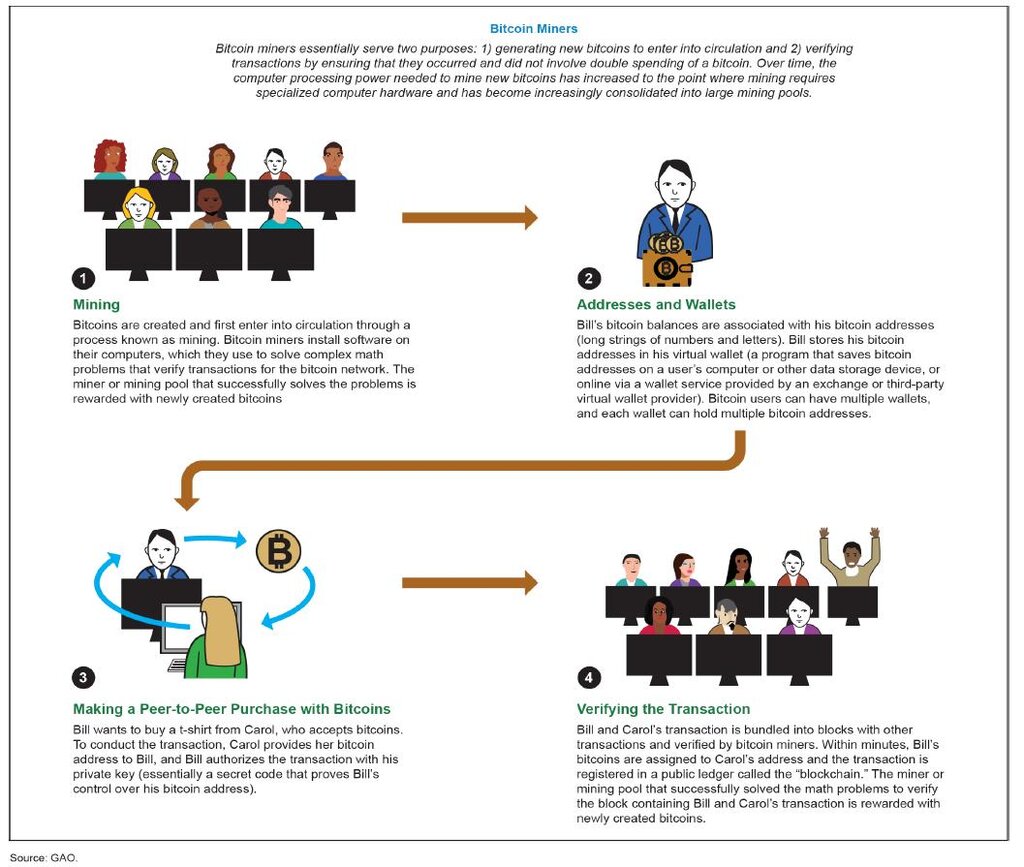
Together, these rewards compensate miners for the electricity and computing hardware they use. More importantly, this incentive system powers and secures the entire Bitcoin network, ensuring that transactions are verified and the ledger remains accurate and tamper-proof without needing a central bank or authority.
Ready to test your knowledge?
What is the primary role of a Bitcoin miner?
The system that requires miners to solve a difficult computational puzzle to add a new block is called __________.
Mining is the engine that keeps the Bitcoin network running. It's a clever system that allows a decentralized network of participants to agree on the state of a shared ledger, all while issuing new currency in a predictable way.