Bitcoin Investment Strategies and Market Mastery
Advanced Cold Storage
Fortifying Your Holdings
When your Bitcoin holdings grow, your security model must evolve. A simple hardware wallet, while excellent for everyday use, represents a single point of failure. A lost device, a compromised seed phrase, or a targeted physical threat could lead to a total loss. Advanced cold storage is about building layers of redundancy and defense to protect against these sophisticated risks.
The core principle is moving from a single key to a distributed trust model. Instead of one key controlling your funds, you create a system where multiple keys, held by different devices and in different locations, are required to authorize a transaction. This is the foundation of a multisignature wallet.
Multisig is the gold standard for bitcoin security.
The Multisig Fortress
A multisignature, or multisig, wallet requires a certain number of keys (M) out of a total number of keys (N) to sign a transaction. This M-of-N scheme eliminates single points of failure. If one key is lost or compromised, your funds remain secure. The most common setups are 2-of-3 and 3-of-5, each offering a different balance of security and operational complexity.
| Scheme | Security (Keys to Compromise) | Redundancy (Keys to Lose) | Use Case |
|---|---|---|---|
| 2-of-3 | 2 keys | 1 key | Good balance for individuals, protecting against loss or theft. |
| 3-of-5 | 3 keys | 2 keys | Ideal for families or small businesses, offering high security and fault tolerance. |
A critical best practice is to use hardware wallets from different vendors for each key in your multisig setup. For example, in a 2-of-3 scheme, you might use a Trezor, a Ledger, and a Coldcard. This strategy mitigates the risk of a bug, vulnerability, or supply-chain attack affecting a single manufacturer. If one brand's security is broken, your funds are still protected by the keys held on devices from other vendors.
True Cold Storage
The highest level of security involves ensuring your private keys never touch a device that has been, or ever will be, connected to the internet. This is known as an setup. You can't just plug an air-gapped device into your laptop to sign a transaction; the data must be transferred physically.
This is accomplished using Partially Signed Bitcoin Transactions (PSBTs). The process is straightforward but deliberate:
- Create: An internet-connected computer with wallet software prepares an unsigned transaction. This PSBT file contains all the details—inputs, outputs, amounts—but no valid signature.
- Transfer: The PSBT file is saved to a microSD card, which is then physically moved to your air-gapped hardware wallet.
- Sign: The offline hardware wallet signs the transaction using its private key and saves the now-partially-signed transaction back to the microSD card.
- Broadcast: The card is returned to the online computer. If it's a multisig setup, this process is repeated with the other signing devices. Once enough signatures are gathered, the completed transaction is broadcast to the Bitcoin network.
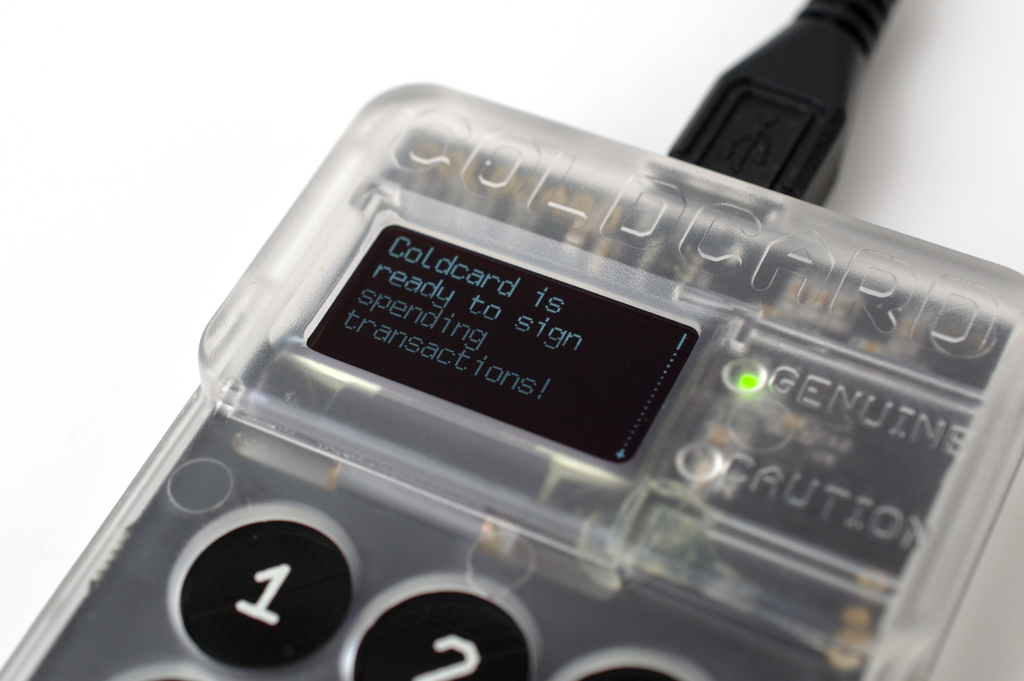
Some hardware wallets are stateless, meaning they don't store any information about your wallet or past transactions. They derive the necessary keys from the seed phrase each time they are powered on. Stateful wallets retain some data, like your public keys, for convenience. For maximum security in an air-gapped setup, a stateless device is often preferred as it leaves a smaller footprint.
Securing Your Recovery
Your seed phrase backups are as critical as the hardware devices themselves. Storing multiple copies in geographically separate, secure locations protects against localized disasters like fire or flood. A common strategy is to place one backup in a safe at home, one in a bank's safe deposit box, and another with a trusted family member or lawyer.
For an additional layer of security, you can add a passphrase, sometimes called the , to your standard 24-word seed phrase. This is part of the BIP39 standard. A seed phrase combined with a passphrase generates a completely different wallet. If your physical seed backup is discovered, it is useless without the passphrase, which you can memorize or store separately from the 24 words.
Warning: If you forget your passphrase, there is no way to recover your funds. It is never stored anywhere and cannot be retrieved. Treat it with the same seriousness as the seed phrase itself.
Protocols like the Glacier Protocol outline extreme measures for paranoid-level security, involving custom-built, permanently offline hardware and casino-grade dice for generating randomness. While not practical for most, its principles—reducing trust in hardware, verifying software, and maintaining a sterile offline environment—are valuable lessons for any serious security model.
Time to review what you've learned.
What is the primary reason to upgrade from a single hardware wallet to an advanced cold storage solution like multisig as your Bitcoin holdings grow?
In a "3-of-5" multisignature wallet, how many keys are required to authorize a transaction?
Building a robust cold storage solution requires careful planning and a deep understanding of the trade-offs between security, redundancy, and convenience. By layering defenses like multisig, air-gapped signing, and protected seed phrases, you can construct a fortress for your digital assets.