Bitcoin Fundamentals
Introduction to Bitcoin
What Is Bitcoin?
Bitcoin is a type of digital money. You can think of it like an online version of cash that you can use to buy and sell things. Unlike the money in your bank account, however, Bitcoin isn't controlled by any single bank or government. It was the first of its kind: a decentralized digital currency.
The goal was to create a way to exchange money directly between people, without a financial institution getting in the middle.
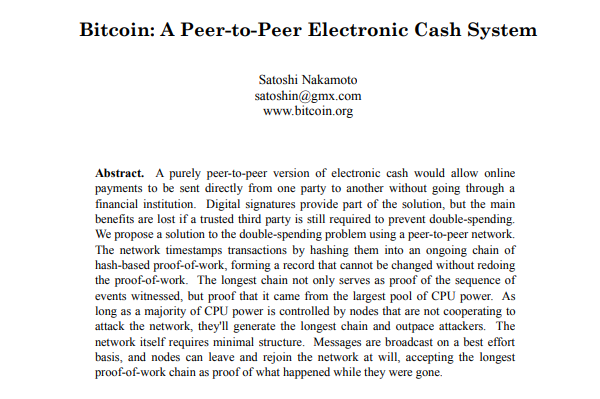
This idea was laid out in 2008 in a paper titled "Bitcoin: A Peer-to-Peer Electronic Cash System." The paper described how this new form of money could work, solving a tricky problem in the digital world: making sure a digital dollar could only be spent once, without a bank to verify it.
The Mysterious Creator
The author of the Bitcoin paper, and the creator of the software, is known only by the pseudonym Satoshi Nakamoto. To this day, no one knows the true identity of Satoshi. It could be a person or a group of people.
Satoshi released the Bitcoin software in early 2009 and collaborated with other developers online for a couple of years. Then, in 2011, they vanished, leaving the project in the hands of the community. This anonymity adds to Bitcoin's mystique, but it also reinforces one of its core principles: the system should work without needing to trust any single person or authority.

How It Works Without a Bank
When Satoshi called Bitcoin a "peer-to-peer electronic cash system," it meant that people could send money directly to each other. Think about how you pay for coffee. You might use a credit card. When you swipe your card, a whole chain of intermediaries gets involved: your bank, the coffee shop's bank, and the credit card company (like Visa or Mastercard).
Bitcoin removes those intermediaries. A transaction is just between the sender and the receiver, verified by a network of computers run by volunteers around the world. There’s no central company to approve the transaction, charge fees, or block the payment.
This new model offers some unique advantages.
Key Advantages
Decentralization: This is the big one. Because there's no central server or controlling entity, the network is incredibly resilient. No single person, company, or government can shut it down or manipulate the rules.
Transparency: Every single Bitcoin transaction is recorded on a public ledger called the blockchain. Anyone can view this ledger. This creates a transparent system where all activity is open for audit. However, the identities behind the transactions are pseudonymous, represented by strings of text and numbers, not personal names.
Security: The network is secured by the collective power of all the computers that participate in it. Once a transaction is confirmed and added to the ledger, it is practically impossible to alter or reverse. This prevents fraud and the double-spending problem mentioned earlier.
Ready to check your understanding of these core concepts?
Who is credited with creating Bitcoin?
What is the primary problem that Bitcoin's design, as described in its original paper, was meant to solve without a central authority?
Bitcoin introduced a new way of thinking about money, one based on decentralization and peer-to-peer exchange.