Bitcoin Explained
Introduction to Bitcoin
The First Digital Currency
In late 2008, as the world grappled with a major financial crisis, a paper appeared online. Titled "Bitcoin: A Peer-to-Peer Electronic Cash System," it was published under the name Satoshi Nakamoto. To this day, no one knows if Nakamoto was a person or a group of people. This paper laid out the vision for a new kind of money, one that wasn't controlled by any bank or government.
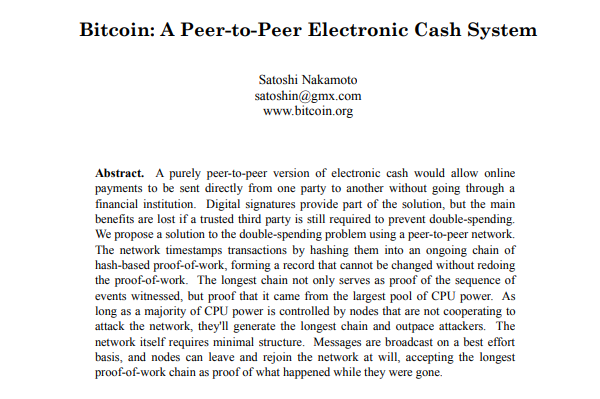
The idea was revolutionary. For the first time, people could send and receive value over the internet without needing a trusted third party, like a bank or a payment processor, to verify the transaction. This was the birth of Bitcoin, the world's first cryptocurrency.
What Makes It Different
Bitcoin is the pioneer of a new category of assets called cryptocurrencies. A cryptocurrency is a digital or virtual token that uses cryptography for security. Unlike the dollars or euros in your bank account, cryptocurrencies don't exist in any physical form. They exist only on a shared digital record, often called a blockchain.
Bitcoin's design gives it a few unique properties that set it apart from traditional money.
Decentralization: No one is in charge. Instead of a central authority like a bank keeping the ledger, a network of computers around the world maintains the system. This means no single person or company can freeze your account, block a transaction, or change the rules.
This decentralized nature is significant. It creates a financial system that is open to anyone, anywhere, regardless of their location or financial history. It’s a network that operates based on code and consensus, not the decisions of a few powerful people.
Digital Scarcity
Governments can print more money whenever they see fit, which often leads to the value of that money decreasing over time through inflation. Bitcoin was designed to be different. Its supply is strictly limited.
Only 21 million bitcoins will ever be created. This rule is embedded in Bitcoin's core code and cannot be changed.
This fixed supply makes Bitcoin a scarce digital asset, much like gold. Because there is a finite amount, it can't be devalued by creating more of it. This property is one of the main reasons some people see Bitcoin as a potential store of value, a way to protect wealth from inflation.
Finally, let's talk about privacy. When you use Bitcoin, you don't use your name or email address. Instead, transactions are sent to and from specific Bitcoin addresses, which appear as long strings of letters and numbers. For example, a Bitcoin address might look something like this: 1A1zP1eP5QGefi2DMPTfTL5SLmv7DivfNa.
This system is pseudonymous, not completely anonymous. While your real-world identity isn't directly tied to your address, all transactions are recorded on the public ledger. If your address is ever linked to your identity, your transaction history could become known. It’s like writing a book under a pen name—you’re not using your real name, but all your work is still connected to that pseudonym.
Bitcoin introduced these powerful ideas to the world and kicked off the entire cryptocurrency movement. It remains the largest and most well-known digital currency, having paved the way for thousands of other projects that followed.
Now, let's review what we've covered.
Who is credited with creating Bitcoin?
What fundamental problem did Bitcoin's peer-to-peer system solve?
Bitcoin's creation marked a fundamental shift in how we think about money and value. By combining decentralization, a fixed supply, and a new level of user control, it offered a glimpse into a different kind of financial system.