Bitcoin Explained
Introduction to Bitcoin
What Is Bitcoin?
Bitcoin is a type of digital money. You can think of it as cash that exists only on the internet. Unlike the money in your bank account, which is managed by a financial institution, Bitcoin is a peer-to-peer currency. This means you can send it directly to anyone, anywhere in the world, without needing a bank or payment processor to approve the transaction.
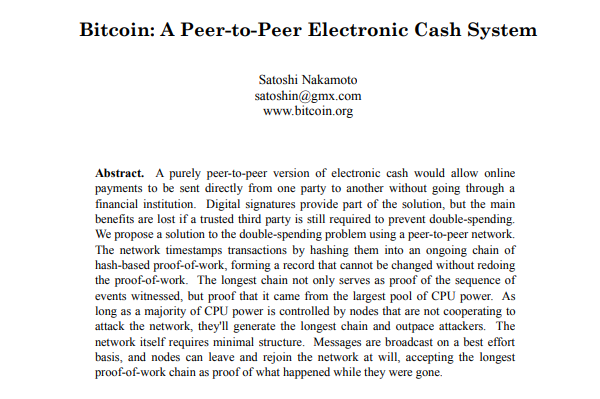
The idea for Bitcoin was published in 2008 by a person or group using the pseudonym Satoshi Nakamoto. The goal was to create a new kind of electronic cash system that wasn't controlled by any single entity. This core principle is called decentralization.
No Banks, No Problem
In the traditional financial system, banks and governments have control. They can freeze accounts, block payments, and print more money, which can affect its value. Bitcoin was designed to be different. There's no CEO, no central office, and no country in charge.
Instead, Bitcoin runs on a global network of computers. This network maintains a shared public ledger, called the blockchain, which contains a record of every transaction ever made. Because this ledger is distributed across thousands of computers, it's incredibly difficult to tamper with. To cheat the system, you'd have to alter the records on thousands of computers simultaneously.
Another key feature is its limited supply. Only 21 million bitcoins will ever be created. This is written into the code and cannot be changed. This scarcity is similar to precious metals like gold, and it contrasts with traditional currencies that can be printed indefinitely.
How Transactions Work
Sending and receiving Bitcoin is a bit like sending an email. You have a Bitcoin "address," which is a long string of letters and numbers that acts like your email address for money. To send bitcoin, you use a digital wallet to create a transaction, sign it with your private key (a secret password), and send it to the recipient's address.
This transaction is then broadcast to the entire Bitcoin network.
Your wallet doesn't actually hold your bitcoin. It holds your private keys, which give you access to your funds on the blockchain.
But who confirms that your transaction is valid? That's where miners come in.
Mining
noun
The process by which new bitcoins are created and new transactions are verified and added to the blockchain.
Miners are people and companies around the world who use powerful computers to compete to solve a complex mathematical puzzle. The first miner to solve the puzzle gets to bundle a group of recent transactions (including yours) into a new "block" and add it to the blockchain.
For their work, the winning miner is rewarded with a small amount of newly created bitcoin and the transaction fees from the block. This process is how new bitcoins enter circulation and how the network remains secure and up-to-date.
What is the core principle of Bitcoin that distinguishes it from traditional currencies controlled by banks and governments?
The shared public ledger that contains a record of every Bitcoin transaction ever made is called the __________.
This covers the fundamental concepts of Bitcoin. It's a decentralized, peer-to-peer digital currency with a limited supply, secured by a global network of miners.