Bitcoin Difficulty Adjustment Explained
Introduction to Bitcoin Mining
The Network's Bookkeepers
Traditional banking relies on a central authority, like a bank, to verify and record transactions. Bitcoin is different. It's a decentralized network, meaning no single person or company is in charge. So how does it keep track of who owns what without a central ledger?
The answer lies with a global network of participants known as miners. You can think of them as the distributed bookkeepers for the entire Bitcoin system. Their primary job is to listen for transactions, verify their legitimacy, and bundle them into records called "blocks."
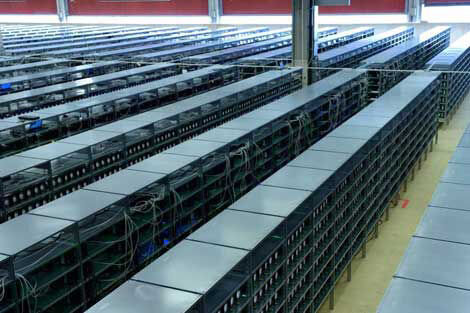
Miners don't just volunteer for this role. They compete. The first miner to successfully add a new block of transactions to the official record, known as the blockchain, earns a reward in the form of newly created bitcoin. This competition is what secures the network and creates new coins.
Proof of Work
How do miners compete? They use a system called Proof of Work (PoW). It’s a mechanism that requires them to solve a complex computational puzzle. This isn't a brain teaser like a crossword; it's a mathematical problem that is very difficult to solve but very easy for others to verify once a solution is found.
Imagine you're trying to find a specific grain of sand on a vast beach. There's no clever shortcut. You just have to pick up grains one by one until you find the right one. That's essentially what mining computers do. They run trillions of calculations per second, guessing numbers until one of them produces the correct answer to the puzzle. The first miner to find the solution "proves" they did the computational "work" and wins the right to add the next block to the blockchain.
Proof of work requires miners to solve a difficult computational problem to mine new blocks:
This massive expenditure of energy and computing power is a core feature of Bitcoin's security. It makes it incredibly difficult and expensive for any bad actor to alter the transaction history, as they would need to redo all the computational work of every subsequent block in the chain.
From Transaction to Block
The entire process follows a clear sequence. First, someone initiates a transaction, which is then broadcast to the entire network. Miners grab this and other pending transactions and collect them into a candidate block.
Then, the race begins. Each miner starts working on the proof-of-work puzzle for their specific block. When a miner finds the solution, they broadcast their completed block to the network. Other participants quickly check if the solution is valid and if the transactions within the block are legitimate. If everything checks out, they add the new block to their copy of the blockchain, and the process starts all over again for the next block.
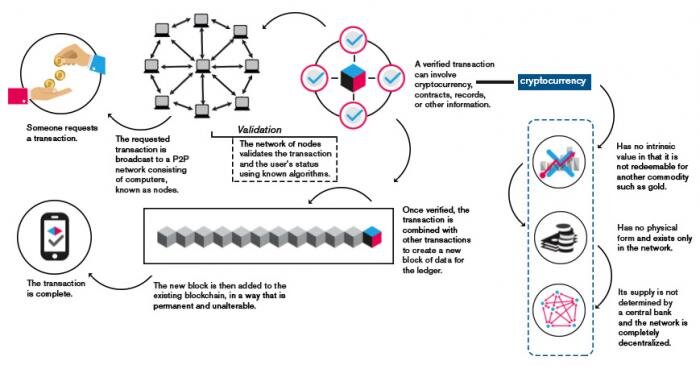
This elegant system ensures that all participants agree on the state of the ledger, creating a secure and trustless way to transfer value digitally.
What is the primary role of miners in the Bitcoin network?
The competitive process where miners use computational power to solve a complex puzzle is known as __________.
This process of validating transactions and adding them to the blockchain is the foundation of the Bitcoin network's security and operation.