Bitcoin Basics
Introduction to Bitcoin
A New Kind of Money
Before 2008, sending money online always required a middleman. If you wanted to pay a friend or buy something from a store, you had to rely on a bank or a payment processor like PayPal. These companies act as trusted third parties, moving money from one account to another and keeping a record of every transaction.
This system works, but it has drawbacks. It gives a lot of power to a few large institutions. They can block transactions, freeze accounts, and charge fees for their services. For years, people wondered if there was another way. Could we create a form of digital money that people could exchange directly, just like handing someone cash?
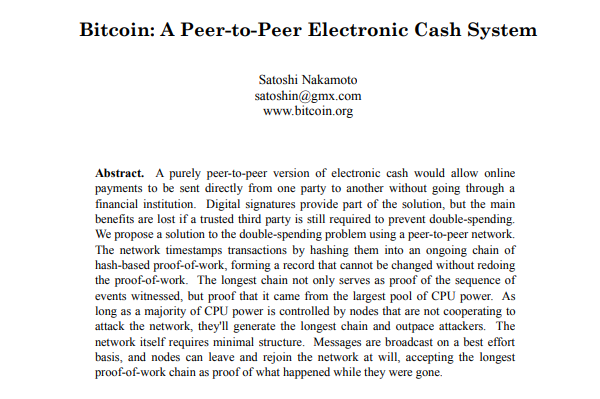
In late 2008, a paper titled “Bitcoin: A Peer-to-Peer Electronic Cash System” appeared online. The author was a person, or perhaps a group of people, using the name Satoshi Nakamoto. Nobody knows who they really are.
Nakamoto’s paper proposed a radical solution. It described a system for a new kind of money called Bitcoin. It was designed to be completely digital and to work without any central authority. No banks, no companies, no governments. Just a network of computers running open-source software.
Bitcoin's core idea was to create a purely peer-to-peer version of electronic cash that allows online payments to be sent directly from one party to another without going through a financial institution.
The Power of Decentralization
How can you have a financial system without a central authority? Bitcoin’s key innovation is decentralization.
Imagine a traditional bank’s ledger. It’s a single, private book that records all transactions. Only the bank can see and update it. A decentralized system is different. Instead of one private book, everyone on the network has a copy of a shared, public ledger. When a transaction happens, it’s broadcast to the whole network and added to every copy of the ledger at once.
This design removes the need for trust in a single entity. Instead, trust is distributed across the entire network. The system is maintained by its users, not by a corporation. This structure makes it incredibly resilient. To shut it down, you’d have to shut down every computer on the network, which is nearly impossible.
Creating Digital Scarcity
Another problem with digital money is the risk of double-spending. Anything digital can be copied. If you have a digital file, like an MP3 or a photo, you can make perfect duplicates and send them to anyone. If digital money worked the same way, you could spend the same dollar over and over again. This is why banks have always been needed, to keep a central record and ensure that once a dollar is spent, it's gone from your account.
Bitcoin solves this with its public ledger, called the blockchain. Because every transaction is recorded on this shared ledger, the network can verify that someone actually has the bitcoins they are trying to spend. Once they're spent, the transaction is recorded for everyone to see, preventing the same coins from being used again.
This system creates digital scarcity. For the first time, a digital object could be unique and non-duplicable without a central authority to enforce it.
Furthermore, the total number of bitcoins that can ever be created is capped at 21 million. This limit is written into the code and cannot be changed. Unlike traditional currencies, which central banks can print more of at any time, Bitcoin has a finite supply. This makes it more like a digital commodity, such as gold, than a fiat currency.
Who is the pseudonymous creator of the paper “Bitcoin: A Peer-to-Peer Electronic Cash System”?
What is the primary problem of digital assets that Bitcoin's public ledger, the blockchain, was designed to solve?
Bitcoin was the first system to combine these ideas. It offered a vision for a new kind of financial network that is open, global, and not controlled by any single person or group.