Bipedal Locomotion and Spinal Dynamics
Introduction to Bipedal Locomotion
The Art of Walking on Two Feet
Walking on two legs, or bipedal locomotion, feels simple. It’s something most of us do without a second thought. Yet, it's a remarkably complex and efficient form of movement that sets humans apart in the animal kingdom. It frees up our hands, allows us to travel long distances, and gives us a unique perspective on the world. To understand this feat, we need to look at the machinery that makes it possible.
The Body's Framework
Our ability to walk upright hinges on a few key anatomical structures working in harmony: the spine, the pelvis, and the lower limbs. Each part is specialized for the demands of bipedalism.
The spine isn't a rigid rod. It has a distinct S-shape that acts like a spring, absorbing shock with every step and keeping our head stable. This curvature is crucial for balance and distributing weight effectively down to the pelvis.
The pelvis is a broad, bowl-shaped structure that forms a stable base, supporting the upper body and anchoring the powerful leg muscles. Its shape is a direct adaptation for upright walking, providing the leverage needed to swing our legs forward.
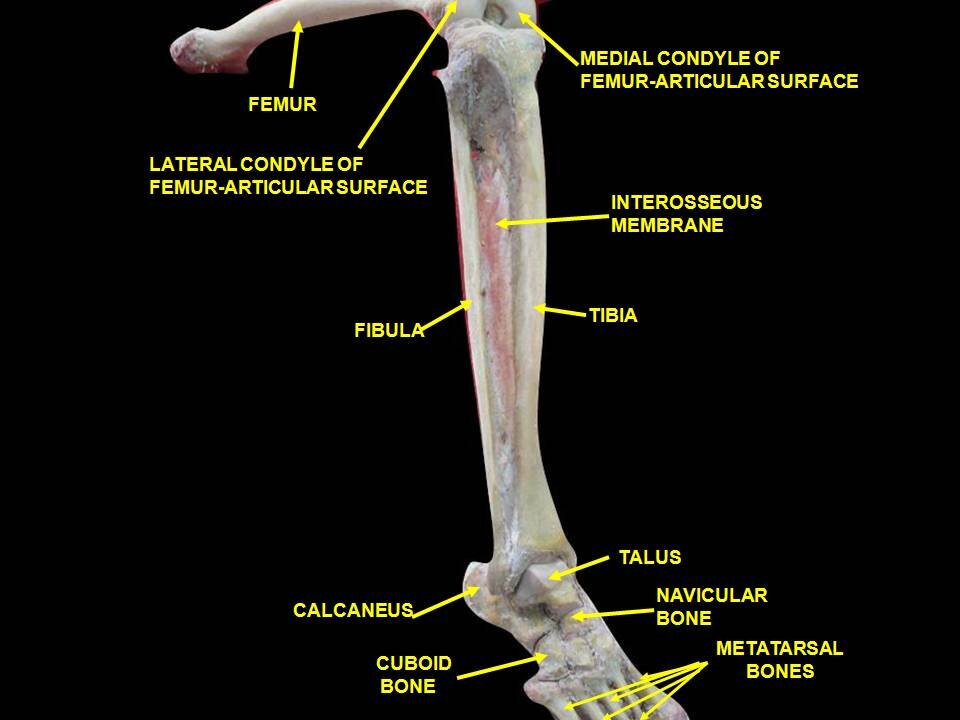
Finally, the lower limbs—the femur, tibia, fibula, and feet—do the heavy lifting. The long bones of the legs support our weight, while the complex structure of the foot, with its arch, provides the final push-off and absorbs impact upon landing. The foot acts as both a rigid lever and a flexible shock absorber.
Walking vs Running
Walking is often described as a process of controlled falling. With each step, you push off, swing your leg forward, and catch yourself just before you topple. This sequence is known as the gait cycle.
It can be broken down into two main phases for each leg: the stance phase, when the foot is on the ground, and the swing phase, when it's in the air. A key characteristic of walking is that one foot is always in contact with the ground. This provides constant support.
Running is fundamentally different. It introduces a
flight phase
where both feet are off the ground simultaneously. This turns the movement from an inverted pendulum (in walking) into more of a bouncing spring. The body stores elastic energy in the tendons, particularly the Achilles tendon, and releases it to propel you forward. This makes running faster but also requires more energy and places greater stress on the body.
Staying Upright and Saving Energy
Human walking is remarkably energy-efficient. Our bodies have evolved to minimize the effort needed to move. During walking, our center of mass rises and falls with each step, smoothly converting potential energy (at the highest point) to kinetic energy (as we move forward) and back again. This pendulum-like exchange means our muscles don't have to work as hard.
Stability is a constant, unconscious effort. We maintain balance by keeping our center of mass over our base of support—the area defined by our feet. When we walk, we are constantly shifting our weight and moving this base of support forward to catch our falling center of mass. Our nervous system makes millions of tiny adjustments in muscle tension to keep us from falling, a task so complex that it remains a major challenge in robotics.
Swinging our arms isn't just for show; it counters the rotation of our legs, keeping our upper body stable and facing forward, which also helps conserve energy. All these elements—the skeletal structure, the mechanics of the gait cycle, and the constant neurological feedback—combine to make bipedal locomotion a sophisticated and efficient way to get around.
What is the primary function of the S-shape of the human spine in bipedal locomotion?
The process of walking is often described as a series of 'controlled falls'.