Biotechnology in Practice
Advanced Genetic Engineering Tools
Targeting Genes with Precision
Genetic engineering has moved beyond simply inserting random genes. Modern tools allow for precise, targeted changes to an organism's DNA, almost like editing text in a document. The most famous of these tools is the CRISPR-Cas9 system.
CRISPR-Cas9 is a novel technology that allows geneticists and medical researchers to edit regions of the genome by removing, inserting, or modifying DNA sequences.
Think of the system in two parts. The Cas9 protein is a nuclease, a type of enzyme that acts like a pair of molecular scissors, capable of cutting DNA. But on its own, Cas9 is blind. It needs a guide to tell it where to cut.
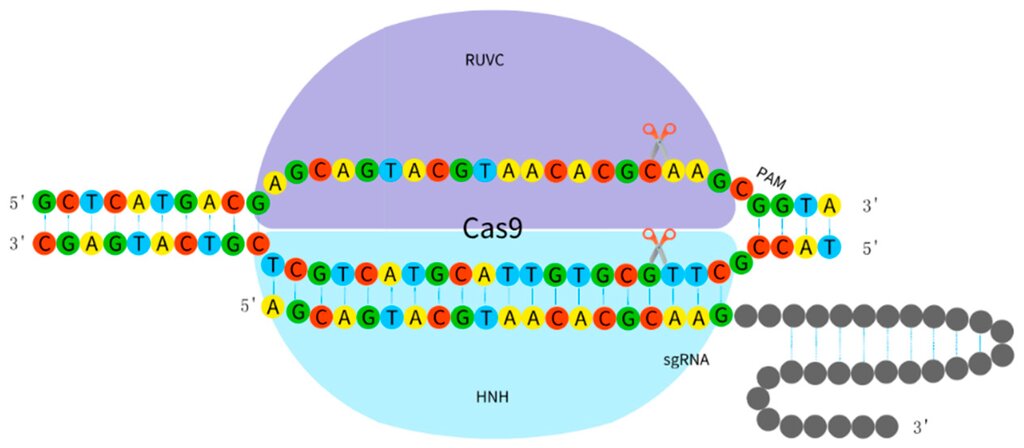
That guide is a small piece of RNA called a (gRNA). Scientists design the gRNA to match the specific DNA sequence they want to edit. The gRNA combines with the Cas9 protein and leads it through the genome. When it finds the exact matching sequence, Cas9 makes a cut.
However, there's a catch. For Cas9 to cut, the target DNA sequence must be located immediately next to another short, specific sequence called a (PAM). The Cas9 protein recognizes the PAM sequence first, and only then does it check the adjacent DNA to see if it matches the gRNA. If there's no PAM sequence, Cas9 won't cut, even if the gRNA finds its target. This requirement is both a key feature and a limitation of the system, as it restricts where in the genome you can make edits.
The Old Guard
Before CRISPR became widespread, scientists used other tools for genome editing, primarily Zinc Finger Nucleases (ZFNs) and Transcription Activator-Like Effector Nucleases (TALENs). Like CRISPR-Cas9, these are engineered proteins designed to cut DNA at specific locations. The key difference lies in how they find their target.
Instead of using an RNA guide, both ZFNs and TALENs rely on protein domains that are engineered to bind directly to specific DNA sequences. Each protein module recognizes a few base pairs, and scientists string them together to target a longer, unique site in the genome.
Assembling these custom proteins for each new target site is a complex and time-consuming process. This difficulty in engineering is the primary reason CRISPR, with its easily programmable RNA guide, quickly became the preferred tool for most applications.
| Feature | CRISPR-Cas9 | ZFNs & TALENs |
|---|---|---|
| Targeting | RNA-guided | Protein-guided |
| Ease of Design | High (simple to design a new gRNA) | Low (requires complex protein engineering) |
| Cost | Low | High |
| Precision | Good, but off-target effects are a concern | Very high, but can be difficult to achieve |
| Multiplexing | Easy (can target multiple genes at once) | Difficult |
The Limits of Cutting
The biggest challenge with any gene-editing tool that cuts DNA is precision. Sometimes, the system makes mistakes and cuts DNA at sites that are similar, but not identical, to the intended target. These are called off-target effects, and they can be dangerous, potentially disrupting important genes and causing unintended consequences.
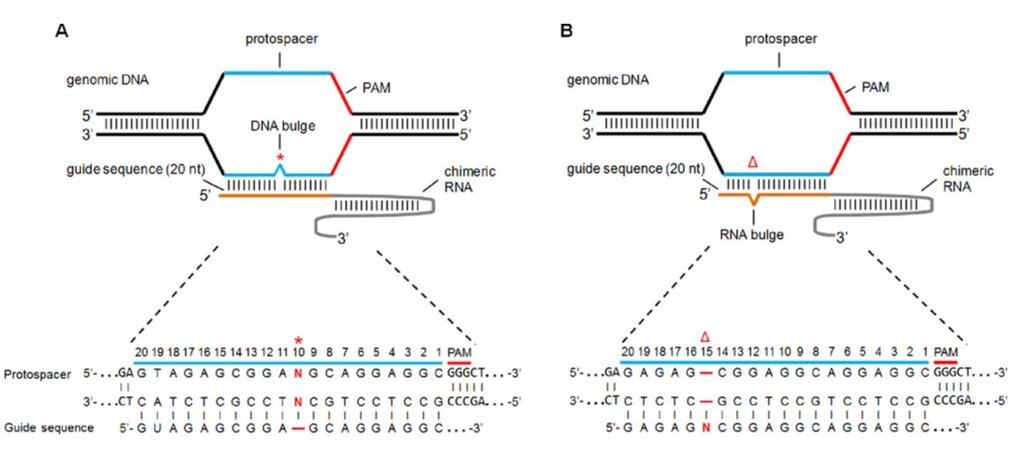
Furthermore, cutting the DNA double helix is a traumatic event for a cell. The cell's natural repair mechanisms can be unpredictable. Sometimes they introduce small insertions or deletions (indels) that disrupt the gene, which is often the goal. But other times, the repair can be incorrect or lead to larger, unwanted genomic rearrangements.
Editing Without Scissors
To address the problems caused by double-strand breaks, scientists have developed next-generation editors that can make precise changes to DNA without cutting it completely. These newer methods offer much higher precision.
Base Editing
noun
A technique that converts a single nucleotide base into another (e.g., a C to a T) at a target location without making a double-strand break in the DNA.
Base editing works by using a modified, 'dead' Cas9 (dCas9) that can no longer cut DNA. This dCas9 is fused to an enzyme that can chemically convert one DNA base into another. For instance, a cytidine deaminase can change a cytosine (C) to a uracil (U), which the cell then reads as a thymine (T). It's like using a pencil eraser and changing a single letter in a word.
Prime editing is an even more advanced technique. It's often described as a DNA 'search and replace' function. It uses a Cas9 enzyme that only nicks one strand of the DNA, paired with a reverse transcriptase enzyme. The guide RNA for prime editing not only contains the target sequence but also carries an RNA template for the new, edited DNA sequence. The reverse transcriptase uses this template to directly write the new genetic information into the target site.
These advanced tools allow for a much wider range of edits, including small insertions, deletions, and any type of single-base substitution, all with far fewer off-target effects. They represent a significant step toward making gene editing safer and more effective for therapeutic applications.
In the CRISPR-Cas9 system, what is the role of the guide RNA (gRNA)?
A scientist finds that CRISPR-Cas9 is not cutting a target gene, even though the guide RNA sequence is a perfect match. What is the most likely reason for this failure?