Biotechnology for Climate Solutions
Introduction to Climate Change
What Is Climate Change?
You've probably heard the terms “climate change” and “global warming” used a lot. They point to the same core issue: Earth's long-term weather patterns are shifting, and the planet is getting hotter. This isn't about a single hot summer day, which is weather. Climate is the average weather over many years. A change in that long-term average is what we call climate change.
Climate Change
noun
A long-term change in the average weather patterns that have come to define Earth’s local, regional, and global climates.
The main driver of this change is the enhanced greenhouse effect. Our atmosphere contains gases, like carbon dioxide (CO₂), that trap heat from the sun. This natural process is like a blanket, keeping Earth warm enough for life to thrive. However, human activities since the Industrial Revolution have added a massive amount of extra greenhouse gases to the atmosphere, making the blanket much thicker. This traps more heat and raises the global temperature.
The primary cause of modern climate change is the emission of greenhouse gases from burning fossil fuels like coal, oil, and natural gas for energy.
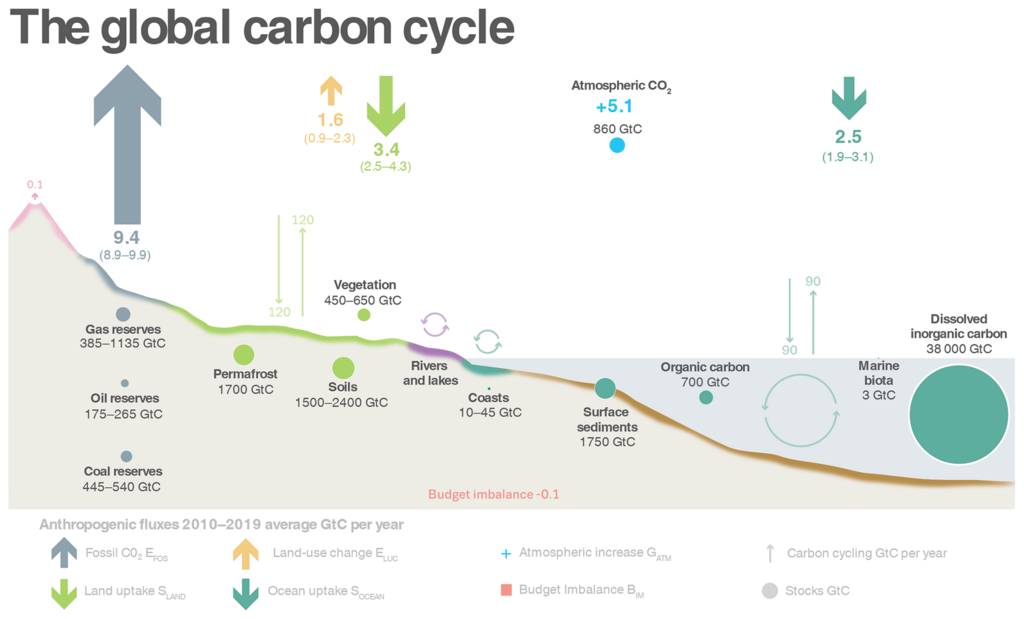
Other major sources include deforestation, which reduces the number of trees available to absorb CO₂, and agricultural practices that release methane, another potent greenhouse gas. This diagram shows how human activities have disrupted the natural carbon cycle, leading to more carbon in the atmosphere.
The Ripples of a Warming World
A warming planet sets off a chain reaction of changes. These impacts aren't just about feeling a little more heat; they affect every part of our world, from vast oceans to our own communities.
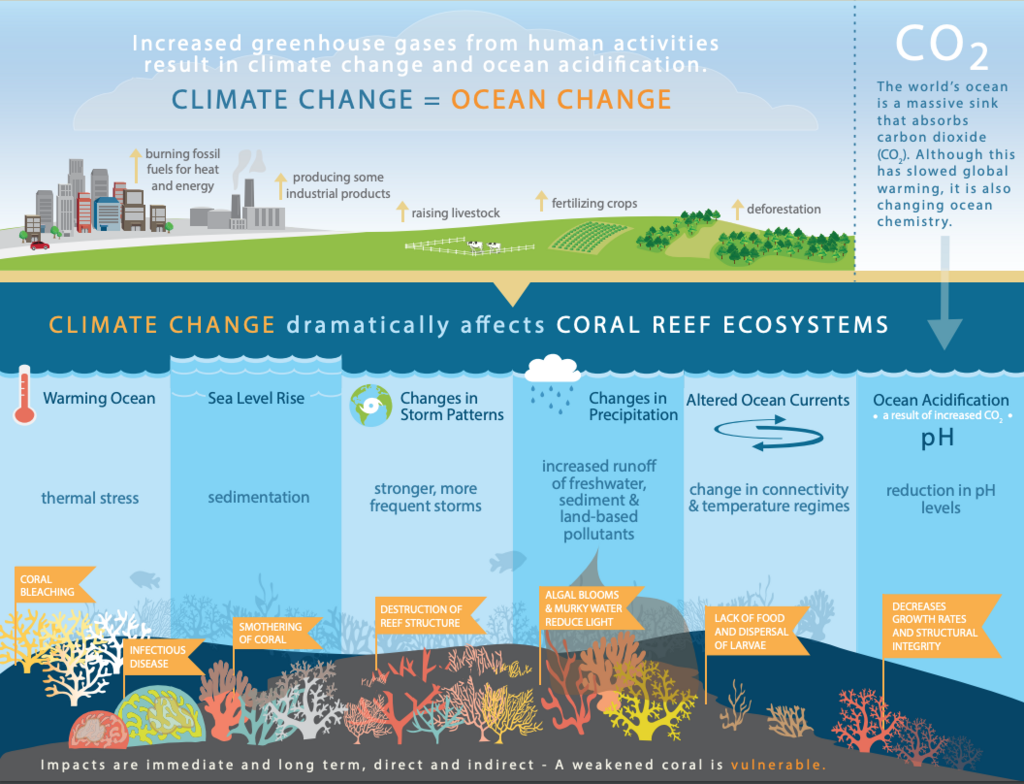
Rising temperatures cause glaciers and polar ice sheets to melt at an alarming rate. This meltwater flows into the oceans, causing sea levels to rise. Coastal cities and small island nations face the direct threat of flooding and erosion. The oceans are also absorbing much of the extra CO₂, which makes the water more acidic. This ocean acidification is devastating for marine life, especially coral reefs, which are bleaching and dying off at unprecedented rates.
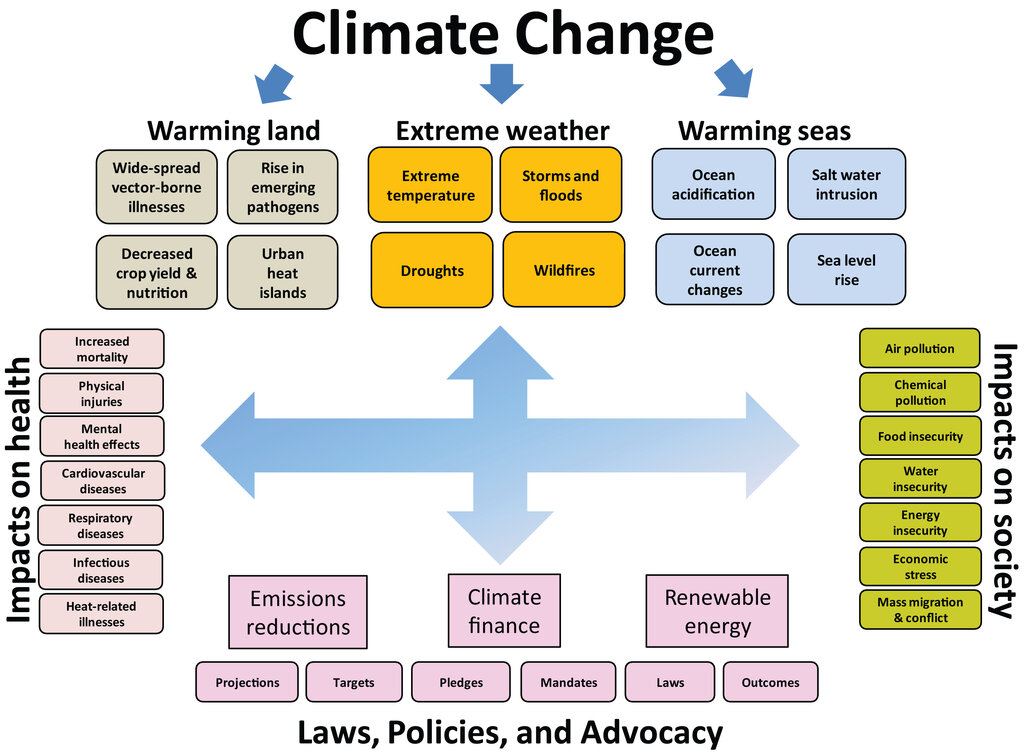
For human societies, the impacts are just as severe. We're seeing more frequent and intense extreme weather events—stronger hurricanes, longer droughts, heavier rainfall, and scorching heatwaves. These events disrupt food and water supplies, damage infrastructure, and pose significant risks to human health. People in vulnerable regions are often the most affected, sometimes forced to leave their homes, becoming climate refugees.
Facing the Challenge
Responding to climate change requires a two-pronged approach: mitigation and adaptation. These strategies are not mutually exclusive; we urgently need both.
Mitigation means tackling the root causes of climate change by reducing greenhouse gas emissions. Adaptation means adjusting to the climatic changes that are already happening.
Mitigation involves making big changes to how we power our world. This includes shifting from fossil fuels to renewable energy sources like wind and solar power, making our homes and vehicles more energy-efficient, and protecting and expanding forests, which act as natural carbon sinks. The goal is to slow down the rate of warming as much as possible.
Adaptation, on the other hand, acknowledges that some degree of climate change is now unavoidable. It focuses on building resilience and reducing vulnerability to its impacts. Examples of adaptation include building sea walls to protect against rising sea levels, developing drought-resistant crops to ensure food security, and creating early warning systems for extreme weather events. These actions help communities cope with their new reality and protect lives and livelihoods.
Design, evaluation, and deployment of adaptation technologies and policies will strengthen our national preparedness for climate change.
Now, let's test your understanding of these fundamental concepts.
What is the primary difference between weather and climate?
The enhanced greenhouse effect is primarily caused by...
By understanding the causes and far-reaching impacts of climate change, we can better appreciate the importance of developing innovative solutions to mitigate its effects and adapt to a changing world.