Biomagnetism Explained
Introduction to Biomagnetism
The Body's Hidden Magnetism
Every time you think, flex a muscle, or feel your heart beat, your body generates tiny electrical currents. These currents, essential for life, also produce something else: incredibly faint magnetic fields. The study of these fields is called biomagnetism.
Biomagnetism
noun
The measurement and study of magnetic fields produced by living organisms.
Unlike the magnets on your fridge, these biological fields are astonishingly weak. The magnetic field from the human brain, for instance, is about one billion times weaker than the Earth's magnetic field that guides a compass. Yet, these subtle signals provide a unique window into the body's inner workings.
A Brief History
The idea that living things produce electricity has been around for centuries. But the ability to detect the resulting magnetic fields is much more recent. The first major breakthrough came in 1963, when physicists Gerhard Baule and Richard McFee successfully measured the magnetic field produced by the human heart. This marked the first-ever recording of a biomagnetic signal from an organ.
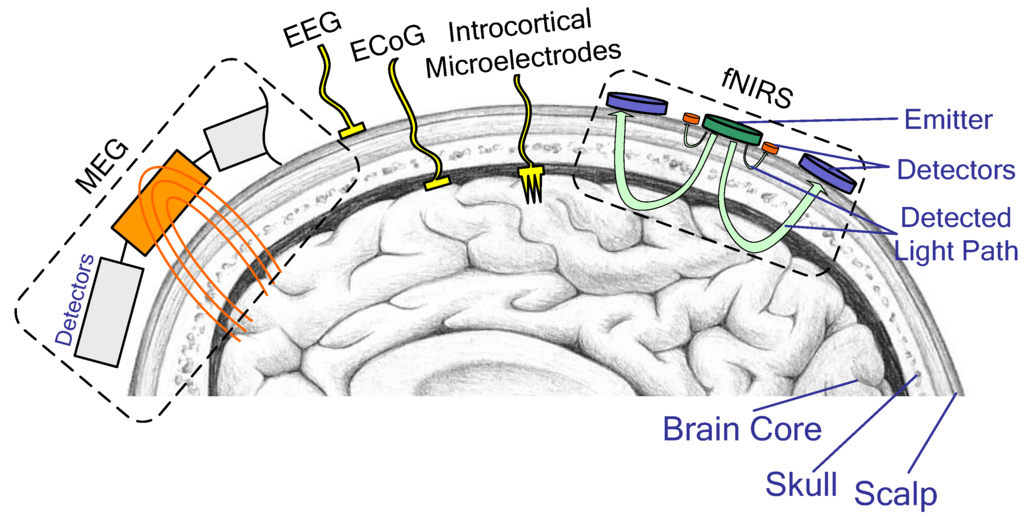
A few years later, in 1968, physicist David Cohen at MIT took the next step. He was the first to detect the even fainter magnetic fields generated by the human brain. These pioneering measurements opened the door to modern techniques that map heart and brain activity with incredible precision, all without touching the body.
Sorting Out the Terms
The world of biological magnetism has a few related terms that can be confusing. Let's clear them up. While they all involve biology and magnetism, they each focus on a different aspect of the relationship.
| Term | Focus | Key Question |
|---|---|---|
| Biomagnetism | Measuring fields from the body | What magnetic signals is the body producing? |
| Bioelectromagnetism | Broader field including both internal and external fields | How do electricity and magnetism behave in and around living things? |
| Magnetobiology | The effects of magnetic fields on the body | How does magnetism (e.g., from the Earth) affect biological processes? |
In short, biomagnetism is about listening to the body's magnetic chatter. Magnetobiology is about seeing how the body reacts when a magnet is nearby. Bioelectromagnetism is the umbrella that covers it all.
Where Do the Fields Come From?
The principle is simple: moving electric charges create magnetic fields. This is a fundamental law of physics.
In our bodies, the "moving charges" are ions—charged atoms like sodium (), potassium (), and calcium (). When a nerve cell fires or a muscle cell contracts, it pumps these ions across its membrane. This flow of ions is a tiny electrical current.
A single cell's current is minuscule. But when millions of cells work in unison, like in the heart muscle during a beat or a cluster of neurons processing information, their tiny magnetic fields add up to create a larger, combined field that can be measured outside the body.
This collective signal is what scientists measure in biomagnetism. Because it's generated directly by cellular activity, it provides a real-time look at what our organs are doing, moment by moment.
Ready to check your understanding?
What is biomagnetism primarily concerned with?
What fundamental principle of physics explains the existence of biomagnetic fields?
Understanding these core ideas provides the foundation for exploring how we measure these fields and what they can tell us about health and disease.