Biological Transport Systems Explained
Introduction to Transport Systems
The Body's Delivery Network
Every living thing, from a single-celled amoeba to a giant sequoia tree, is a bustling hub of activity. Cells need a constant supply of fuel and building materials, and they produce waste that needs to be removed. In very small organisms, substances can just move in and out easily. But for anything larger, this isn't enough. It would be like trying to run a city without roads or delivery trucks.
This is where transport systems come in. They are the internal networks that move essential substances to where they're needed and clear out waste products. Think of it as a biological postal service, delivering oxygen and nutrients while hauling away carbon dioxide and metabolic trash. Without these systems, cells would starve, waste would pile up, and life as we know it wouldn't be possible.
Keeping Things Stable
Organisms work hard to keep their internal conditions just right, a state of balance called homeostasis. Your body temperature, for example, stays around 98.6°F (37°C) whether it's snowing or scorching hot outside. Transport systems are crucial for maintaining this stability.
When you exercise, your muscle cells use up oxygen and glucose faster. The circulatory system responds by speeding up blood flow to deliver more of these substances. It also carries away the extra carbon dioxide and lactic acid produced. By constantly adjusting delivery and removal rates, transport systems ensure every cell has what it needs to function, keeping the entire organism in a stable, healthy state.
homeostasis
noun
The tendency of an organism or a cell to regulate its internal conditions, such as the chemical composition of its body fluids, so as to maintain a stable, constant condition.
How Molecules Move
At the cellular level, transport comes down to moving molecules across a barrier, the cell membrane. This happens in a few fundamental ways. Some methods are passive, meaning they don't require any energy from the cell. Others are active, requiring the cell to spend energy to move substances against their natural flow.
Passive transport is like floating downstream in a river—no effort required. Active transport is like paddling upstream—it takes energy.
The simplest form of passive transport is diffusion. This is the natural tendency of molecules to spread out from an area of high concentration to an area of lower concentration. Imagine dropping a bit of food coloring into a glass of water. At first, the color is concentrated in one spot, but it gradually spreads until the entire glass is evenly colored. The molecules are just moving randomly, but the net effect is a movement from where they are crowded to where they are less crowded.
Osmosis is a special type of diffusion that involves water moving across a semipermeable membrane, like a cell membrane. Water moves from an area with a higher concentration of water (and lower concentration of dissolved substances, or solutes) to an area with a lower concentration of water (and higher concentration of solutes).
A related process is facilitated diffusion. Some molecules are too large or have the wrong charge to simply diffuse across the cell membrane. They need help from special protein channels that act like selective tunnels, allowing only specific substances to pass through. It's still passive transport because it follows the concentration gradient and doesn't require energy.
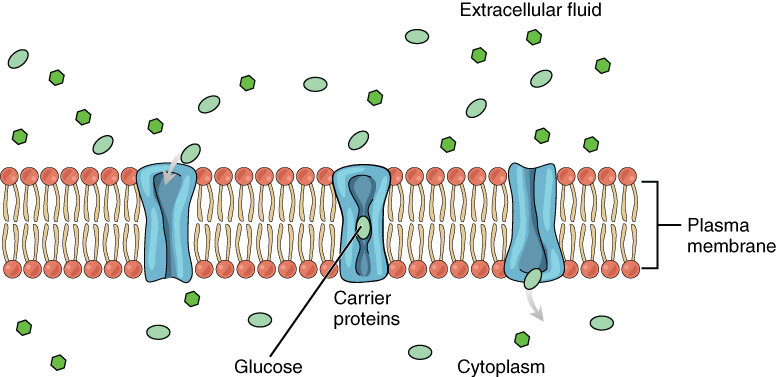
Finally, there's active transport. Sometimes a cell needs to move substances against their concentration gradient—from an area of low concentration to an area of high concentration. This is like pushing a ball uphill. It requires energy, which the cell provides in the form of a molecule called ATP (adenosine triphosphate).
Active transport uses protein "pumps" embedded in the cell membrane. These pumps bind to a specific substance, use energy to change shape, and push the substance to the other side of the membrane, even if it's already crowded there. This process is vital for functions like nerve cell signaling and absorbing nutrients from the gut.
| Transport Type | Energy Required? | Direction of Movement | Example |
|---|---|---|---|
| Simple Diffusion | No | High to low concentration | Oxygen entering blood cells |
| Osmosis | No | High to low water concentration | Plant roots absorbing water |
| Facilitated Diffusion | No | High to low concentration | Glucose entering cells |
| Active Transport | Yes | Low to high concentration | Nerve cells pumping out sodium |
These fundamental mechanisms—diffusion, osmosis, and active transport—are the building blocks for all the complex transport systems found in nature, from the roots of a plant to the arteries of a human.
Ready to check your understanding?
What is the primary reason large organisms need transport systems, while single-celled organisms do not?
Which of the following processes requires a cell to expend energy in the form of ATP?
Understanding how substances move is the first step in appreciating the incredible logistics that keep every living organism running smoothly.