Biological Bases of Behavior Course Design
Introduction to Behavioral Neuroscience
The Brain's Messengers
Everything you think, feel, and do is the result of tiny cells communicating in your body. These specialized cells are called neurons, and they are the fundamental building blocks of your nervous system. There are billions of them, forming a complex network that transmits information with incredible speed.
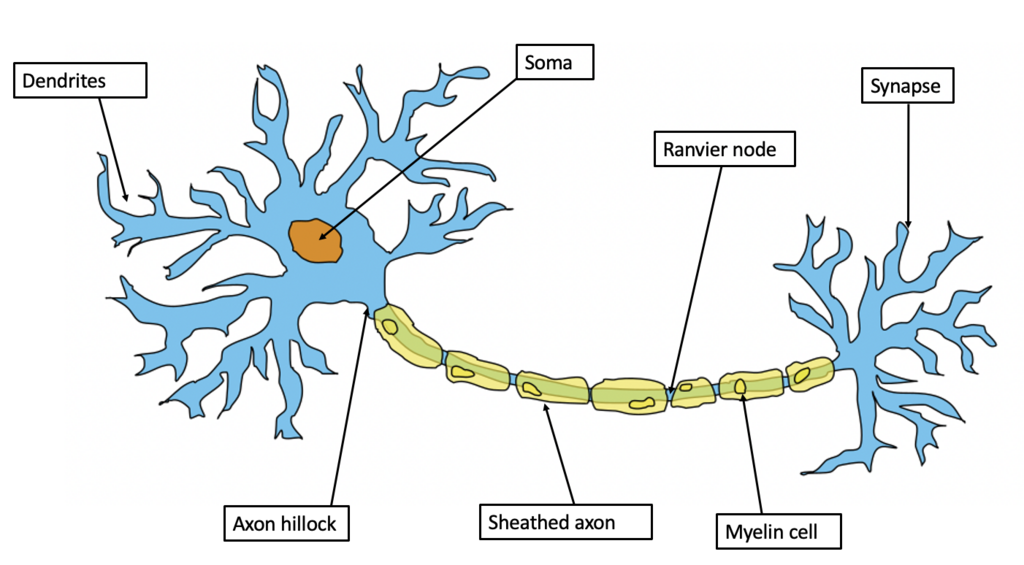
Each neuron has three main parts. Dendrites act like antennas, receiving signals from other neurons. The soma, or cell body, is the neuron's command center, containing the nucleus. If the signal received is strong enough, the soma passes it along to the axon, a long cable that carries the message away from the cell body.
Think of it like a relay race. A signal comes into the dendrites, gets processed in the soma, and then zips down the axon to be passed to the next neuron.
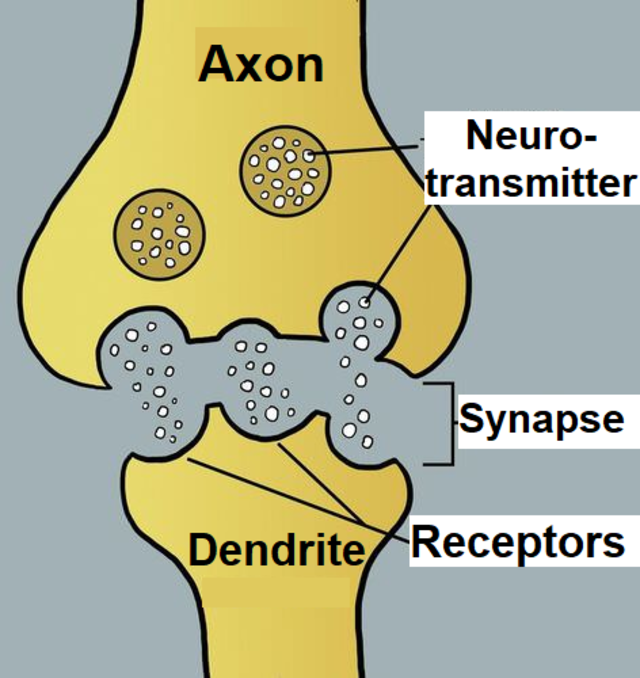
But neurons don't physically touch. There's a tiny gap between the axon of one neuron and the dendrite of the next. This gap is called a synapse. When an electrical signal reaches the end of an axon, it triggers the release of chemical messengers called neurotransmitters. These chemicals float across the synapse and attach to the next neuron's dendrites, passing the message along.
Your Body's Command Center
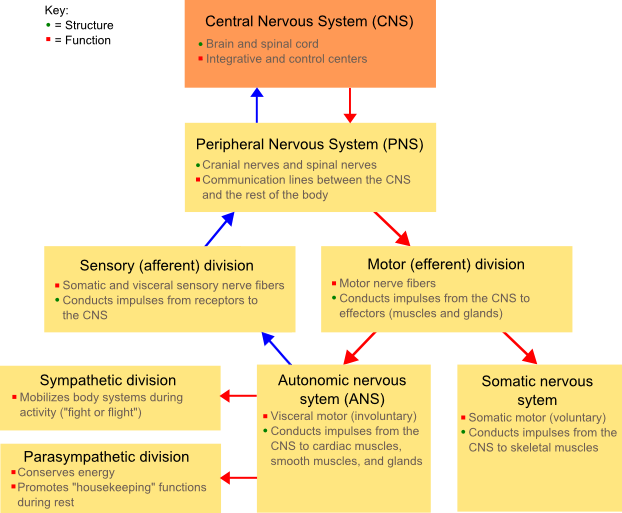
This vast network of neurons is organized into two main parts: the central nervous system and the peripheral nervous system. It's helpful to think of them as a government and its postal service.
nervous system
noun
The network of nerve cells and fibers that transmits nerve impulses between parts of the body.
The Central Nervous System (CNS) is the command center. It consists of the brain and the spinal cord. The brain is the seat of consciousness, where information is processed and decisions are made. The spinal cord is the main highway, relaying messages between the brain and the rest of the body and controlling simple reflexes.
The Peripheral Nervous System (PNS) is the network of nerves that extends from the spinal cord out to your organs, muscles, and limbs. It's the postal service, carrying messages from the body to the CNS (like “my hand is touching something hot”) and carrying commands from the CNS back out to the body (like “pull your hand away!”).
A Quick Tour of the Brain
The brain itself isn't just one solid mass. It has distinct regions, each with specialized functions. For now, we can think about three major parts.
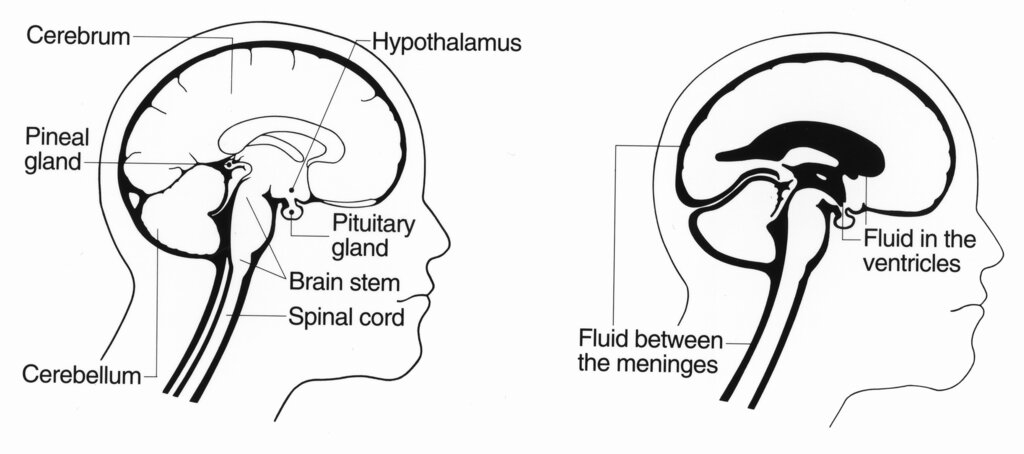
The Cerebrum is the largest part of the brain, the wrinkly outer layer you typically picture. It's responsible for higher-level functions like thought, language, memory, and voluntary movement. It's divided into two hemispheres, left and right.
The Cerebellum, located at the back of the brain beneath the cerebrum, is crucial for balance, coordination, and posture. It helps you perform smooth, controlled movements, from walking to typing.
The Brain Stem connects the cerebrum and cerebellum to the spinal cord. It controls many of the body's essential, automatic functions, such as breathing, heart rate, and sleep. It's the brain's life support system.
What is the primary function of a neuron's dendrites?
The tiny gap between two neurons where chemical signals are passed from one cell to the next is called a ______.