Biological and Industrial Chemistry of s and p Block Elements
Biological Alkali Metals
The Body's Tiny Batteries
Sodium (Na⁺) and Potassium (K⁺) ions are the unsung heroes of our biology. While chemically similar, their roles within our bodies are strictly segregated. You'll find a high concentration of sodium ions in the fluid outside your cells, like a salty ocean. Inside the cells, however, potassium ions reign supreme. This separation isn't accidental; it's a carefully maintained imbalance that powers everything from your thoughts to your heartbeat.
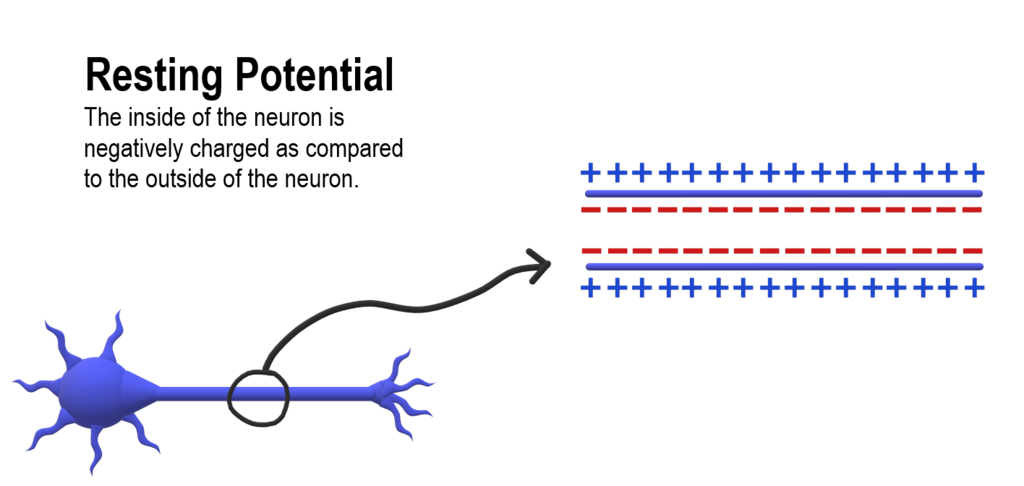
This deliberate separation creates an electrochemical gradient, turning each of your cells into a tiny battery. The inside of the cell is slightly negative relative to the outside, a state known as the resting membrane potential. But how does the body build and maintain this crucial charge? The answer lies with a remarkable molecular machine embedded in our cell membranes: the Sodium-Potassium Pump.
Sodium serves a vital purpose in the human body: via its role as an electrolyte, it helps nerves and muscles to function correctly, and it is one factor involved in the osmotic regulation of water content in body organs (fluid balance).
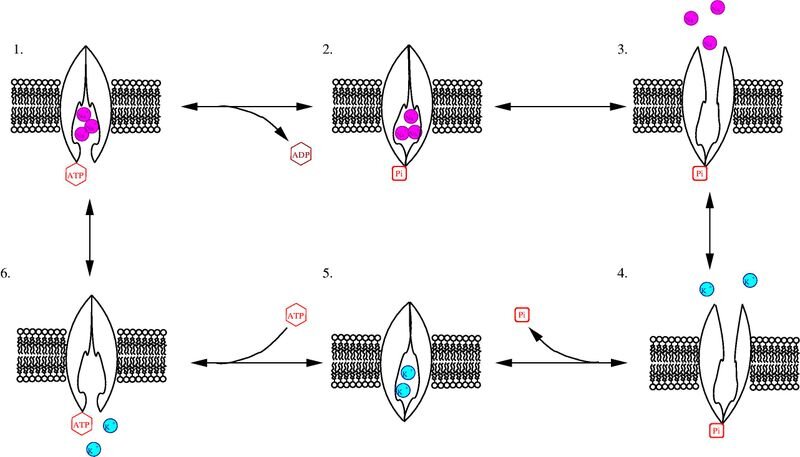
This pump, officially known as , is a protein that acts like a tireless gatekeeper. It's a form of active transport, meaning it uses energy to move ions against their natural direction of flow. For every cycle, it burns one molecule of ATP (adenosine triphosphate), the cell's main energy currency, to forcibly eject three sodium ions from the cell and pull two potassium ions in.
The Spark of Life
The constant work of the Sodium-Potassium pump sets the stage for one of life's most essential processes: the nerve impulse, or action potential. The resting potential it creates is like a drawn bowstring, storing energy. When a neuron is stimulated, specialised protein channels in the membrane spring open. First, voltage-gated sodium channels open, allowing Na⁺ ions to flood into the cell, erasing the negative charge and making it momentarily positive. This is called depolarization.
Immediately after, the sodium channels snap shut and potassium channels open. Now, K⁺ ions rush out of the cell, following their own concentration gradient, which makes the inside of the cell negative again. This rapid swing in membrane voltage is the action potential, an electrical signal that zips down the length of a nerve fibre.
Why Sodium and Not Potassium?
One might wonder why cells use different ions for these roles. Why is Na⁺ pumped out and K⁺ pumped in? The answer lies in their physical size and their interaction with water. Although a potassium ion is larger than a sodium ion, its interaction with surrounding water molecules is weaker. This interaction is described by .
Ion channels are highly selective pores. For an ion to pass through, it must shed its shell of water molecules. The channel's interior is lined with amino acids that mimic this water shell. For a potassium ion, the energy cost of shedding its water molecules is easily repaid by the favourable interactions inside the potassium channel. A smaller sodium ion, with its tightly bound water shell, finds this trade-off energetically unfavourable and is thus excluded. The reverse is true for sodium channels.
Beyond nerve impulses, this ion gradient also controls cell volume. Because water moves to dilute solutes, the constant pumping of sodium out of the cell prevents an excessive influx of water. Without the pump, water would rush in via osmosis, causing the cell to swell and burst. Thus, the work of this single protein is fundamental to nerve communication, muscle contraction, and maintaining the very integrity of our cells.
Time to test your understanding of these vital ions.
In a typical resting cell, where are sodium (Na⁺) and potassium (K⁺) ions found in the highest concentrations?
What is the direct energy source for the Sodium-Potassium Pump (Na⁺/K⁺-ATPase) to move ions against their concentration gradients?
From powering our thoughts to keeping our cells from bursting, the distinct biological roles of sodium and potassium highlight how simple chemical properties translate into complex physiological functions.