Biochemistry Principles with Yang Rongwu
Introduction to Biochemistry
The Chemistry of Life
At its heart, biochemistry is the study of the chemical processes within and relating to living organisms. Think of it as the chemistry of life itself. Every breath you take, every meal you digest, and every thought that crosses your mind is powered by a symphony of chemical reactions. Biochemistry seeks to understand this symphony, from the smallest molecules to the complex networks that keep us alive.
biochemistry
noun
The branch of science concerned with the chemical and physicochemical processes and substances that occur within living organisms.
It's the field that bridges biology and chemistry. Biologists study life, and chemists study matter. Biochemists study the matter that makes up life, exploring how the interactions of these molecules give rise to the phenomenon we call living.
The Four Building Blocks
Living things are built from four main types of large organic molecules, often called biomolecules or macromolecules. Think of them as the essential building blocks for constructing a cell, just as you'd use bricks, wood, and steel to build a house.
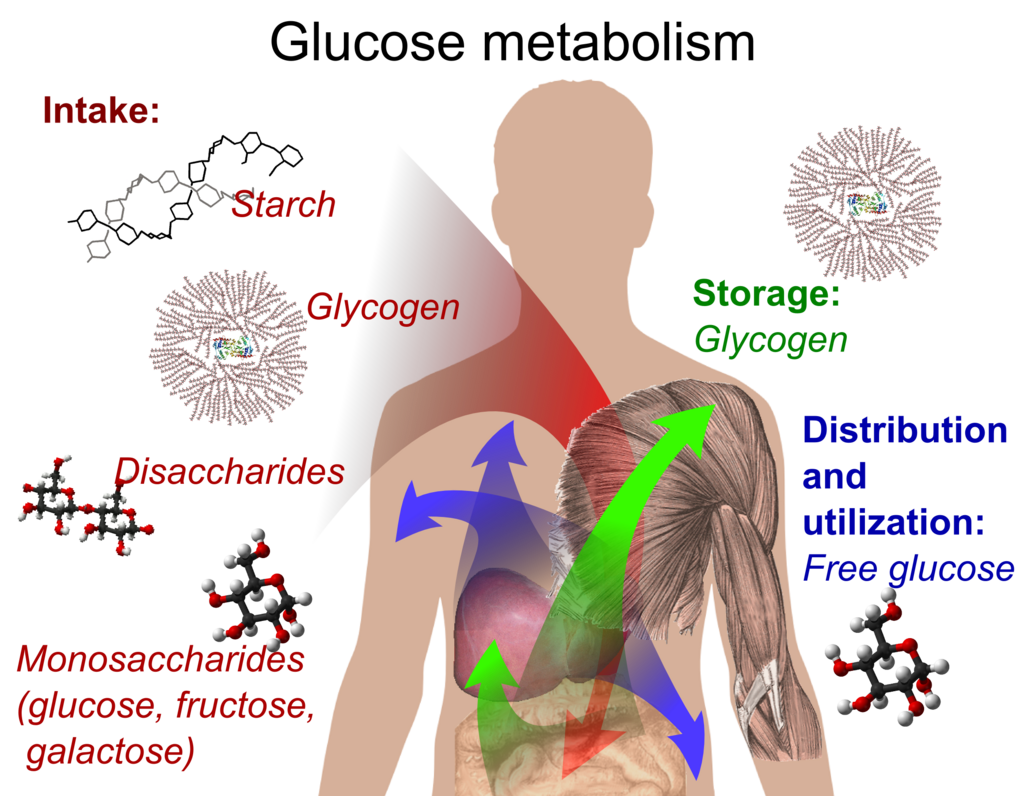
Carbohydrates are our primary source of energy. Composed of carbon, hydrogen, and oxygen, they are essentially sugars and starches. When you eat a piece of bread or a banana, your body breaks down the carbohydrates into simpler sugars, like glucose, which your cells use as fuel. Some carbohydrates also provide structural support, like the cellulose that makes up the cell walls of plants.
Proteins are the workhorses of the cell. They do almost everything. They're built from smaller units called amino acids, linked together in long chains. The sequence of these amino acids determines the protein's unique 3D shape, which in turn dictates its function. Proteins act as enzymes to speed up reactions, provide structural support like collagen in your skin, transport substances like hemoglobin carrying oxygen in your blood, and much more.
Lipids, more commonly known as fats, oils, and waxes, are essential for storing energy long-term. They are also the primary components of cell membranes, forming a flexible barrier that separates the inside of a cell from its environment. Lipids don't mix well with water, a property that is crucial for their barrier function.
Nucleic acids, like DNA (deoxyribonucleic acid) and RNA (ribonucleic acid), are the information molecules of the cell. DNA contains the genetic blueprint for building an organism, a complete instruction manual for everything the cell will ever do. RNA helps carry out these instructions, translating the genetic code into proteins.
Together, these four types of molecules work in concert to build cells, power organisms, and pass genetic information from one generation to the next.
Enzymes The Reaction Accelerators
Chemical reactions in cells need to happen quickly and efficiently. If your cells had to wait for these reactions to occur on their own, life would be too slow to be possible. This is where enzymes come in.
Enzymes are a special class of proteins that act as biological catalysts. A catalyst is a substance that speeds up a chemical reaction without being consumed in the process. Each enzyme is highly specific, meaning it typically catalyzes only one or a few types of reactions. It works by binding to one or more molecules, called substrates, at a specific location known as the active site.
This binding brings the substrates together in the perfect orientation, making it much easier for the reaction to occur. After the reaction is complete, the enzyme releases the new molecules, called products, and is ready to start the cycle all over again. Without enzymes, metabolism would grind to a halt.
Metabolic Pathways
Individual biochemical reactions don't happen in isolation. Instead, they are organized into intricate, interconnected series called metabolic pathways. Think of a metabolic pathway as a cellular assembly line. A starting molecule enters at one end, and is modified step-by-step by a sequence of enzymes, until a final product is made.
There are two main types of metabolic pathways:
-
Catabolic pathways break down complex molecules into simpler ones, releasing energy in the process. The digestion of food is a catabolic process.
-
Anabolic pathways build complex molecules from simpler ones, and this process requires an input of energy. Using amino acids to build a new protein is an anabolic process.
These pathways are carefully regulated, allowing cells to control their chemical environment, respond to changes, and maintain a stable internal state known as homeostasis. The study of these pathways is central to understanding health and disease.
The diverse metabolic pathways are fundamental to all living organisms, as they harvest energy, synthesize biomass components, produce molecules to interact with the microenvironment, and neutralize toxins.
Now, let's test your understanding of these core concepts.
Biochemistry is best described as the study of:
Which class of biomolecules is primarily responsible for storing the genetic blueprint of an organism?
This introduction lays the groundwork for exploring the fascinating world of biochemistry. By understanding these fundamental molecules and processes, we can begin to unravel the complex chemistry that defines life.