Biochemistry Dosage Calculations
Introduction to Drug Dosage Calculations
The Goldilocks Principle of Medicine
Taking medicine is all about finding the “just right” amount. Too little, and the drug won't have the desired effect. A headache might linger, or an infection could persist. Too much, and the drug can become harmful, causing side effects or even toxicity. This sweet spot is often called the therapeutic window.
The goal of dosing is to keep a drug's concentration in the body within this therapeutic window—high enough to be effective, but low enough to be safe.
Getting this balance right is one of the most critical tasks in medicine. It's not just about reading a label; it's a precise science that ensures a medication helps rather than harms. Accurate dosing is the foundation of safe and effective treatment.
Biochemistry's Role in Dosing
To understand how to dose a drug, we first need to understand how the body will handle it. This is where biochemistry and pharmacology meet. Pharmacology is the study of how drugs affect the body, but biochemistry explains the why and how at a molecular level. Every drug is a chemical, and your body is a complex system of chemical reactions. Pharmacology is essentially applied biochemistry.
The presenter reviews 4 key criteria that influence drug levels and kinetics in the body; specifically absorption, distribution, metabolism, and excretion.
A drug's journey through the body has four main stages, often called ADME:
- Absorption: How the drug gets into your bloodstream.
- Distribution: Where the drug goes in your body after it's absorbed.
- Metabolism: How your body chemically changes or breaks down the drug, often in the liver.
- Excretion: How your body gets rid of the drug, usually through the kidneys.
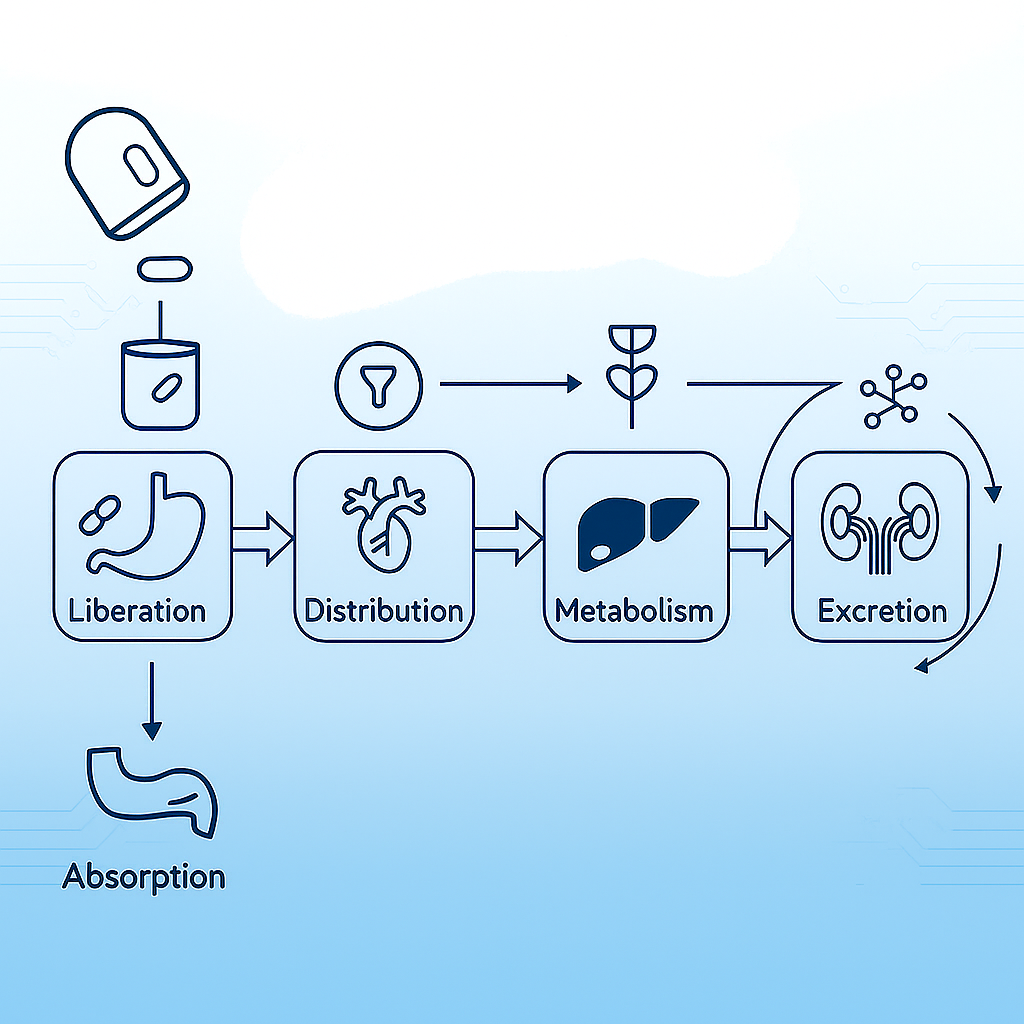
Each of these steps is a series of biochemical processes. By understanding them, we can predict how much of a drug will reach its target, how long it will stay active, and how the body will eventually clear it. This knowledge is essential for calculating a dose that will work as intended.
Principles of Dosage Determination
If everyone's body chemistry were identical, dosing would be simple. But we're all unique, so the “just right” dose isn't a single number. The science of determining the correct dosage is known as posology.
Posology
noun
The branch of medical science concerned with the determination of appropriate doses of drugs or other therapeutic agents.
Several factors influence how an individual processes a drug, requiring adjustments to the standard dose. These include:
- Age: Infants and the elderly often metabolize drugs differently than adults.
- Weight and Body Size: A larger person may need a higher dose to achieve the same concentration of a drug in their body.
- Genetics: Your genes determine which enzymes your body produces to break down drugs. Some people are naturally "fast metabolizers," while others are "slow metabolizers."
- Health Status: The health of your liver and kidneys is crucial. Since these organs are key players in metabolism and excretion, any impairment can cause a drug to build up to dangerous levels.
- Other Medications: Different drugs can interact, affecting how they are absorbed, metabolized, or excreted.
The right dose is not one-size-fits-all. It's a personalized calculation based on an individual's unique biochemistry.
By considering these variables, healthcare professionals can move from a standard dose to a personalized one, maximizing the drug's benefits while minimizing its risks. This careful, biochemically-informed approach is the key to modern pharmacology.