Biochemical Assays for Food Carbohydrate Analysis
Carbohydrate Structure
The Building Blocks
Carbohydrates are often categorized by their size. Think of them like building with LEGOs. You can have a single brick, a few bricks snapped together, or a massive, complex structure.
Monosaccharide
noun
The simplest form of carbohydrate, consisting of a single sugar unit. It cannot be broken down into simpler sugars.
Monosaccharides are the single bricks. They are the fundamental units from which all other carbohydrates are built. The most common ones have six carbon atoms, like glucose, fructose, and galactose. Their chemical formula is often a multiple of , which is where the name “carbohydrate” comes from: carbo- (carbon) and hydrate (water).
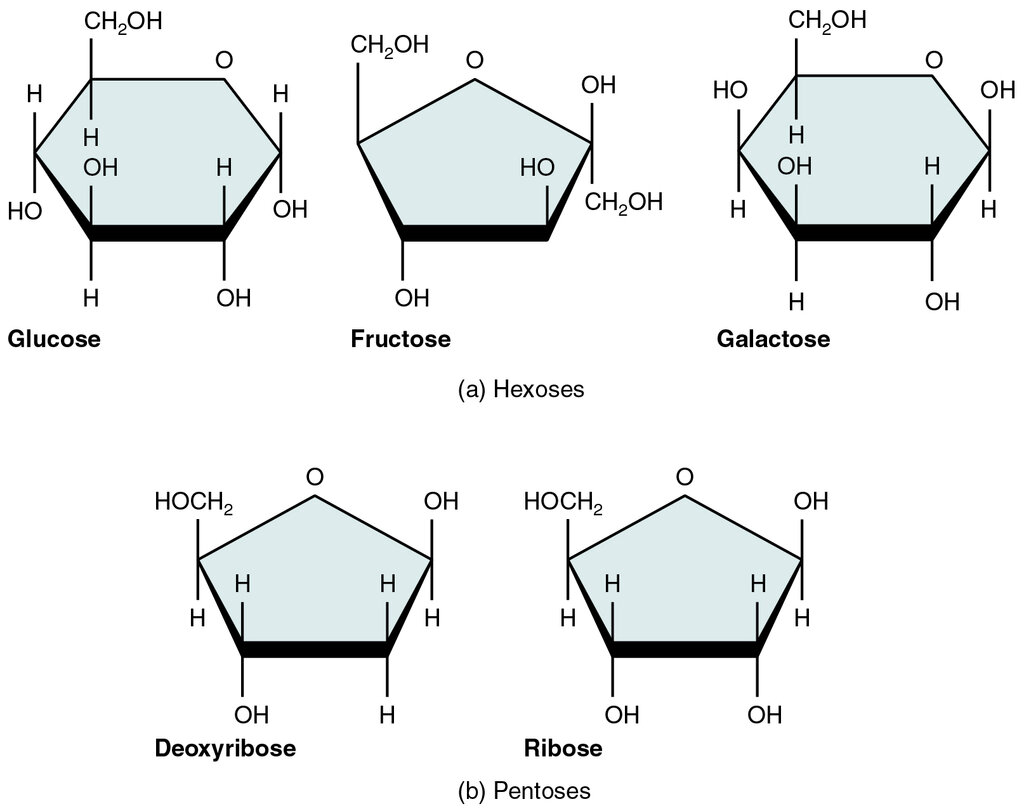
When you link two monosaccharides together, you get a disaccharide. A familiar example is sucrose, or table sugar, which is made of one glucose unit and one fructose unit. Lactose, the sugar in milk, is another; it's formed from glucose and galactose.
Chains with a few monosaccharides (typically 3 to 10) are called oligosaccharides. They often attach to proteins and lipids on cell surfaces and play roles in cell recognition.
Finally, when you link hundreds or thousands of monosaccharides, you get polysaccharides. These are the giants of the carbohydrate world. Starch, which plants use to store energy, and cellulose, which gives plants their structure, are both polysaccharides made entirely of glucose units. The way those units are linked, however, makes all the difference.
A Question of Handedness
The structure of a carbohydrate isn't just about how many units are in the chain. The spatial arrangement of its atoms is critical. Many molecules in biology, including sugars, are chiral. This means they exist in two mirror-image forms, like your left and right hands. They are the same in terms of components but are arranged differently in space and are not superimposable.
These two forms are called D- (from the Latin dexter, for right) and L- (laevus, for left) configurations. This designation is based on the orientation of the hydroxyl () group on the chiral carbon atom farthest from the carbonyl group. If it points to the right in a standard Fischer projection, it's a D-sugar. If it points to the left, it's an L-sugar.
This might seem like a small detail, but it has huge biological consequences. The enzymes in our bodies are also chiral and are highly specific. Most organisms, including humans, can only metabolize D-sugars. L-sugars, while structurally almost identical, won't fit into the active sites of our enzymes. This is why L-glucose, the mirror image of the glucose our body uses, tastes sweet but provides no calories.
Rings and Anomers
While we often draw monosaccharides as straight chains, in water they usually form stable ring structures. This happens when the carbonyl group (the ) reacts with a hydroxyl group on the same molecule. When this cyclization occurs, the carbon that was part of the carbonyl group becomes a new chiral center. This carbon is called the anomeric carbon.
The orientation of the new hydroxyl group on the anomeric carbon creates two different forms, called anomers: alpha (α) and beta (β).
- In the alpha (α) form, the anomeric hydroxyl group is on the opposite side of the ring from the group.
- In the beta (β) form, the anomeric hydroxyl group is on the same side of the ring as the group.
This simple difference in orientation dramatically affects the properties of polysaccharides. Starch is made of α-glucose units. The α-linkages cause the chain to form a loose helix, which is easy for our digestive enzymes to break down for energy.
Cellulose, on the other hand, is made of β-glucose units. The β-linkages result in long, straight, rigid chains that pack together into strong fibers. Most animals, including humans, lack the enzyme needed to break these β-linkages, which is why we can't digest cellulose. It simply passes through our system as dietary fiber.
The small difference between an α- and β-linkage is what makes a potato digestible and wood indigestible.
Time to check your understanding of these structural concepts.
What is the name for a carbohydrate made by linking two monosaccharide units together?
The structural difference between starch and cellulose is based on the type of linkages between their glucose units. Starch is made of ____-glucose, while cellulose is made of ____-glucose.
Understanding these details—from single units to their 3D shape—is key to seeing how carbohydrates work in our bodies and in the food we eat.