Binomial Nomenclature: Naming Life's Diversity
Introduction to Taxonomy
A Place for Everything
The world is filled with an incredible diversity of life, from the tiniest bacteria to the largest blue whales. To make sense of it all, biologists use a system of organization. Think of it like a massive library. Instead of books, it contains every living thing on Earth. To find anything, you need a reliable cataloging system. That system is called taxonomy.
Taxonomy
noun
The science of naming, defining, and classifying groups of biological organisms on the basis of shared characteristics.
The main goal of taxonomy is to create a universal framework for organizing life. This allows scientists from different countries who speak different languages to communicate clearly about the same organism. It's not just about putting things in boxes; it's about understanding how all life is related. By grouping organisms based on their similarities, taxonomy reveals patterns of evolution and helps us piece together the family tree of life.
The Biological Address
Taxonomy uses a hierarchical system, which means it has different levels of classification, arranged from the broadest to the most specific. You can think of it like your home address. It starts with a very broad category (your country) and gets progressively narrower (state, city, street) until it points to one specific location (your house).
In biology, this system has eight main levels. Each level is called a taxon (plural: taxa).
A domain is the highest and most general level. All life is grouped into just three domains. A kingdom is the next level down. From there, it gets more and more specific with phylum, class, order, family, and genus. Finally, the most specific level is species, which typically refers to a group of organisms that can interbreed and produce fertile offspring.
| Taxon | Human | Gray Wolf |
|---|---|---|
| Domain | Eukarya | Eukarya |
| Kingdom | Animalia | Animalia |
| Phylum | Chordata | Chordata |
| Class | Mammalia | Mammalia |
| Order | Primates | Carnivora |
| Family | Hominidae | Canidae |
| Genus | Homo | Canis |
| Species | sapiens | lupus |
From Aristotle to DNA
The idea of classifying organisms isn't new. The Greek philosopher Aristotle grouped animals over 2,000 years ago based on simple traits, like whether they lived on land, in water, or in the air. This was a great start, but it had its limits. For example, a bat and a bee both fly, but they aren't closely related.
Modern taxonomy began in the 18th century with a Swedish botanist named Carl Linnaeus. He created a formal system of naming and classifying organisms that we still use today. Linnaeus based his system on shared physical characteristics. This was a huge leap forward.
As our scientific understanding grew, so did our methods of classification.
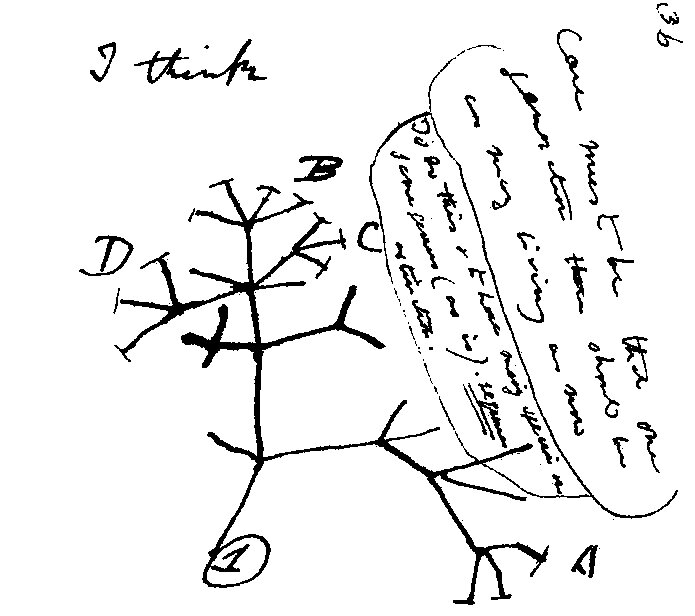
The biggest change came with the ability to analyze DNA. Scientists can now compare the genetic codes of different organisms to determine how closely they are related. This has led to some major revisions of the tree of life. Sometimes, two species that look very different are actually close relatives, while two that look similar are only distantly related. Taxonomy is a dynamic science, always being updated as we discover more about life's complex history.
Taxonomy is less about creating a fixed filing system and more about mapping a constantly evolving family tree.
Ready to check your understanding of these foundational concepts?
What is the primary goal of taxonomy?
Which of the following lists the taxonomic ranks in the correct order from most general to most specific?
Understanding this system of classification is the first step toward appreciating the immense and interconnected web of life on our planet.