Bindcraft Protein Engineering
Protein Design Basics
From Sequence to Shape
At the heart of every living thing are proteins, tiny machines that perform countless jobs. What gives a protein its specific ability, whether it's digesting food or carrying oxygen, is its unique three-dimensional shape. But how does a protein get its shape? It all starts with a simple, linear chain.
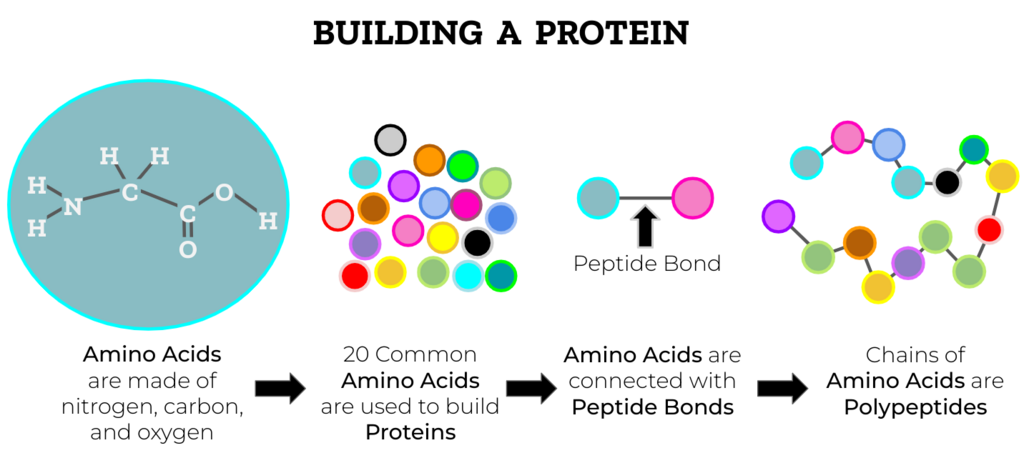
This chain is made of building blocks called amino acids. There are twenty common types, each with its own chemical personality. Some are attracted to water, others are repelled by it. Some are bulky, others are small. Some carry positive charges, others negative.
The specific order, or sequence, of these amino acids determines how the chain will spontaneously fold itself into a complex, stable structure. Imagine a long string with magnets, velcro, and oily beads attached at different points. If you dropped it into a bucket of water, it would wiggle and fold until the magnets snapped together, the velcro stuck, and the oily parts clustered away from the water. The final shape would be a direct result of the order of those attachments. A protein does the same thing, driven by chemical forces to find its most stable configuration, known as its native state.
amino acid
noun
A type of organic molecule that serves as the basic building block of proteins.
This fundamental link between sequence and structure is the key to protein design. If we can write the sequence, we can, in theory, dictate the final shape and function.
Designing from Scratch
For a long time, scientists were limited to studying the proteins nature had already made. But what if we could create entirely new proteins, custom-built for specific tasks? This is the goal of de novo protein design, which means “from the new” or “from scratch.”
It’s an enormous challenge. You aren't just modifying an existing protein; you're inventing one. The goal is to devise an amino acid sequence that will fold into a completely novel structure that has never been seen in nature. This is like trying to write a meaningful poem in a language you're just learning. You have to understand the grammar (chemical forces) and vocabulary (amino acids) perfectly to create something that makes sense.
De novo design involves predicting a sequence that will fold into a desired, novel shape.
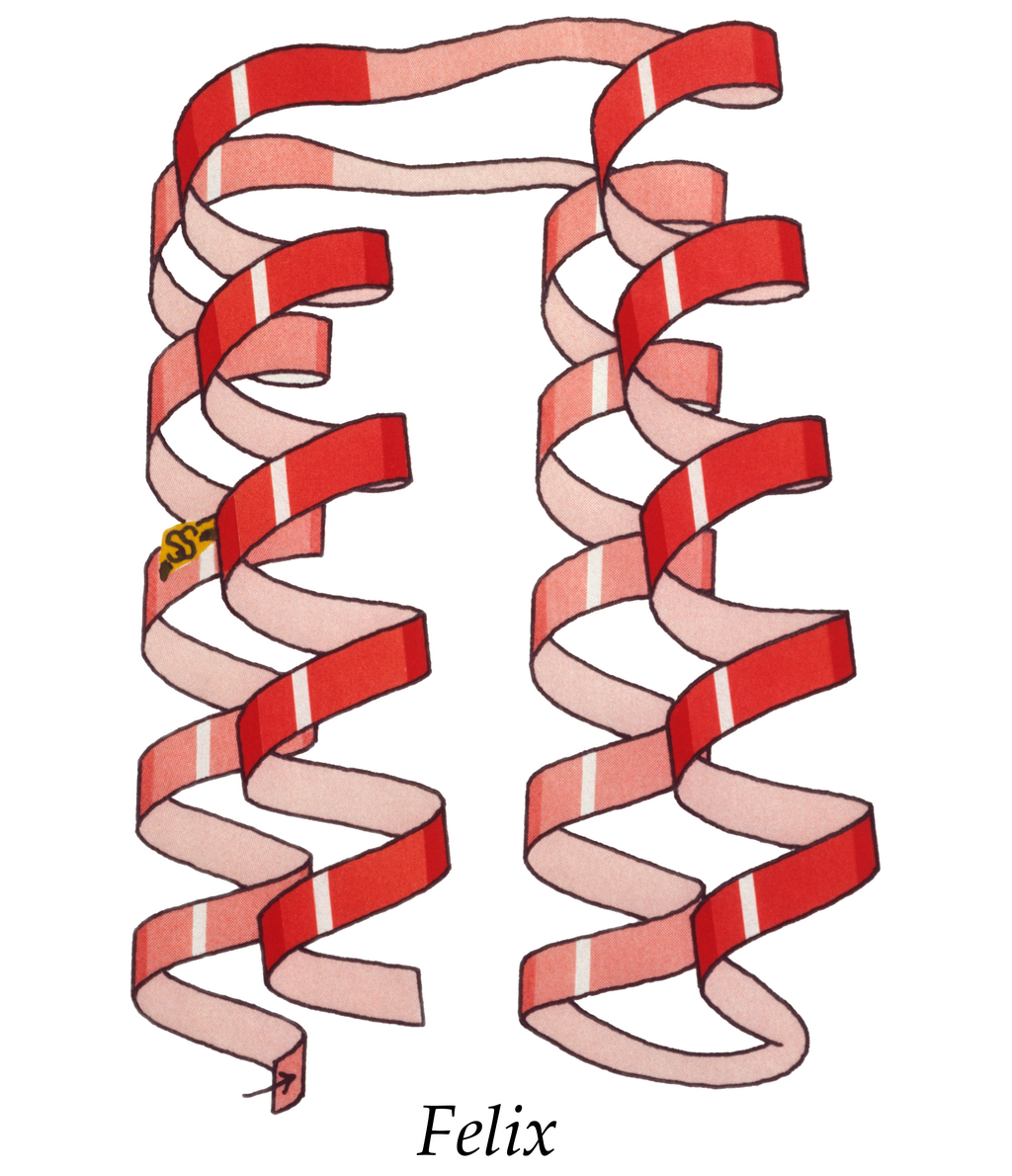
One of the first major successes in this field came in the 1990s with the design of a protein called Felix. It was a simple, four-helix bundle, but it proved that the basic principles of protein folding were understood well enough to build a protein from the ground up.
Early de novo design was a slow, painstaking process. Scientists relied on their knowledge of physics and chemistry to hand-craft sequences. Today, the process is heavily aided by computers.
The Role of Computers
Predicting how a sequence of hundreds of amino acids will fold is a staggeringly complex computational problem. The number of possible shapes is astronomical. To tackle this, scientists developed sophisticated software that could model the forces between atoms and search for the lowest-energy, most stable fold.
This is where computational modeling becomes essential. Instead of building a physical protein and hoping it folds correctly, which is expensive and time-consuming, designers can test thousands of sequences in a computer simulation. They can ask the software: "What sequence of amino acids is most likely to fold into this target shape?"
If we can learn about the proteins that nature has made, we can learn to build our own.
One of the most powerful and influential software suites for this is Rosetta. Developed at the University of Washington, Rosetta can be used for both predicting a protein's structure from its sequence and for the reverse problem: designing a sequence that will adopt a desired structure. A key component, RosettaDesign, allows researchers to specify a target backbone shape and then explores different amino acid sequences to find one that would be stable in that conformation.
While computers handle the heavy lifting of calculating energies and exploring possibilities, the process still requires human creativity. The designer must provide the initial idea, the target shape, and the functional requirements. The computer is a powerful tool, but the vision comes from the scientist.
Modifying Existing Proteins
Besides creating proteins from scratch, scientists also engage in protein redesign. This involves taking a protein that already exists in nature and tweaking its amino acid sequence to alter its properties. This approach is often simpler and more direct than de novo design.
Think of it as remodeling a house versus building a new one. In redesign, the basic structure—the protein's overall fold or "scaffold"—is already there. You're just changing a few key parts, perhaps to make an enzyme more efficient, more stable at high temperatures, or able to bind to a different molecule.
For example, an industrial enzyme used in detergents might be redesigned to work better in cold water. Scientists would identify the amino acids in the original enzyme that are crucial for its stability and function, and then use computational tools to predict mutations that would improve its performance in the new environment without disrupting its essential structure.
Now, let's test your understanding of these foundational concepts.
What is the primary factor that determines a protein's unique three-dimensional shape?
The term 'de novo protein design' refers to what process?
Protein design combines our understanding of biology, chemistry, and computer science. By learning to write the language of amino acid sequences, we are beginning to create a whole new world of functional molecules.