Binary Framing for Uncertainty Compression
Binary Framing Architecture
The Binary Bottleneck
In any complex environment, the number of possible states, or the 'state space,' can be enormous. While AI can explore this vast landscape of possibilities, a human decision-maker cannot. This is the reality of bounded rationality—our cognitive capacity is finite, especially when decisions must be made quickly. The challenge isn't just about generating options; it's about making a choice that is both effective and timely.
This is where binary framing architecture comes in. Instead of navigating an infinite sea of possibilities, we deliberately collapse the state space into a focused, 'A vs. B' choice. This isn't an act of oversimplification. It's a strategic architectural decision designed to channel analytical power, both human and machine, toward the most critical pivot point. The process transforms a noisy, multi-dimensional problem into a single, actionable question.
By forcing a choice between two well-defined alternatives, you achieve uncertainty compression. A vast field of probabilistic outcomes is distilled into a concrete trade-off. This doesn't eliminate uncertainty, but it makes it manageable. You are no longer asking, "What are all the things that could happen?" Instead, you ask, "Which of these two futures do we commit to?" This shift focuses the conversation on consequences and clarifies the stakes.
Signal From Noise
AI models are powerful but can produce an overwhelming volume of output. This output contains both valuable insights (signal) and irrelevant possibilities (noise). A binary frame acts as a high-pass filter, allowing only the most critical information to pass through for a decision. It forces the AI's predictive power to be applied to a specific, high-stakes question, maximizing the signal-to-noise ratio in the final output you receive.
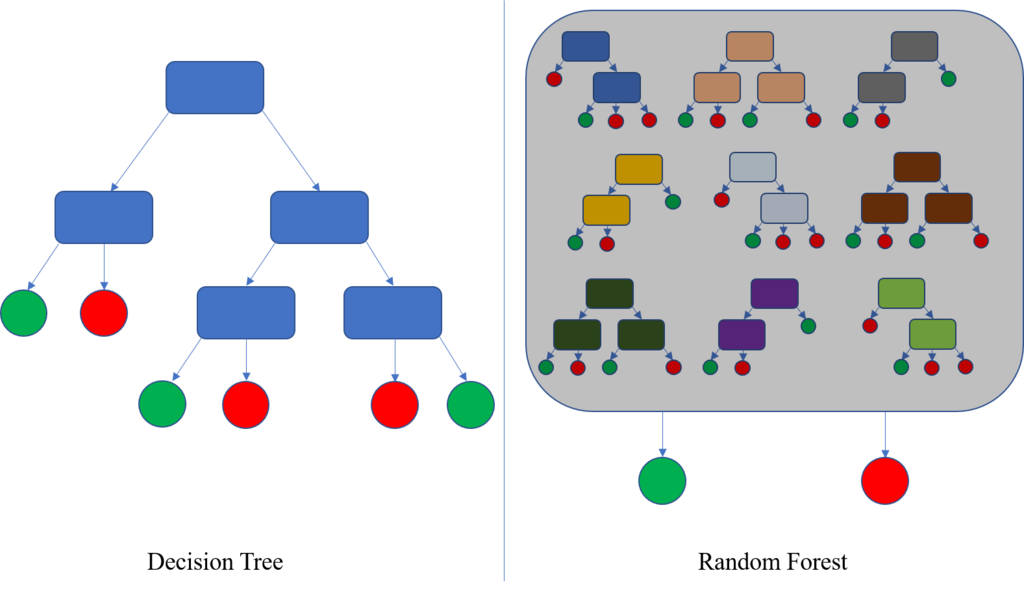
This structured approach helps you reach the 'economic frontier' of decision framing. This is the point where the cognitive and computational cost of analyzing more options exceeds the marginal benefit of any potential improvement in the outcome. A binary frame helps you find this frontier quickly. It accepts that a perfect, exhaustive analysis is often impossible or impractical. The goal is to make a robust, high-utility decision with the resources available, not to chase a theoretical optimum.
Building Decision Frameworks That Reduce Cognitive LoadEffective executives rely on structured decision frameworks that help break complex challenges into manageable components.
Ultimately, moving from an expansive state space to a binary frame is not a retreat from complexity. It is a sophisticated method for mastering it. It's a deliberate architectural choice that aligns AI's capabilities with human cognitive limits, ensuring that analysis leads to action, not paralysis.
What is the primary problem that 'binary framing architecture' is designed to address?
By collapsing a vast field of possibilities into a focused 'A vs. B' choice, binary framing achieves __________.
This deliberate structuring allows for more effective and rapid decision-making in high-velocity environments.