Binary Code Fundamentals
Introduction to Binary Code
The Language of Computers
At its core, a computer doesn't understand words, images, or sounds. It only understands two things: on and off. Everything you see on your screen right now is the result of billions of tiny electronic switches flipping between these two states. To make sense of this, computers use a language called binary code.
Binary is a number system that uses only two digits: 0 and 1. Think of it like a light switch. A 1 means the switch is on, and a 0 means it's off. By stringing together these ones and zeros, computers can represent any piece of information imaginable.
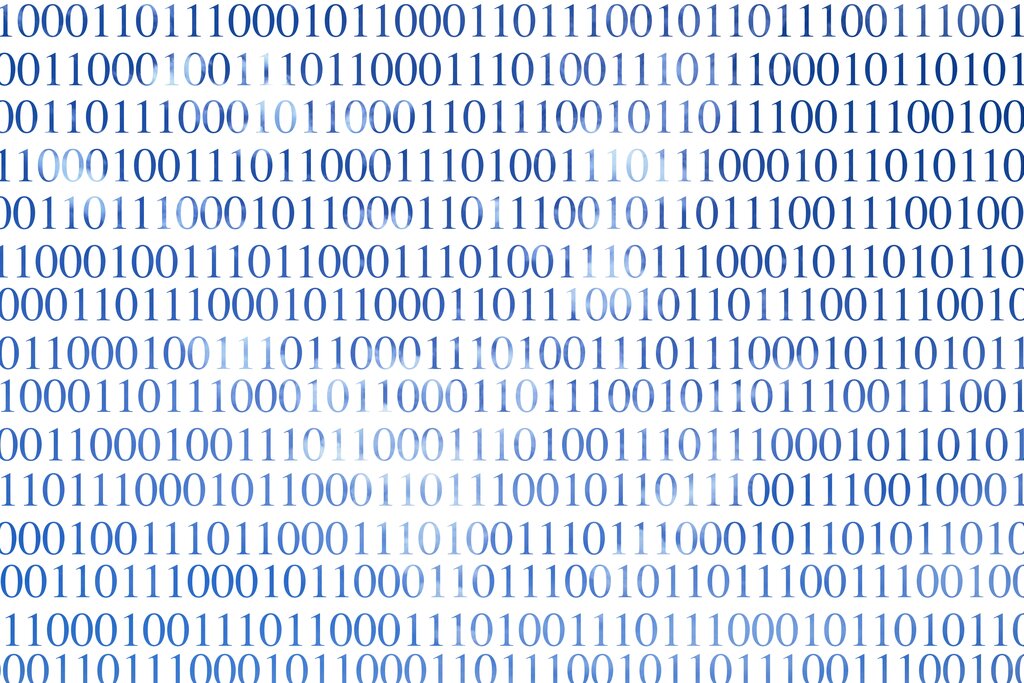
Each 0 or 1 is called a bit, which is short for "binary digit." A bit is the smallest possible unit of data in computing. When you combine eight bits, you get a byte. A byte can represent 256 different values, enough to store a single letter, number, or symbol.
For example, the letter 'A' is represented in binary as
01000001.
Counting with Two Digits
We're used to the decimal system, or base-10, which has ten digits (0-9). In this system, each position in a number represents a power of 10. The number 123 is really .
The binary system, or base-2, works the same way, but each position represents a power of 2. Let's look at the binary number 101.
| Position (from right) | Power of 2 | Value |
|---|---|---|
| 1st | 1 | |
| 2nd | 2 | |
| 3rd | 4 |
To convert 101 to a decimal number, we multiply each digit by its corresponding power of 2 and add them up.
So, the binary number 101 is equal to the decimal number 5. With just these two digits, we can represent any number, no matter how large.
A Brief History
While binary is the foundation of modern computing, the idea has been around for centuries. Systems similar to binary appeared in ancient China and India. However, the modern binary number system was fully documented by the German mathematician Gottfried Wilhelm Leibniz in the late 17th century. He saw it as a reflection of Christian theology, with 1 representing God and 0 representing the void.
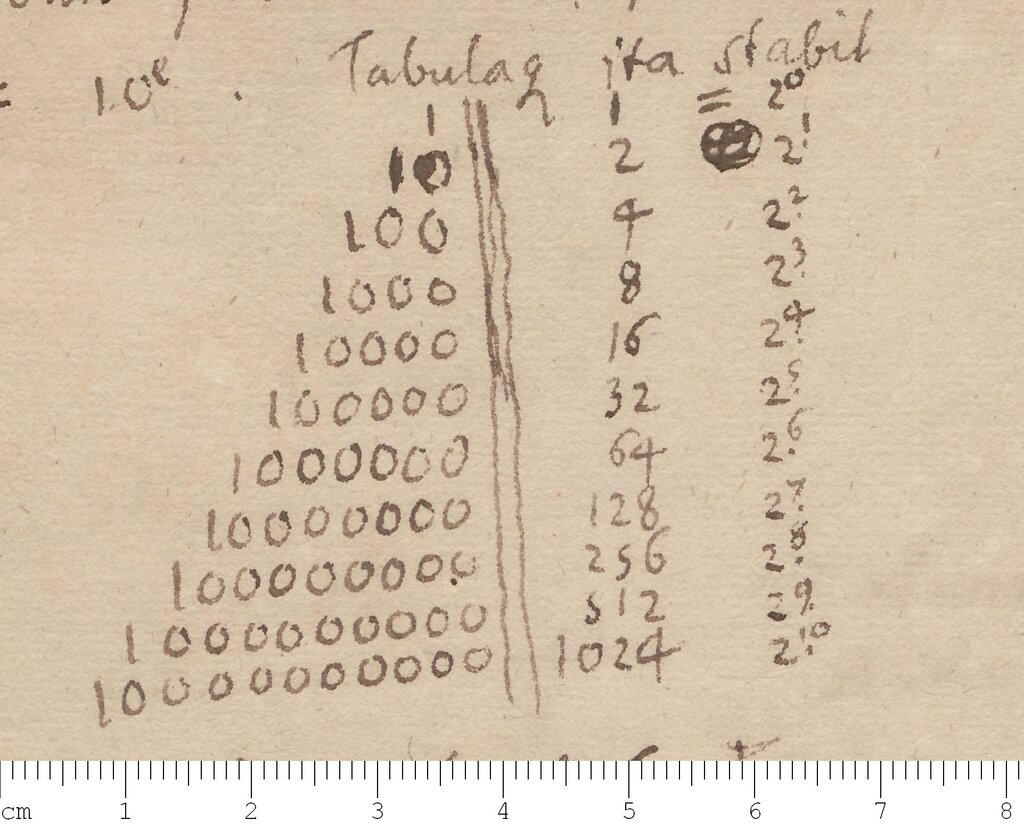
Binary didn't become practical until the invention of electronic computers in the 20th century. Early computers used vacuum tubes and transistors, which are essentially switches. These components could be either on or off, making binary the natural and most reliable way to build their logic circuits. This simple, two-state system is less prone to errors from electrical interference than a system with more states, and it's what makes modern digital technology so robust and powerful.
So next time you use your phone or computer, remember the simple language working behind the scenes. Every photo you take, every message you send, is just a beautifully complex sequence of ones and zeros.
Ready to check your understanding?
What is the smallest possible unit of data in computing?
How many bits are in a byte?