Bikepacking Route Planning and Cycling Training
Bikepacking Basics
What is Bikepacking?
Bikepacking is the combination of cycling and backpacking. It’s about strapping gear to your bike and setting off on an adventure, usually for multiple days. Unlike traditional bike touring, which often involves heavy racks and panniers on road bikes, bikepacking favors a lightweight, minimalist setup. This allows riders to tackle rougher terrain like singletrack trails, gravel paths, and remote dirt roads.
The spirit of bikepacking grew out of long-distance, self-supported mountain bike races. Riders needed to carry everything they required to survive while moving fast and light over challenging landscapes. This ethos of efficiency and freedom is what defines bikepacking today. It’s less about the destination and more about the journey and self-reliance along the way.
Essential Gear
Your bikepacking setup starts with the bike. While almost any bike can work, models designed for bikepacking often have durable frames, clearance for wider tires, and plenty of mounting points for cages and bags. The goal is a reliable ride that can handle varied terrain.
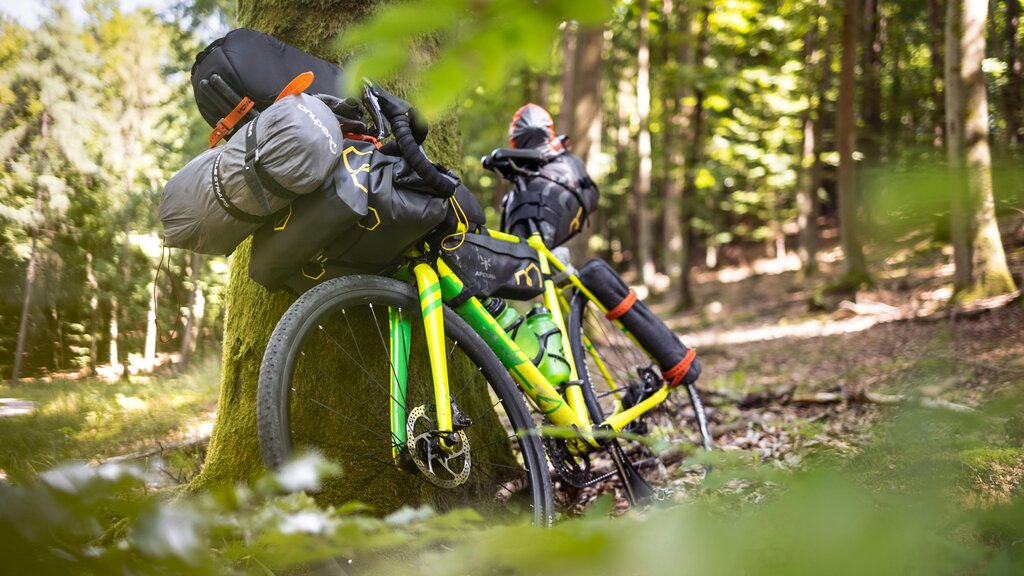
Instead of traditional racks and panniers, bikepackers use a system of soft bags that attach directly to the bike. This keeps the bike nimble and narrow enough for singletrack trails.
- Saddle Bag: A large bag that sits behind the saddle, perfect for bulky but light items like a sleeping bag or clothes.
- Frame Bag: This fits inside the main triangle of your bike frame, ideal for dense, heavy items like water, tools, and food. It keeps the center of gravity low.
- Handlebar Roll: Strapped to your handlebars, this bag holds items like your tent or sleeping pad.
When packing, think light and compact. Every ounce matters when you're pedaling it up a hill.
Beyond the bags, your gear list will look similar to a backpacker's. Your exact items will depend on your trip's length, location, and climate, but they generally fall into these categories:
| Category | Key Items |
|---|---|
| Shelter | Lightweight tent, bivy sack, or tarp |
| Sleep System | Sleeping bag or quilt, sleeping pad |
| Cooking | Small stove, fuel, pot, spork, food |
| Clothing | Layers for warmth and rain, cycling shorts, gloves |
| Repair Kit | Multi-tool, tire levers, patch kit, spare tube, pump |
| Navigation | GPS device or phone with maps, compass, power bank |
Common Challenges
Bikepacking is incredibly rewarding, but it comes with unique challenges. Being prepared is key to handling them.
Mechanical failures are one of the biggest concerns. A broken chain or a flat tire in a remote area can be a serious problem if you don't have the tools and knowledge to fix it. Always carry a well-stocked repair kit and know how to use it.
Weather is another major factor. You might face everything from scorching sun to freezing rain on a single trip. Packing versatile, layered clothing is essential for staying comfortable and safe.
Finally, there's the physical and mental challenge. Pedaling a loaded bike for days on end is tough. You'll get tired and face moments of doubt. Pacing yourself, eating and drinking enough, and maintaining a positive mindset are just as important as any piece of gear.
Flexibility is your best tool. Plans will change, things will break, and the weather won't always cooperate. The ability to adapt is what turns a potential disaster into part of the adventure.
Now that you understand the basics of what bikepacking is, what gear it requires, and what to expect on the trail, let's test your knowledge.
What is a key difference that distinguishes bikepacking from traditional bike touring?
To maintain a low center of gravity and stable handling, where should you pack the densest, heaviest items like tools and water?
Understanding these fundamentals is the first step in planning your own cycling adventures.