Bicycle Brake Adjustment and Maintenance
Brake System Overview
The Anatomy of a Brake System
Every bicycle brake has one job: to slow you down. They all accomplish this by converting the kinetic energy of your moving bike into heat through friction. The system starts at your hands with the brake levers. When you pull a lever, you're starting a chain reaction that ends with brake pads creating friction against a braking surface, stopping the wheel's rotation.
Brake Lever
noun
The control on the handlebar that the rider squeezes to initiate the braking process.
While the goal is the same, there are two main families of brakes: rim brakes and disc brakes. Each has its own design, advantages, and specific components.
Rim Brakes
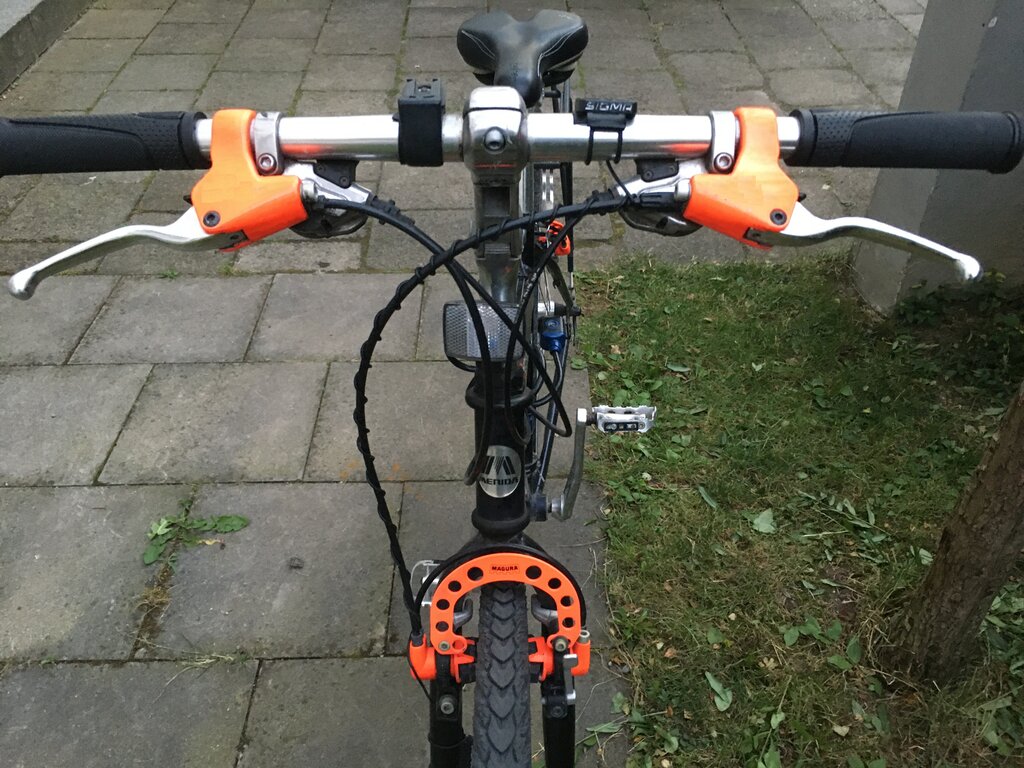
Rim brakes, as the name suggests, apply braking force directly to the rim of the wheel. When you pull the brake lever, a cable pulls on a mechanism called a caliper, which squeezes two brake pads against the sides of the spinning rim. This friction slows the wheel down.
There are a few common types of rim brakes.
Caliper Brakes: These are often found on road bikes. They consist of a single unit that mounts to the frame via one bolt. They're lightweight and have a simple design.
Cantilever Brakes: These brakes have two separate arms mounted on posts on either side of the fork or frame. A straddle cable runs between the two arms and is pulled up by the main brake cable to activate them.
V-Brakes: A more modern and powerful version of the cantilever design, V-brakes also use two separate arms. However, the brake cable pulls one arm directly, which then pulls a cable housing across the top to activate the other arm. You'll see them on many hybrid, commuter, and older mountain bikes.
Disc Brakes
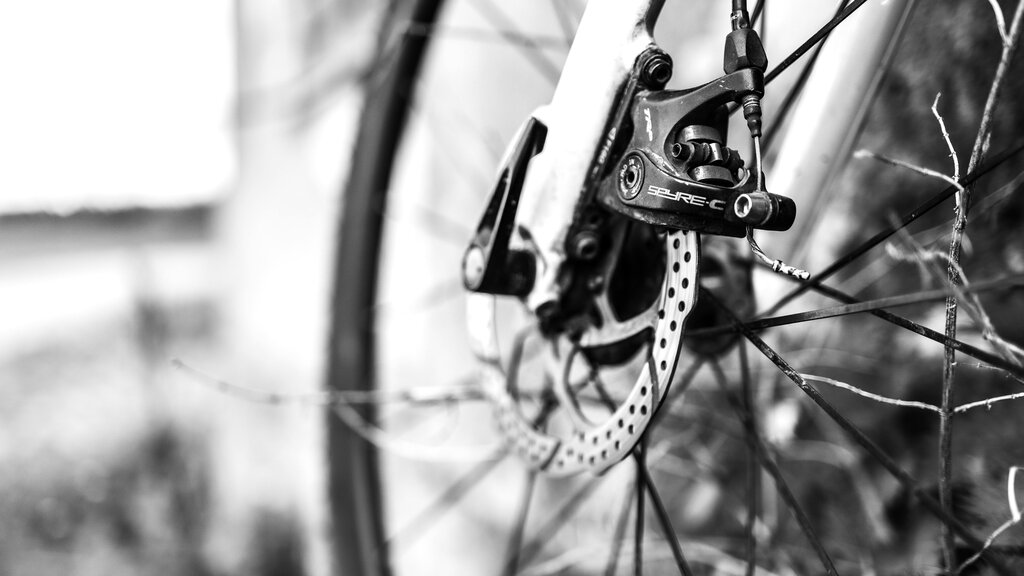
Disc brakes work more like the brakes in a car. Instead of squeezing the rim, they use a caliper to squeeze pads against a separate metal disc, called a rotor, that's attached to the hub of the wheel. This design offers more powerful and consistent braking, especially in wet or muddy conditions, because the braking surface is farther from the ground.
Rotor
noun
A metal disc attached to the wheel's hub that serves as the braking surface for a disc brake system.
Disc brakes come in two main varieties, distinguished by how they're activated.
Mechanical Disc Brakes: These systems use a standard steel brake cable, just like rim brakes. Pulling the lever pulls the cable, which operates a cam or lever inside the caliper to push the brake pads against the rotor. They are generally simpler and easier to maintain than their hydraulic counterparts.
Hydraulic Disc Brakes: Instead of a cable, these systems use a sealed hose filled with brake fluid. When you squeeze the lever, a piston in the lever pushes fluid through the hose. This hydraulic pressure forces pistons inside the caliper to move, squeezing the brake pads against the rotor. They offer more braking power with less hand effort and automatically adjust for pad wear.
Hydraulic systems use Pascal's principle: pressure applied to a fluid in a closed container is transmitted equally to every point of the fluid and the walls of the container.
| Feature | Rim Brakes | Mechanical Disc | Hydraulic Disc |
|---|---|---|---|
| Braking Surface | Wheel Rim | Rotor | Rotor |
| Actuation | Cable | Cable | Brake Fluid |
| Best For | Road, Dry Conditions | All-Weather, Simplicity | All-Weather, High Power |
| Maintenance | Simple cable adjustment | Simple cable adjustment | Requires fluid bleeding |
Familiarizing yourself with these parts and types is the first step. Knowing whether you have V-brakes or hydraulic disc brakes will tell you exactly what to look for when it's time for an adjustment.
Ready to check your understanding? Let's see what you've learned about the different brake systems.
What fundamental energy conversion do all bicycle brakes rely on?
Which type of brake applies force directly to the wheel's rim?
Now that you can identify the key components and types of brakes, you're well on your way to keeping your bike's stopping power in top shape.