Bi-Directional Electricity Metering Explained
Introduction to Electricity Metering
Measuring Electricity
Your utility bill is based on a simple idea: you pay for the electricity you use. But how does the power company know how much that is? The answer lies in a device on the side of your house called an electricity meter.
This meter acts like a cash register for electricity. Its job is to count every bit of electrical energy your home consumes. The standard unit for this measurement is the kilowatt-hour, or kWh.
One kilowatt-hour is the energy used if you run a 1,000-watt appliance for one full hour. For example, a powerful hairdryer or a microwave oven might use about 1 kWh of energy in an hour.
Every time you turn on a light, watch TV, or charge your phone, you're using energy. The meter keeps a running total of all the kilowatt-hours, which the utility company uses to calculate your bill.
The Spinning Disc
For over a century, the most common type of electricity meter was the electromechanical induction meter. You've probably seen one. It's a glass-encased box with a set of numbered dials and, most importantly, a small metal disc that spins horizontally.
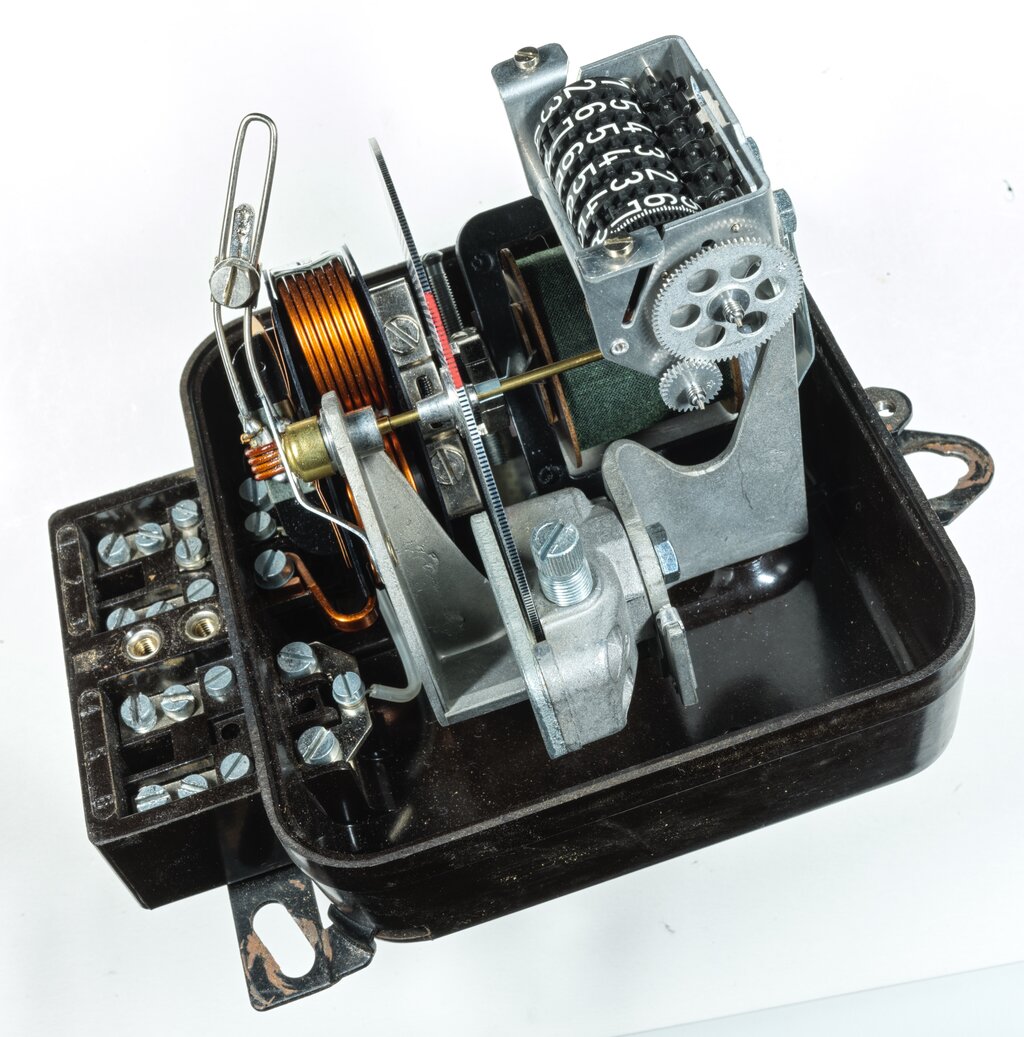
That spinning disc is the heart of the meter. Its speed is directly related to the amount of power your home is drawing at any given moment. If you have just one lamp on, the disc turns slowly. If you turn on the air conditioner, the oven, and the television all at once, the disc will spin much faster.
As the disc rotates, it drives a series of small gears. These gears are connected to the pointers on the dials you see on the meter's face. Each rotation of the disc moves the gears just a tiny bit, slowly advancing the pointers to record the total energy used over time.
The magic happens through electromagnetism. The meter has two coils of wire. A current coil, connected in series with your home's circuit, senses how much electricity is flowing. A voltage coil, connected in parallel, senses the electrical pressure, or voltage.
Together, these coils create shifting magnetic fields that induce electrical currents (called eddy currents) in the aluminum disc. This interaction produces a force that makes the disc turn. A permanent magnet is also placed near the disc to act as a brake, ensuring the disc stops when the power is off and spins at a controlled, accurate speed.
Downsides of the Old Way
While reliable, these traditional meters have significant limitations. The biggest one is that they must be read manually.
A utility worker has to physically visit each property, look at the meter, and record the numbers on the dials. This process is slow, expensive for the utility company, and prone to human error. If the meter is inaccessible—behind a locked gate, for instance—the company has to estimate your usage, which can lead to inaccurate bills.
Traditional meters can only tell you one thing: the total amount of energy used since the meter was installed. They can't tell you when you used it.
This lack of detail means neither you nor the power company gets any insight into your usage patterns. You can't see if you're using most of your energy in the morning or late at night. The utility company also has a harder time managing the overall electrical grid because they have a very limited, delayed view of energy demand.
Finally, these meters are purely mechanical. They can't detect power outages or other problems on their own. The power company often won't know about an outage until a customer calls to report it.
What is the standard unit used to measure the amount of electrical energy a home consumes?
In a traditional electromechanical meter, if you turn on an air conditioner, an oven, and a television all at once, what happens to the metal disc?
These limitations paved the way for the development of newer technologies, but understanding the simple, effective mechanism of the spinning disc is the first step in appreciating how we measure and manage electrical power.