BESS Engineering and System Integration
BESS System Architecture
The Brains of the Battery
A utility-scale Battery Energy Storage System (BESS) is far more than a simple collection of battery cells. It's a sophisticated, coordinated system where hardware and software work in unison to manage massive flows of energy. At the heart of this operation are three critical subsystems, often called the '3S': the Power Conversion System (PCS), the Battery Management System (BMS), and the Energy Management System (EMS). Together, they control every aspect of how the BESS charges, discharges, and communicates with the grid.
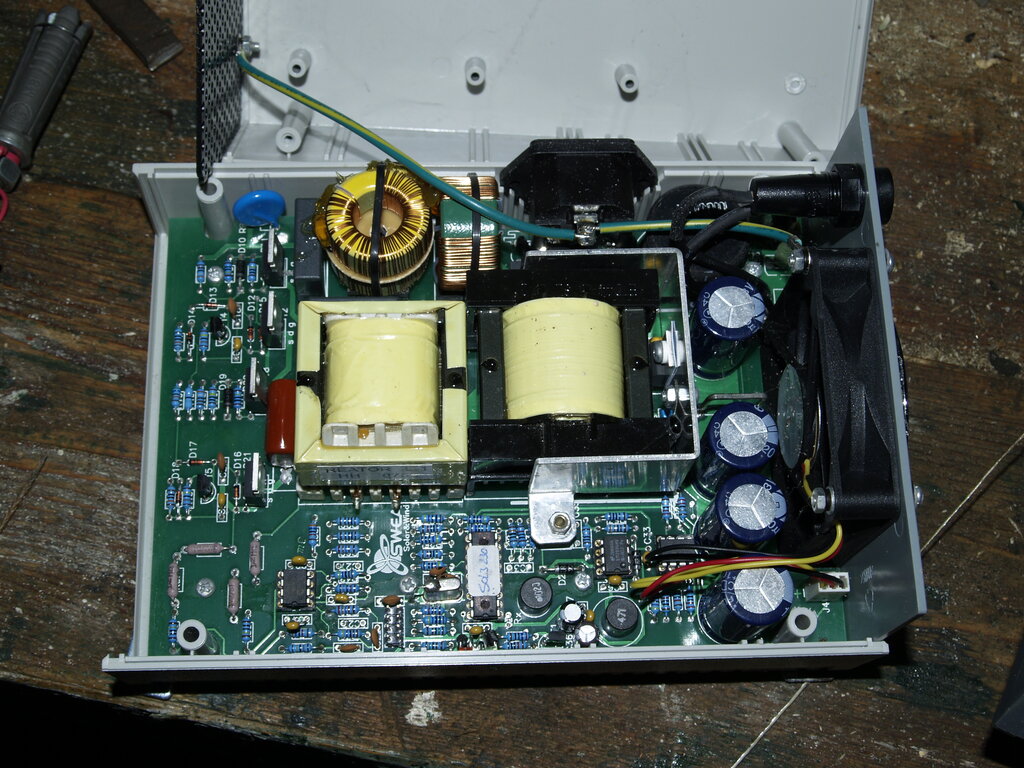
A Battery Management System (BMS) is integral to the performance, safety, and longevity of battery packs, effectively serving as the “brain” of the system.
Think of the entire BESS as an organism. The batteries are the muscle, storing potential energy. The PCS is the circulatory system, moving that energy where it needs to go. The BMS is the nervous system, monitoring the health of every cell. And the EMS is the brain, making high-level decisions based on internal and external signals.
Power Conversion System (PCS)
The PCS is the electromechanical gateway between the BESS and the electrical grid. Its primary job is to act as a bidirectional translator. The grid operates on alternating current (AC), while batteries store energy as direct current (DC). The PCS seamlessly handles the conversion in both directions.
When the BESS charges, the PCS converts AC power from the grid into DC power suitable for the battery cells. When it's time to discharge, the PCS inverts the DC power from the batteries back into grid-compliant AC power. This dual capability is what makes a BESS a flexible asset, able to both absorb and provide energy.
The size of the PCS, rated in megawatts (MW), defines the BESS's power capacity. This rating determines the maximum rate at which the system can charge or discharge. It's a critical parameter that dictates how the BESS can be used, whether for rapid frequency response or for slower, energy-shifting applications.
Battery Management System (BMS)
The BMS is the guardian of the battery pack. Its fundamental role is to ensure the safety, efficiency, and longevity of the individual battery cells. It's a hierarchical system that monitors and manages the battery down to the cellular level. This hierarchy is often structured in three layers:
- Battery Module Unit (BMU): The lowest level. The BMU is a small circuit board attached to a single battery module (a small group of cells). It directly monitors critical parameters like cell voltage and temperature.
- Battery Cluster Unit (BCU): The middle manager. A BCU collects data from multiple BMUs within a battery rack or cluster. It performs cell balancing—ensuring all cells maintain a similar state of charge—and can disconnect a module if it detects a fault.
- Battery Array Unit (BAU): The top-level controller. The BAU aggregates information from all BCUs in the entire BESS. It calculates the overall state of charge (SoC) and state of health (SoH) for the system and communicates this vital information to the EMS.
Energy Management System (EMS)
If the BMS is focused inward on the health of the batteries, the EMS looks outward. It's the high-level decision-making software that determines the BESS's overall behavior. The EMS acts on signals from the grid operator, energy market prices, or local site needs to decide when and how quickly to charge or discharge the system.
The dispatch logic of an EMS can be complex. It might be programmed to:
- Charge when electricity prices are low (e.g., midday when solar is abundant) and discharge when prices are high (e.g., evening peak demand).
- Respond in milliseconds to a grid operator's signal to stabilize grid frequency.
- Smooth the output of a co-located wind or solar farm, storing excess energy and filling in gaps during lulls.
The EMS is the component that allows the BESS to generate revenue and provide valuable grid services. It constantly communicates with both the BMS (for battery status) and the PCS (to execute charge/discharge commands).
Communication and Integration
For these three systems to work together, they need to communicate flawlessly. A BESS uses several industrial communication protocols to pass data and commands.
- CAN Bus: Often used for high-speed communication within the BMS hierarchy, linking BMUs and BCUs due to its reliability in electrically noisy environments.
- Modbus (over RS485): A common, robust protocol for communication between the BMS, PCS, and EMS. It's used to relay battery status, alarms, and charge/discharge commands.
- IEC 61850: The modern standard for communication between the BESS (specifically the EMS) and the utility's grid control systems (SCADA). It allows for more complex and faster data exchange, which is essential for advanced grid services.
Finally, system integration involves a crucial balancing act. A BESS isn't 100% efficient; it consumes power for its own auxiliary loads like cooling systems (HVAC), lighting, and the control systems themselves. The EMS must account for this parasitic load. The total energy stored in the batteries is not the same as the usable energy that can be dispatched to the grid. Effective system design and management minimizes these internal loads to maximize the BESS's round-trip efficiency and overall profitability.
Let's test your understanding of how these critical systems work together.
What is the primary function of the Power Conversion System (PCS) in a BESS?
In the hierarchical structure of a Battery Management System (BMS), the _______ collects data from multiple Battery Module Units (BMUs) and performs cell balancing.
Understanding the interplay between the PCS, BMS, and EMS is key to appreciating how a BESS operates as a single, intelligent grid asset.