Benjamin Franklin's Legal Legacy
Early Life and Education
Humble Beginnings
Benjamin Franklin was born in Boston in 1706, the tenth son of a soap and candle maker. With so many children to support, his family's resources were limited. He attended Boston Latin School for just two years before his father pulled him out at age 10. The family simply couldn't afford the tuition. That was the end of his formal education.
An Education of His Own
Though he left the classroom behind, Franklin never stopped learning. He became a voracious reader, devouring books on a huge range of subjects. He borrowed books from friends and spent whatever little money he had on them. He didn't just read; he studied. Franklin carefully analyzed the writing in publications he admired, like the British magazine The Spectator. He would read an article, jot down notes, and then try to rewrite it in his own words, comparing his version to the original to improve his style. This rigorous self-education turned him into a skilled and persuasive writer, a talent that would define his career.
The Printer's Apprentice
At age 12, Franklin was apprenticed to his older brother James, a printer. The work was hard, and the relationship was often tense. James frequently beat his younger brother. Despite the difficulty, the print shop was the perfect university for a boy like Franklin. He was surrounded by words and ideas, and he mastered the trade that would be his ticket to independence.
While working for James, a teenaged Franklin began writing letters to the editor under the pseudonym "Silence Dogood," a fictional middle-aged widow. In these letters, he offered witty commentary on society and politics. They became incredibly popular, but he kept his identity secret, knowing his brother would never publish his work. This early venture showed his knack for connecting with the public and shaping opinion.
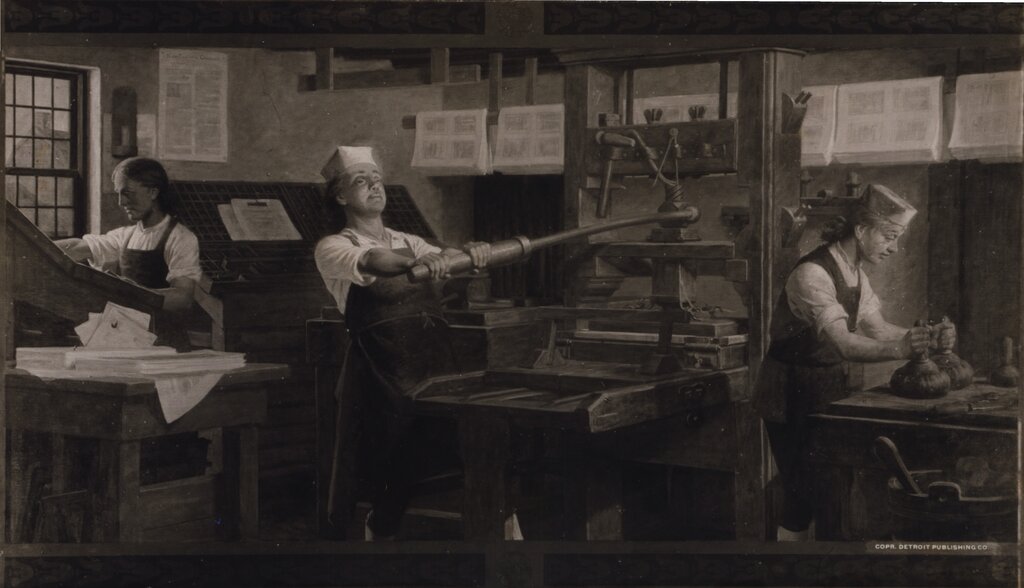
Tired of his brother's harsh treatment, Franklin ran away at 17. He first went to New York and then to Philadelphia, arriving with almost no money. But he had a valuable trade. His skill and ambition quickly landed him work in a local print shop.
A Voice for Philadelphia
Within a few years, Franklin's hard work paid off. By 1729, he bought a struggling newspaper, The Pennsylvania Gazette. He transformed it into the most widely read newspaper in the colonies. It wasn't just a business for him; it was a tool for civic improvement. He published articles, often his own, that advocated for projects like a city watch, a fire company, and a lending library.
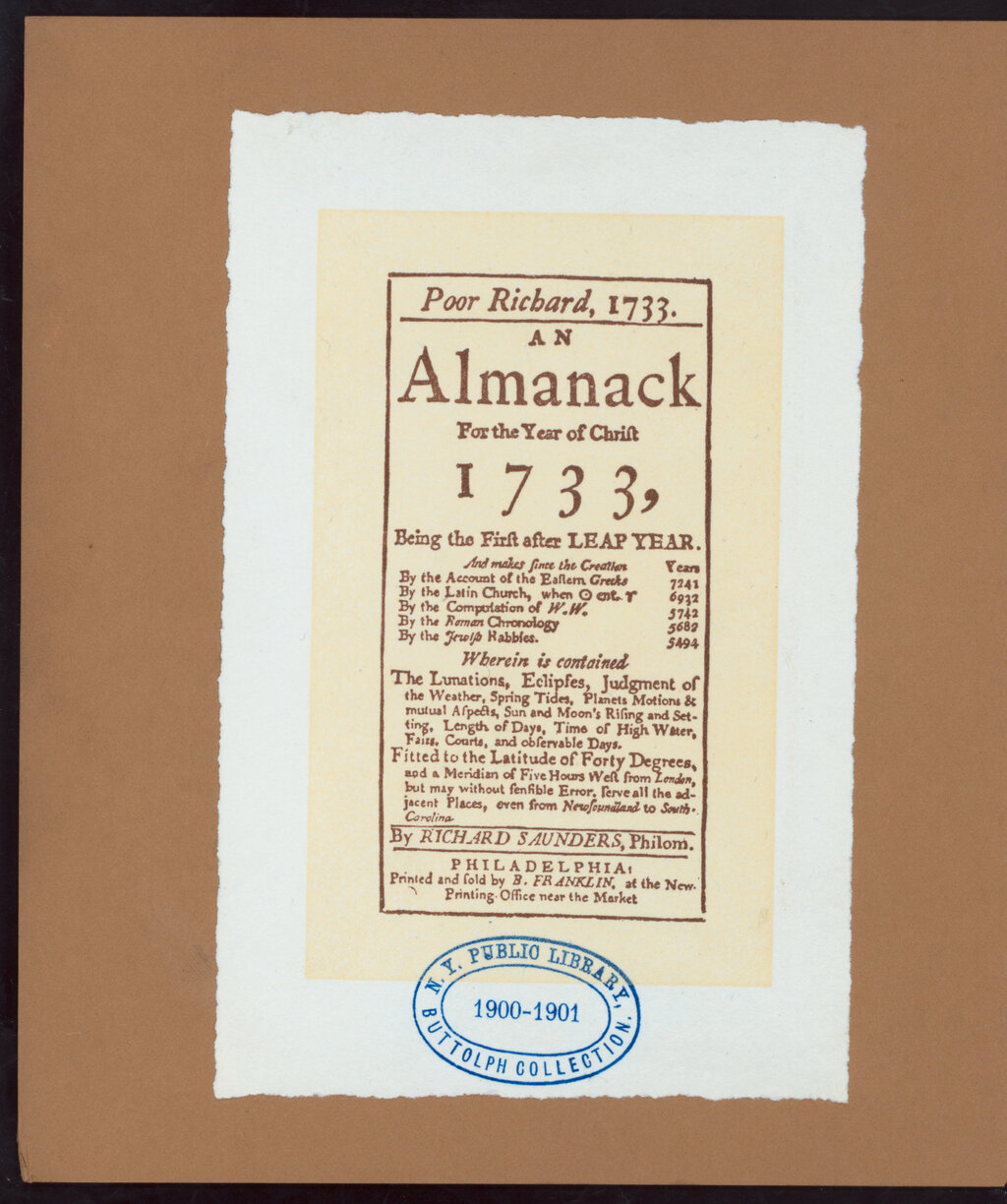
He also found immense success with Poor Richard's Almanack, an annual publication filled with proverbs, weather forecasts, and puzzles. Its homespun wisdom and practical advice made Franklin a household name across the colonies.
These early experiences in publishing were the foundation for his later work in public service. The printing press gave him financial freedom, a powerful platform to influence public discourse, and a deep understanding of how to communicate complex ideas clearly. His journey from a runaway apprentice to a successful publisher demonstrated the values of industry and self-reliance that would shape his contributions to the new nation.
Let's review what you've learned.
What was the primary reason Benjamin Franklin's formal education ended at age 10?
Under the pseudonym "Silence Dogood," Franklin wrote letters offering witty commentary on society and politics.
Franklin's early life shows how determination and a love of learning can shape a remarkable career, even without formal schooling.