Benjamin Franklin The Innovator
Early Life and Influences
A Born Reader
Benjamin Franklin’s formal education ended when he was just ten years old. In bustling, colonial Boston, this wasn't unusual. Most boys were expected to learn a trade, not spend their youth in a classroom. His father, a candlemaker with seventeen children, couldn't afford to send him to Harvard as he once hoped. But this setback didn't stop Franklin's education. It simply moved it from the schoolhouse to the print shop, the docks, and the pages of every book he could find.
From a young age, Franklin devoured books. He read histories, essays, and poetry, often staying up late into the night. He didn't just read; he analyzed. He loved the essays in a British magazine called The Spectator and decided he wanted to write just as persuasively. So, he developed a method. He would read an essay, jot down notes, and then try to rewrite it from memory in his own words. Days later, he would compare his version to the original, correcting his own clunky phrases and weak arguments. It was a rigorous exercise in self-improvement that taught him logic, clarity, and style.
For Franklin, learning wasn't a chore confined to school. It was a lifelong, self-directed pursuit of knowledge and personal betterment.
The Printer's Apprentice
At twelve, Ben was apprenticed to his older brother James, a printer. The work was hard, involving setting tiny metal letters by hand and operating a heavy press. Yet, for a boy who loved words, a print shop was a treasure trove. He was surrounded by pamphlets, news, and ideas flowing in from across the Atlantic. It was here that he truly found his voice.
His brother started one of the first independent newspapers in the colonies, The New-England Courant. Young Ben wanted to contribute, but he knew James wouldn't publish anything by his little brother. So, he adopted a persona: a sharp-witted middle-aged widow named Silence Dogood. Under this pseudonym, he wrote 14 letters poking fun at Boston society, from the fashion of hoop petticoats to the shortcomings of Harvard. The letters were a huge hit. Everyone in town wondered who this clever woman was. When Ben finally confessed, James was furious at being tricked, and their already tense relationship worsened.
This conflict pushed Franklin to make a bold decision. At 17, he broke his apprenticeship contract—an illegal act at the time—and ran away. He first went to New York, but finding no work, he continued on to Philadelphia. This move marked the end of his childhood and the beginning of his life as an independent man in a city that would shape his future.
An Enlightened City
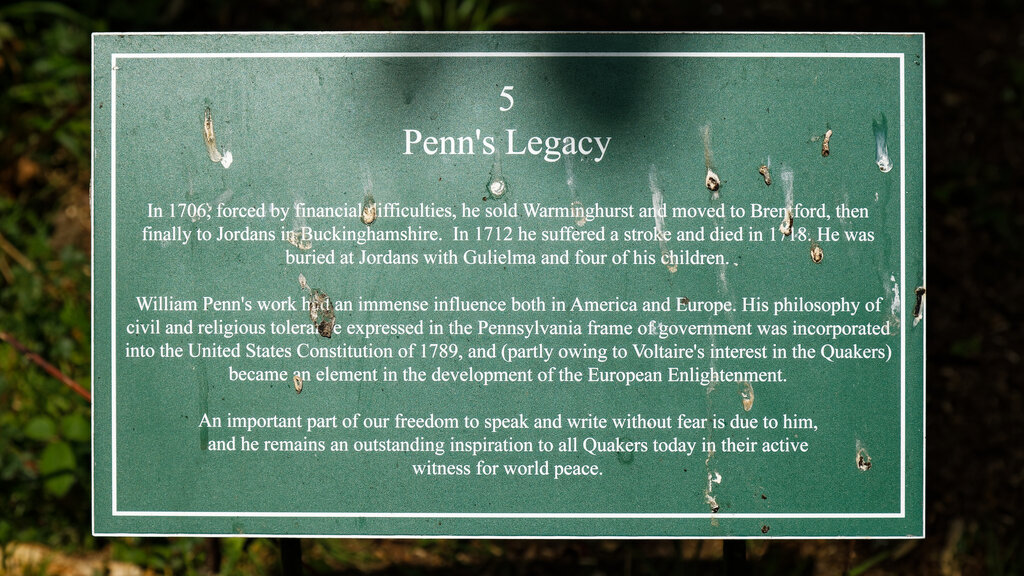
Philadelphia in the 1720s was the perfect place for an ambitious young man. Unlike Puritan Boston, it was a city founded on principles of religious tolerance and intellectual freedom, thanks to William Penn. This environment attracted diverse immigrants and fostered a culture of open debate and civic engagement. It was a city buzzing with new ideas from a powerful intellectual movement sweeping across Europe: The Enlightenment.
Enlightenment
noun
An intellectual and cultural movement in the 17th and 18th centuries that emphasized reason, individualism, and skepticism over tradition.
Enlightenment thinkers believed that reason and scientific inquiry, not just faith or tradition, were the best tools for understanding the world. They argued that humans could improve their own lives and society through logic and cooperation. Franklin embodied this spirit. He wasn't interested in abstract philosophical debates as much as practical application. How could these new ideas be used to make life better for ordinary people?
This question drove him to action. In 1727, he founded the Junto, a club for mutual improvement. It was a group of like-minded artisans and tradesmen who met each week to discuss morals, politics, and natural philosophy. The club was a place to network, debate ideas, and, most importantly, devise projects for the public good. The Junto became an incubator for some of Franklin's most famous civic innovations, including the first lending library, a volunteer fire department, and a city watch.
Franklin's early years show us a young man shaped by a deep curiosity and an unshakable belief in self-improvement. He turned a lack of formal schooling into an opportunity for self-education and used his trade to become a master of communication. In the free-thinking city of Philadelphia, he found the perfect stage to turn his ideas into actions that would transform his community and, eventually, a new nation.
Ready to test your knowledge?
Why did Benjamin Franklin's formal education end when he was ten years old?
What was the primary purpose of Franklin's method of reading an essay, taking notes, and then rewriting it from memory?