Benford's Law Unveiled
Introduction to Benford's Law
A Surprising Pattern in Numbers
Pick a random number from a newspaper or a science journal. What do you think its first digit will be? Most people guess that any digit from 1 to 9 has an equal chance of appearing. It seems logical, right? But in many real-world datasets, that's not the case at all.
There's a strange and fascinating pattern called Benford's Law. It states that in many naturally occurring collections of numbers, the number 1 is the most common leading digit, showing up about 30% of the time. The number 2 is next, at around 18%, and the frequency continues to drop all the way to 9, which appears as the first digit less than 5% of the time.
This isn't just a quirky observation; it's a predictable statistical principle. It holds true for an astonishingly wide range of data, from financial records and population numbers to the lengths of rivers and physical constants.
This pattern might feel counterintuitive, but it emerges from the way numbers grow. A quantity has to pass through the 100s before it can reach the 200s. It spends much more
It spends much more 'time' as a number starting with 1 (from 100 to 199) than as a number starting with 9 (from 900 to 999). This principle applies across many orders of magnitude and is why Benford's Law often requires data that spans several scales.
An Accidental Discovery
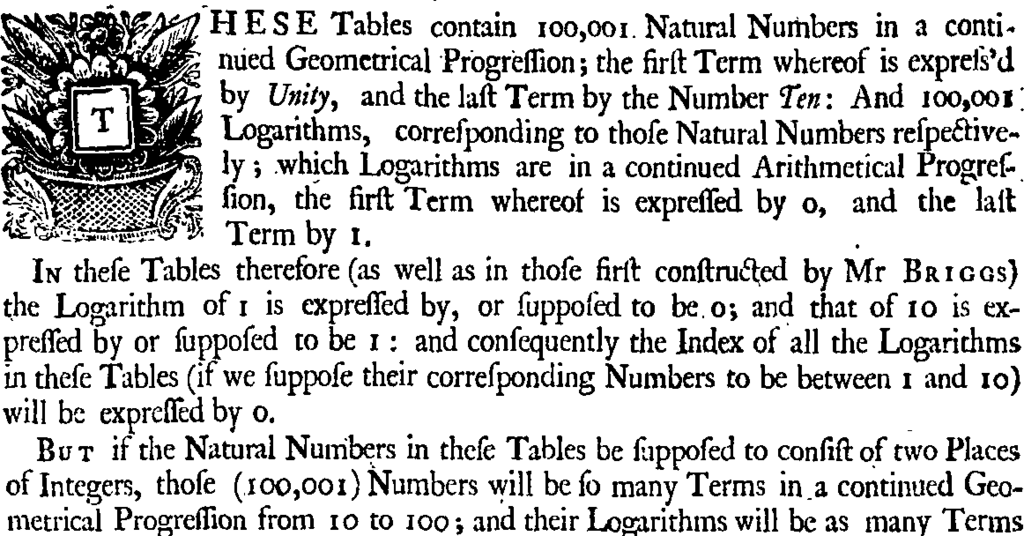
The law was first noticed not by a statistician, but by an astronomer. In 1881, Simon Newcomb observed that the pages at the beginning of his logarithm tables were much more worn than the pages at the end. It meant that scientists and engineers were more often looking up numbers that started with 1.
His finding was published in a small journal and largely forgotten for over 50 years. Then, in 1938, a physicist named Frank Benford independently rediscovered the same pattern. He was much more thorough, testing the idea on 20 different datasets containing over 20,000 numbers in total. His sources were eclectic.
Benford analyzed the surface areas of rivers, baseball statistics, numbers from Reader's Digest articles, and even the street addresses of fellow scientists. The pattern held. Because of his extensive work, the phenomenon was named Benford's Law.
The Math Behind the Pattern
The mathematical formula for Benford's Law is surprisingly simple. It states that the probability of a number starting with the digit (where is any digit from 1 to 9) is given by a logarithmic function.
Let's see how this works for the first few digits.
For the digit 1, the probability is:
For the digit 2, the probability is:
And for the last digit, 9:
These calculated probabilities match the frequencies observed in the bar chart. It’s a remarkable connection between a simple formula and the messy, complex data of the real world.
Where Does It Work?
Not every dataset follows Benford's Law. It works best on data that is naturally generated and spans multiple orders of magnitude. For example, the populations of cities around the world will follow the law. You have many small towns, fewer mid-sized cities, and only a handful of megacities. Their populations span from hundreds to tens of millions.
Other examples include:
| Conforms to Benford's Law | Does Not Conform |
|---|---|
| Stock market prices | Human heights |
| River lengths | Lottery numbers |
| Electricity bills | Phone numbers |
| Scientific constants | Standardized test scores |
Data that is constrained to a narrow range, like human heights, won't work. Most adult heights start with a 1 (in meters) or a 5 or 6 (in feet). Likewise, assigned numbers like phone numbers or zip codes, which are often uniformly distributed by design, won't follow the pattern.
The key is that the process generating the numbers must be multiplicative, not additive. Think about investments. An account balance grows by a percentage (multiplication), not by a fixed dollar amount (addition). This is the kind of process that produces data ripe for Benford's Law.
Ready to test your understanding?
According to Benford's Law, which digit is most likely to be the first digit in a naturally occurring set of numbers?
Which of the following datasets is most likely to conform to Benford's Law?
This simple logarithmic pattern reveals a deep structure in the numbers that describe our world, a structure hiding in plain sight.