Benedict Evans on AI and the Future of Tech
Understanding AI Fundamentals
What Is AI, Really?
Artificial intelligence, or AI, is the science of making computers do things that normally require human intelligence. This includes tasks like learning, reasoning, problem-solving, understanding language, and perceiving the world around them.
Think of it less like creating a thinking machine and more like teaching a very powerful, very fast calculator how to recognize patterns. Instead of just crunching numbers, it can identify a cat in a photo, translate a sentence from Spanish to Japanese, or predict which customers are likely to stop using a service.
At its core, AI is about enabling machines to learn from data and make decisions or predictions based on that learning.
A Quick Trip Through Time
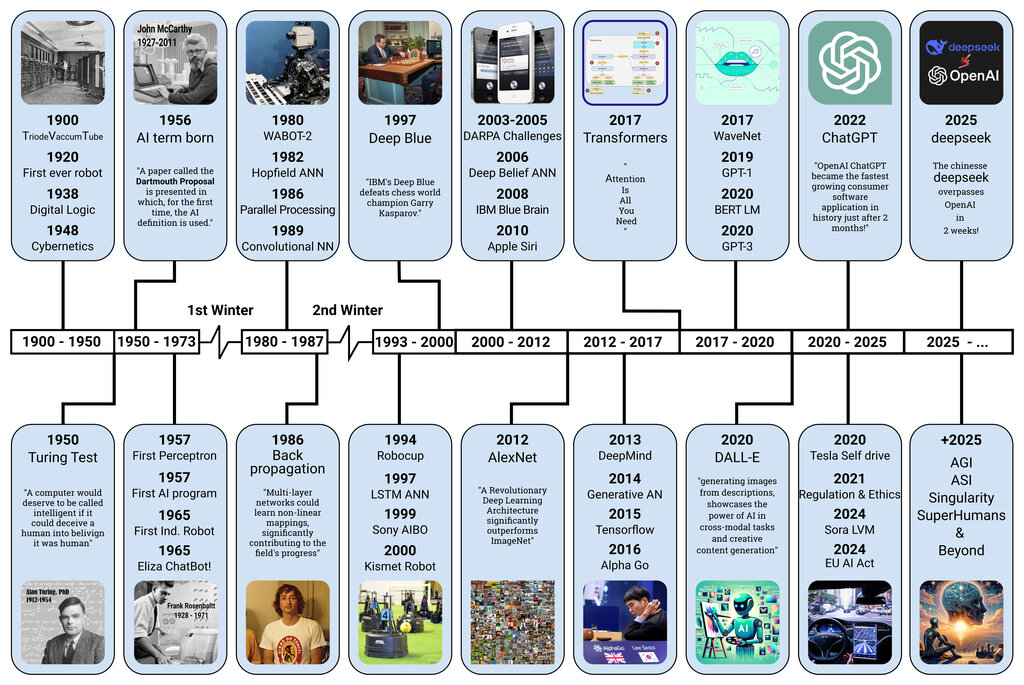
The idea of artificial minds isn't new. Philosophers have wondered about it for centuries. But the actual field of AI research kicked off in the 1950s. Early researchers were optimistic, believing they could create human-level intelligence within a few decades.
Progress wasn't always a straight line. There were periods of excitement followed by "AI winters," when funding and interest dried up. But breakthroughs in computing power and the availability of massive amounts of data have led to the AI boom we see today.
The AI Family Tree
The term "AI" is a big umbrella. Underneath it are several key concepts that work together. Understanding their relationship is crucial.
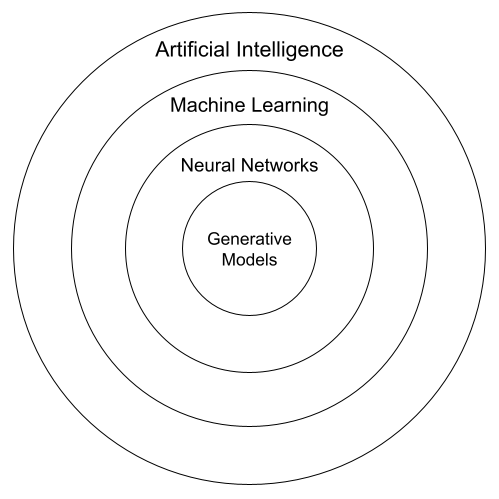
Machine Learning (ML) is a subset of AI. Instead of programming a computer with explicit rules for a task, you give it lots of data and let it learn the rules for itself. For example, to build a spam filter with ML, you'd feed it thousands of emails labeled as "spam" or "not spam." The algorithm learns the patterns associated with junk mail on its own.
Neural Networks are a type of ML model inspired by the structure of the human brain. They consist of layers of interconnected "neurons" that process information. Each neuron takes inputs, does a small calculation, and passes the result to the next neuron.
Deep Learning is simply the use of neural networks with many, many layers—a "deep" stack of them. This depth allows them to learn incredibly complex patterns from huge datasets. The technology behind self-driving cars and advanced image recognition is powered by deep learning.
Two Flavors of AI
When people talk about AI, they're usually referring to one of two types.
Artificial Narrow Intelligence (ANI), sometimes called Weak AI, is designed to perform a single, specific task. This is the only kind of AI we have today. Your navigation app finding the fastest route, a recommendation engine suggesting movies, and a voice assistant setting a timer are all examples of ANI. They can be incredibly powerful at their one job, but they can't operate outside of it.
Artificial General Intelligence (AGI), or Strong AI, is the more sci-fi version of AI. This is a hypothetical machine with the ability to understand, learn, and apply knowledge across a wide range of tasks at a human level. Creating AGI is the long-term goal for many researchers, but it remains a massive scientific challenge.
AI in the Wild
Today, AI is woven into the fabric of our daily lives and industries. It's not just about robots; it's about smarter systems and processes.
- Healthcare: AI helps doctors analyze medical images like X-rays and MRIs to spot diseases earlier and more accurately.
- Finance: Banks use AI to detect fraudulent transactions in real-time and to assess credit risk for loans.
- Entertainment: Streaming services use sophisticated ML algorithms to analyze your viewing habits and recommend what you should watch next.
- Retail: AI powers everything from inventory management systems that predict demand to personalized marketing campaigns that show you ads for products you're likely to buy.
Let's check your understanding of these core concepts.
Which statement best describes the relationship between Artificial Intelligence (AI), Machine Learning (ML), and Deep Learning?
An AI system that analyzes your viewing habits to recommend new shows on a streaming service is an example of what?
Having a solid grasp of these fundamentals is the first step for anyone looking to build or manage products in an AI-driven world.