Bench Press Power
Bench Press Fundamentals
Setting Up for Success
Before you even think about lifting the bar, your setup is what determines if a bench press is safe and effective. A solid foundation lets you press more weight with better control. Think of it as building a stable platform to launch from.
Your goal is to create five points of contact with the bench and floor: your head, your upper back, your glutes, and both of your feet. These points should remain firmly in place throughout the entire lift.
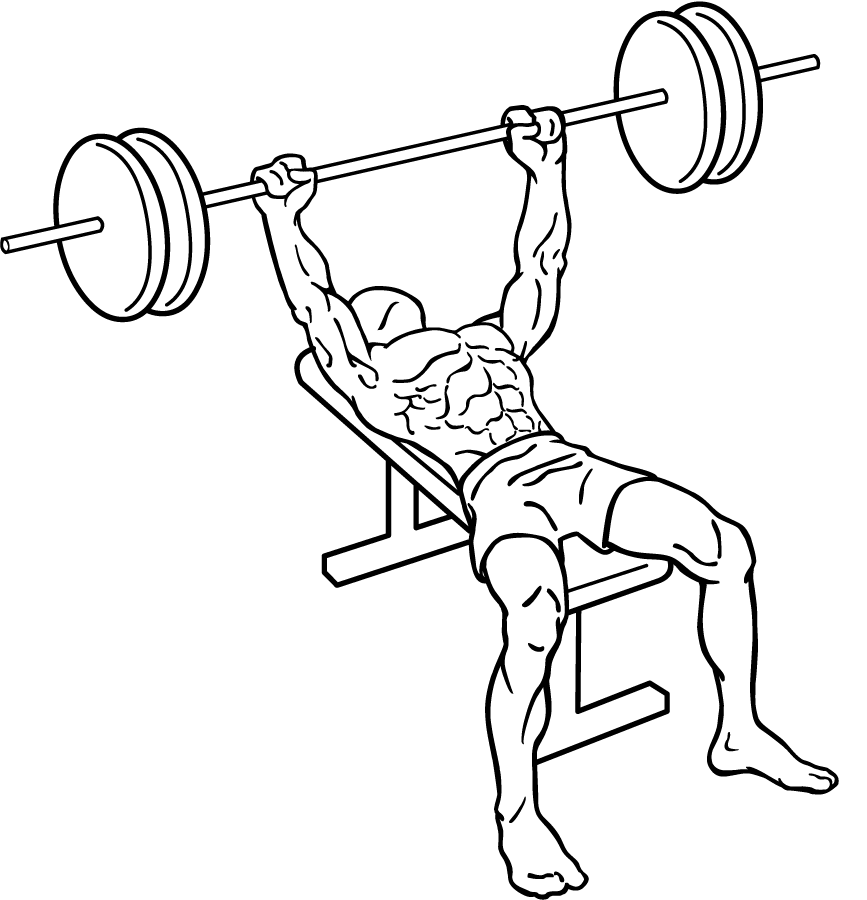
Lie back on the bench and plant your feet flat on the floor, wider than your hips if needed. Your feet should be positioned so you can drive through them, pushing your body back into the bench. This creates tension and stability.
Next, focus on your upper back. Squeeze your shoulder blades together as if you're trying to pinch a pencil between them, and pull them down toward your waist. This is called scapular retraction and depression. It protects your shoulder joints and gives you a more solid base to press from. You should feel a slight, natural arch in your lower back. Your glutes should remain on the bench.
Key Setup Cues: Feet planted firmly. Shoulder blades pinched together and pulled down. Glutes on the bench.
Getting a Grip
With your body in position, it's time to grab the bar. Your grip width affects which muscles do the most work and can impact shoulder comfort. A good starting point is a grip that's slightly wider than your shoulders. When you lower the bar, your forearms should be roughly vertical at the bottom of the movement.
Look for the smooth rings, or knurl marks, on the barbell. Use these to ensure your grip is even on both sides. An uneven grip will lead to an unstable lift.
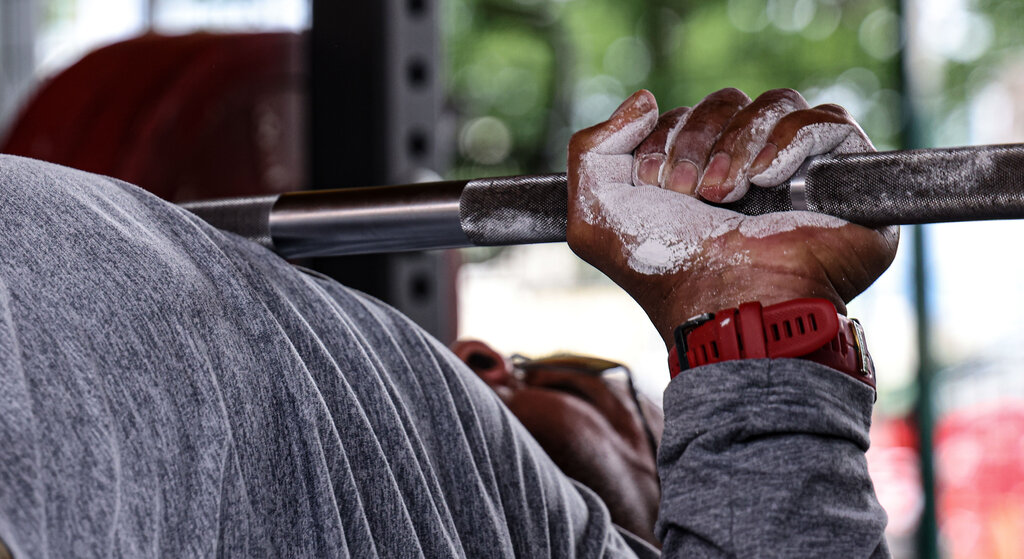
Always use a full grip, meaning your thumbs are wrapped firmly around the bar. This locks the barbell in your hands. Some people use a "thumbless" or "suicide" grip, but it's risky. If the bar slips, there’s nothing to stop it from falling.
As for your wrists, keep them straight and stacked directly over your forearms. Don't let them bend backward under the weight; this can lead to strain and reduces your ability to transfer force into the bar.
The Movement
Now for the lift itself. After unracking the bar, hold it directly over your shoulders with your arms locked. This is your starting and ending position.
The first phase is lowering the bar to your chest, known as the eccentric phase. This should be a controlled movement, not a drop. Inhale as you lower the weight. Aim to touch the bar to your mid or lower chest, around your sternum. Keep your elbows tucked in at a 45 to 75-degree angle from your body. Flaring them out to 90 degrees puts unnecessary stress on your shoulders.
The second phase is pressing the bar back up, called the concentric phase. Once the bar touches your chest, drive it upward powerfully. Think about pushing yourself away from the bar, driving your upper back into the bench. Exhale forcefully as you press.
Don't just push the bar straight up. Push it up and slightly back, so it ends where it started: directly over your shoulders. This follows a more natural and stronger movement arc. Lock your elbows at the top to complete the repetition.
Proper technique in foundational movements builds a strong base and prevents injury.
Breathing is Power
How you breathe during the bench press is crucial for maintaining stability. A common mistake is to hold your breath incorrectly or breathe at the wrong times. The right technique helps brace your core and torso.
Here’s a simple pattern to follow:
- Before you lower the bar: Take a deep breath into your belly and hold it. This is called the Valsalva maneuver. It increases intra-abdominal pressure, which helps stabilize your spine and creates a rigid torso.
- As you lower the bar: Keep holding that breath. This maintains tightness and control.
- As you press the bar up: Exhale forcefully as you push through the most difficult part of the lift. Some lifters hold their breath until the rep is nearly complete for maximum stability.
For lighter sets, you can simplify this by inhaling on the way down and exhaling on the way up. But as the weight gets heavier, learning to brace with your breath becomes essential for both safety and performance.
That's a good place to start with the fundamentals. Let's see what you've learned.
What are the five points of contact that create a stable foundation for the bench press?
What is the primary purpose of squeezing your shoulder blades together and pulling them down (scapular retraction and depression)?
Mastering these fundamentals will set you on the right path for getting stronger safely. Always prioritize good form over lifting heavy weight.