Belly Dance Fundamentals and Teaching
Origins and Evolution
Ancient Roots
The dance we know today as belly dance has roots that stretch back thousands of years. It wasn't born in a single place but evolved from folk dances across the Middle East and North Africa. These early dances were social events, performed by women for women at community gatherings like weddings and childbirths. They were a way to celebrate and connect with the body's natural movements.
It is widely agreed that belly dance originated as a women’s ritual dance, possibly even as a child-birthing exercise or a young woman’s initiation dance.
Far from being a performance for a male audience, these dances were integral to female social life. The movements celebrated fertility and the power of the female body, existing long before they were ever performed on a stage.
The Heart of the Dance
Egypt is often considered the heartland of modern belly dance. It was here that the dance moved from private homes to public venues in the early 20th century, developing into two main styles.
Raqs Baladi is the social, folkloric style. It's earthy and grounded, danced by everyone at celebrations. Raqs Sharqi is the performance style developed for the stage, incorporating more fluid, ballet-influenced movements.
dance of the east
During Egypt's
Golden Age of cinema in the mid-20th century, dancers like Samia Gamal and Tahia Carioca became huge stars. They performed in films and exclusive nightclubs, shaping Raqs Sharqi into the elegant and expressive art form recognized worldwide.
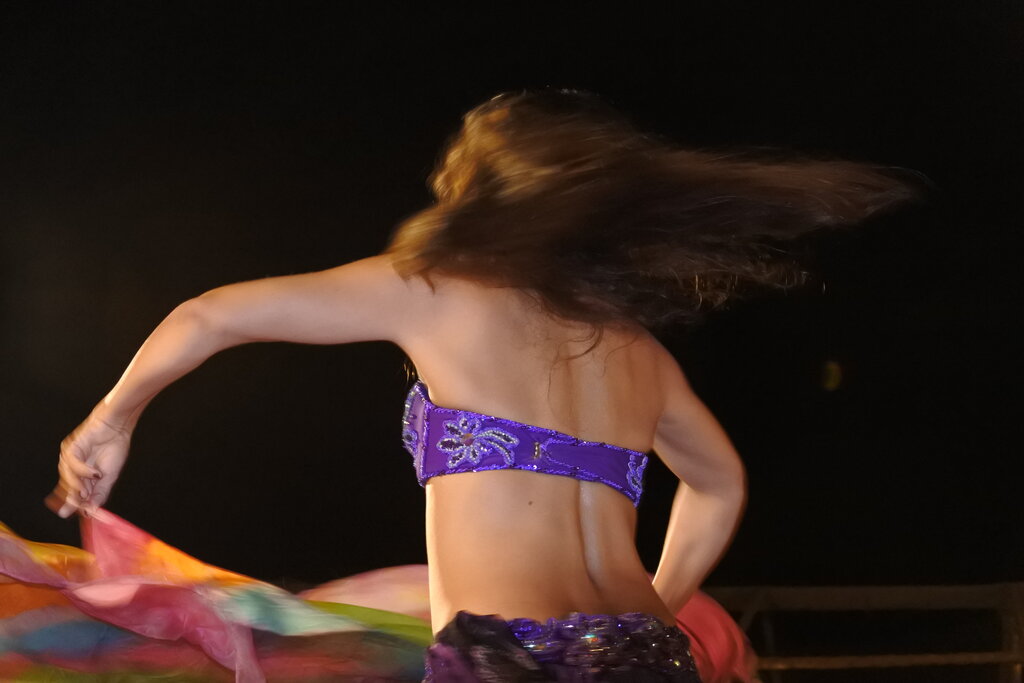
New Interpretations
As the dance spread, different regions developed their own unique flavors. In Turkey, the style known as Oryantal Dans emerged. It's often more energetic and athletic than its Egyptian counterpart, with more dynamic floorwork and lively rhythms. Turkish dancers are known for their playful and flamboyant stage presence.
The dance's journey to the West was a turning point. It was introduced to a mass American audience at the 1893 Chicago World's Fair. It was here that the term "belly dance" was coined, largely as a marketing tactic to sound exotic and tantalizing.
In Arabic belly dancing is referred to as “raqs sharqi” which literally means dance of the East it was however deemed “belly dancing” after a performance at the Chicago World Fair in 1893.
This introduction also gave rise to an "Orientalist" fantasy, viewing the dance through a lens of exoticism rather than understanding its cultural context. Over time, however, dancers and scholars have worked to correct these misconceptions.
In the United States, this cultural fusion led to new innovations. One of the most significant is American Tribal Style (ATS) belly dance, which developed in the 1970s. ATS is a group improvisational format, blending influences from Egyptian, Indian, and Flamenco dance. Dancers learn a shared vocabulary of movements and cues, allowing them to create intricate, synchronized performances on the spot.
Ready to test your knowledge on the evolution of this dance form?
The earliest forms of the dances that evolved into modern belly dance were primarily performed in what context?
Which country is considered the heartland of the elegant and expressive Raqs Sharqi style, popularized through its mid-20th century cinema?
From ancient folk traditions to the global stage, belly dance continues to evolve, telling stories of culture, history, and personal expression.