Belgian Corporate Income Tax
Introduction to Corporate Income Tax
What is Corporate Tax?
Just like individuals pay taxes on their income, businesses pay taxes on their profits. This is called corporate income tax. It's a direct tax levied by a government on the profits of a company.
corporation
noun
A legal entity that is separate and distinct from its owners. It has most of the rights and responsibilities that an individual possesses, like the ability to enter into contracts, own assets, and, of course, pay taxes.
The tax isn't on all the money a company brings in. It's on the profit, which is what's left after the company pays for its expenses. The basic idea is simple.
Revenue is the total amount of money generated from sales. Expenses are the costs of doing business, like employee salaries, rent for office space, and the cost of raw materials. Tax laws get very specific about which expenses can be subtracted, or "deducted," to calculate the final taxable income.
Why Tax Companies?
Corporate income taxes are a key source of revenue for governments around the world. This money helps fund public services that benefit everyone, including the companies themselves. Think of roads, schools, national defense, and healthcare. All are supported by tax dollars.
Companies rely on this public infrastructure. They use roads to transport goods, hire graduates from public schools and universities, and operate in a stable society maintained by government services. The tax they pay is their contribution to this system. It's part of the circular flow of the economy, where money moves between businesses, households, and the government.
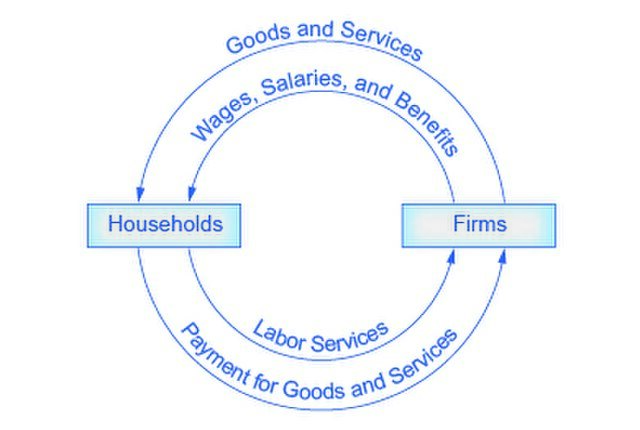
Beyond just raising revenue, corporate taxes can also be a tool for economic policy. By offering tax breaks for certain activities, like investing in research and development or renewable energy, governments can encourage companies to act in ways that align with national goals.
How Corporate Taxes Work
While the details vary wildly from one country to another, most corporate tax systems share some basic principles. One of the most important is the concept of a tax base. This is the total amount of profit that is subject to taxation. Most countries allow for various deductions and credits that can reduce this base.
Globally, there are a few common structures for corporate taxes.
| Tax System | How It Works |
|---|---|
| Territorial | Companies are only taxed on profits earned within the country's borders. Income from foreign operations is often exempt. |
| Worldwide (or Residential) | A country taxes its resident companies on all profits, no matter where in the world they are earned. |
| Flat Tax | A single tax rate is applied to all profits, regardless of how large they are. |
| Progressive Tax | The tax rate increases as a company's profits increase. This is less common for corporations than for individuals. |
Many countries use a hybrid system that combines elements of these different structures. The choice of system has a big impact on how attractive a country is for multinational corporations and how much tax revenue it can collect.
The goal for many governments is to set a tax rate that is high enough to fund public services but low enough to remain competitive and attract business investment.
Now let's review the key ideas before testing your knowledge.
Ready to see what you've learned?
Corporate income tax is a tax levied directly on a company's...
To calculate a company's taxable income, you start with its total revenue and subtract:
Understanding these general principles is the first step. Next, we'll dive into the specific rules that apply to corporations in Belgium.