Behavioral Science in Policy Development
Introduction to Behavioral Science
Beyond Pure Logic
Why did you choose the breakfast you had this morning? Why do you prefer one brand of sneakers over another? If you think the answers are based purely on logic and careful calculation, you might be surprised. Our decisions are rarely that simple. Welcome to the world of behavioral science, the study of why we humans behave the way we do.
Behavioral science is an interdisciplinary field that pulls from psychology, economics, and sociology to understand the hidden drivers of our actions. It moves beyond theories of how people should act and instead focuses on how they actually act in the real world, with all their quirks and inconsistencies.
The Rational Actor Myth
For a long time, many economic models were built around the idea of a “rational actor.” This hypothetical person, sometimes called Homo economicus, is a perfect decision-maker. They have complete information, stable preferences, and the mental power to always choose the option that gives them the greatest possible benefit.
Imagine a rational actor buying a car. They would systematically research every model, compare specs and prices, calculate long-term costs, and make a perfectly optimal choice. This model is a useful starting point, but it doesn't capture the full picture of human nature.
In reality, we are influenced by emotions, distracted by irrelevant details, and often just go with our gut. We buy a car because we like the color, because our friend recommended it, or simply because the dealership offered free coffee. We aren't calculating machines; we're people.
This difference doesn't mean we're flawed. Our brains evolved to make quick, efficient judgments to navigate a complex world. We rely on mental shortcuts to save time and energy. These shortcuts are the core focus of behavioral science.
Mental Shortcuts
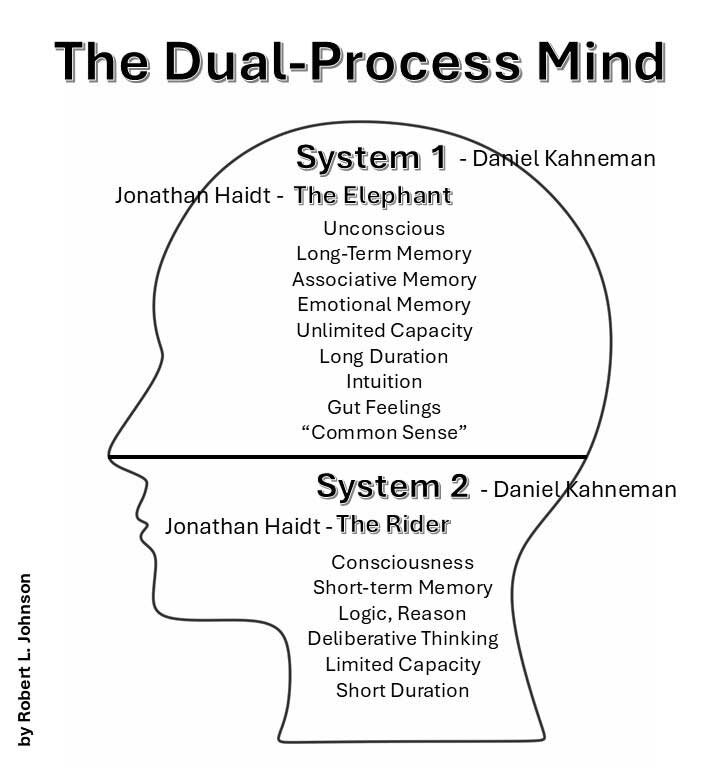
Our brains have two general modes of thinking, often called System 1 and System 2. System 2 is our slow, deliberate, and analytical mind—the one a rational actor would use all the time. System 1 is fast, intuitive, and automatic. It's responsible for the vast majority of our daily decisions.
To operate so quickly, System 1 uses mental shortcuts, or heuristics. These are simple rules of thumb that help us make judgments without a lot of effort.
Heuristic
noun
A mental shortcut or rule of thumb that people use to make judgments and decisions quickly and efficiently.
For example, the availability heuristic describes our tendency to judge the likelihood of an event by how easily an example comes to mind. We worry more about plane crashes than car accidents because images of plane crashes are vivid and heavily publicized, making them feel more common than they are, despite statistics showing the opposite.
While heuristics are often useful, they can lead to predictable patterns of errors in judgment. These systematic errors are called cognitive biases.
Bias
noun
A systematic pattern of deviation from norm or rationality in judgment, leading to illogical inferences about other people and situations.
One of the most powerful is the anchoring bias. This happens when we rely too heavily on the first piece of information we receive. If the first car a salesperson shows you costs $50,000, a later car priced at $35,000 seems like a great deal, even if it's still overpriced. The initial $50,000 price acted as an anchor, influencing your perception of value.
The Social Animal
Our decisions aren't made in a vacuum. We are deeply social creatures, constantly influenced by the people around us. Our choices are shaped by a desire to fit in, to cooperate, and to understand our place within a group.
Social norms—the unwritten rules of behavior in a group—are a powerful force. Think about facing the wrong way in a crowded elevator. You haven't broken any laws, but you'll likely feel an intense, uncomfortable pressure to turn around. That pressure is the power of a social norm at work.
We also engage in social comparison, evaluating ourselves by looking at others. This can influence everything from our career aspirations to what we post online. When we're unsure how to act, we often look to see what everyone else is doing—a tendency known as social proof.
Understanding these cognitive shortcuts and social influences is the first step in seeing human behavior more clearly. It reveals that our decisions are a rich and complex mix of logic, emotion, and social context.
Let's review these core ideas.
Now, test your understanding of these foundational concepts.
Behavioral science primarily studies how people _______, whereas traditional economic models often focus on how people _______ act.
A news report extensively covers a rare lottery win. Afterwards, many people buy lottery tickets, believing their chances of winning are higher than they actually are. This overestimation is best explained by the:
By moving past the myth of the perfectly rational actor, behavioral science provides a more realistic and useful framework for understanding ourselves and the world around us.