Behavioral Science for Policy
Introduction to Behavioral Science
Beyond Pure Logic
For a long time, many experts, especially in economics, pictured people as perfectly rational beings. In this view, we carefully weigh the pros and cons of every choice to get the best possible outcome. But if you look at your own life, you probably know this isn't quite right. We buy things we don't need, procrastinate on important tasks, and sometimes let our emotions get the best of us.
Behavioral science offers a more realistic view. It's the study of how people actually behave, blending insights from psychology, economics, and neuroscience. It accepts that we're not robots. Our decisions are shaped by emotions, social pressures, and the way information is presented to us.
The core idea is simple: context and psychology matter. A lot.
Instead of assuming we are always logical, behavioral science explores the predictable patterns in our thinking that lead us to deviate from pure rationality. It doesn't say we're irrational, just that our reasoning has its own unique, and very human, logic.
Mental Shortcuts
Our brains process an incredible amount of information every second. To cope, we rely on mental shortcuts, or heuristics, to make quick judgments and decisions. These are like rules of thumb that work well most of the time, allowing us to navigate daily life without getting stuck analyzing every tiny detail.
Heuristic
noun
A mental shortcut or rule of thumb used for rapid problem-solving and decision-making.
For example, if you see a product with thousands of positive reviews, you might use a heuristic and assume it's a good product. This saves you the time of researching every alternative. Most of the time, this works out. The trouble is, sometimes these shortcuts lead us astray.
Predictable Patterns of Error
When heuristics lead to a systematic error in judgment, it's called a cognitive bias. These aren't just random mistakes; they are predictable patterns of thinking that affect nearly everyone. Understanding these biases is key to understanding human behavior.
Let's look at a few common ones:
| Bias | Description | Example |
|---|---|---|
| Anchoring Bias | We rely too heavily on the first piece of information we receive. | The first price you see for a used car (the "anchor") influences how you judge all other prices, even if it's unreasonably high. |
| Confirmation Bias | We tend to search for, interpret, and remember information that confirms our existing beliefs. | If you believe a certain political candidate is dishonest, you'll pay more attention to news stories that support that view and ignore ones that don't. |
| Availability Heuristic | We overestimate the importance of information that is easily available to us. | We might worry more about a shark attack (a vivid, memorable event) than a car accident, even though car accidents are far more common. |
These biases operate under the radar, shaping our choices without us even noticing. They show that our decision-making process is often more automatic than we'd like to believe.
Making Choices
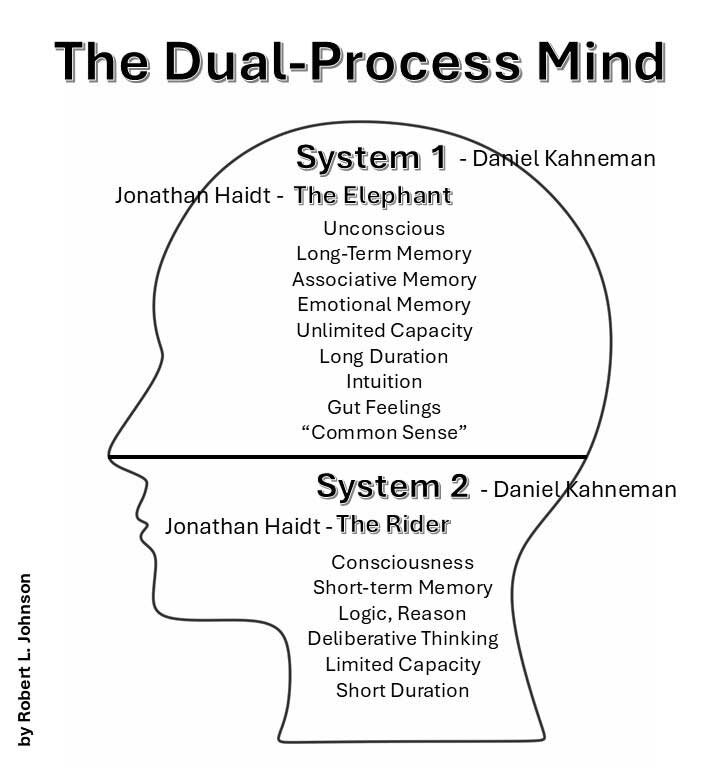
So how do we make decisions? Behavioral science suggests a dual-process model. We have two different systems of thinking:
-
System 1: Fast, automatic, intuitive, and emotional. This is your gut reaction. It's responsible for most of our day-to-day decisions.
-
System 2: Slow, deliberate, logical, and effortful. This is the system you use to solve a complex math problem or weigh a major life decision.
System 1 is the star of the show, running things on autopilot to conserve mental energy. System 2 only steps in when it has to, like when we face something new, surprising, or complex. The interplay between these two systems, and the biases that creep into System 1, is at the heart of behavioral economics. It helps explain why we might say we want to save for retirement (a System 2 goal) but then spend money on an impulse purchase (a System 1 action).
Now let's check your understanding of these foundational ideas.
How does the view of human decision-making in behavioral science differ from the traditional economic view?
Mental shortcuts that help us make quick judgments are called ______, and the systematic errors they sometimes cause are called ______.
These concepts are the building blocks for understanding human action. By recognizing that our behavior isn't always perfectly rational, we can start to see why people make the choices they do.