Behavioral Science Diagnostics
Introduction to Behavioral Science
What is Behavioral Science?
Behavioral science is the systematic study of why humans do what they do. It’s a broad field that pulls from psychology, sociology, and anthropology to understand our actions, habits, and decisions. It goes beyond simple observation to explore the hidden drivers of behavior: our thoughts, emotions, and the social situations we find ourselves in.
At its core, behavioral science uses the scientific method to explore human action, moving beyond intuition and guesswork.
Think of it this way: you might notice that people in a coffee shop line tend to buy the pastry closest to the cash register. Common sense might say, "It just looks good." A behavioral scientist would ask more specific questions. Is it the placement? The lighting? The price? Is there a social pressure to decide quickly? By designing studies to test these questions, they can uncover the principles that guide our choices, often without us even realizing it.
A Quick History
While people have always been curious about human nature, behavioral science as a formal field is relatively new. For a long time, the focus was on things that could be seen and measured directly. This gave rise to a powerful early framework called behaviorism.
Behaviorism
noun
A theory that human and animal behavior can be explained in terms of conditioning, without appeal to thoughts or feelings.
Behaviorists saw the mind as a "black box"—unknowable and irrelevant to scientific study. They focused exclusively on observable behavior. They argued that our actions are shaped by our environment through rewards and punishments. Think of training a dog: it learns to sit because it gets a treat. For behaviorists, human learning wasn't much different.
But this view had its limits. It couldn't explain things like language, problem-solving, or creativity. How could a child produce a sentence they've never heard before? This dissatisfaction led to the "cognitive revolution" in the mid-20th century.
Cognitivism opened the black box. This new framework proposed that to understand behavior, we must study mental processes. It uses analogies from computer science, viewing the brain as an information processor. It explores how we perceive, store, and use information to make sense of the world and decide how to act.
Two Major Frameworks
Behaviorism and cognitivism are two of the most influential frameworks in behavioral science. While they have different focuses, they both offer valuable insights into why we do what we do.
| Framework | Main Idea | Focus | Example |
|---|---|---|---|
| Behaviorism | Behavior is learned through interaction with the environment. | Observable actions, rewards, punishments. | A student studies hard to get good grades (a reward). |
| Cognitivism | Behavior is guided by internal mental processes. | Thinking, memory, perception, problem-solving. | A driver sees a yellow light and uses memory of traffic laws and judgment of speed to decide whether to stop or go. |
Today, many behavioral scientists take an integrated approach. They recognize that both our external environment and our internal thought processes play crucial roles in shaping our behavior. Understanding both perspectives gives us a more complete picture of human action.
The Role of Empirical Research
What makes behavioral science a science is its reliance on empirical research. This means that ideas and theories about behavior are not just debated; they are tested with data collected from the real world.
Empirical research involves formulating a specific, testable question (a hypothesis), and then collecting and analyzing data to see if the evidence supports it.
Researchers use a variety of methods, such as controlled experiments, surveys, and direct observation, to gather this evidence. This rigorous process allows them to identify patterns, understand cause-and-effect relationships, and build reliable models of human behavior. It's the difference between saying, "I think people are more generous when they're in a good mood," and being able to say, "Our study showed that participants who watched a happy film clip donated 40% more to charity than those who watched a neutral clip."
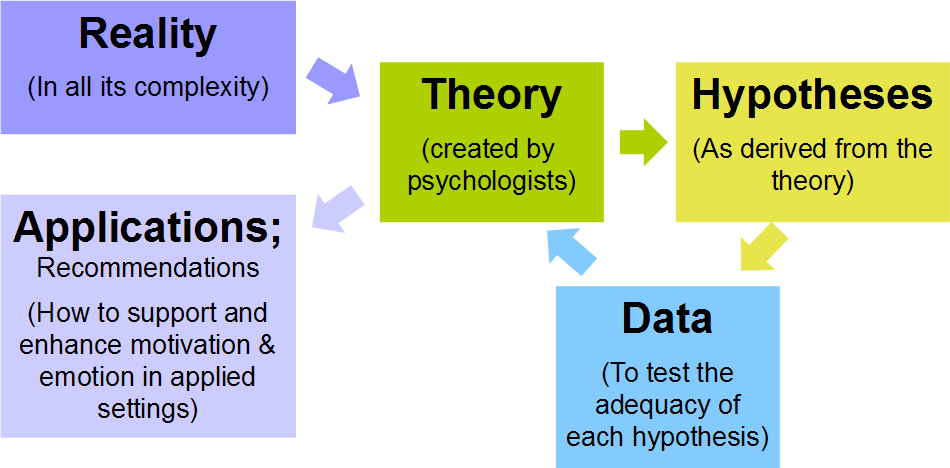
This commitment to evidence is the foundation of the field. It ensures that our understanding of behavior is built on a solid base of tested knowledge, allowing us to develop effective and predictable applications in areas from mental health to public policy.
To test your understanding of these core concepts, let's move on to a few questions.
Which of the following best describes the primary goal of behavioral science?
A researcher who believes that understanding behavior requires studying mental processes like memory and perception is most likely aligned with which framework?