Behavioral Finance Explained
Introduction to Behavioral Finance
The Human Factor
Traditional finance is built on a simple, elegant idea: people make logical financial decisions. In this world, everyone is a rational calculator, always acting in their own best interest. We weigh all the options, process all available information, and choose the path that maximizes our wealth. It's a neat model, but it doesn't always match reality.
Behavioral finance offers a different perspective. It starts with a more realistic assumption: we're human. We're influenced by emotions, mental shortcuts, and the opinions of others. This field blends psychology with economics to understand why we do what we do with our money, especially when our actions seem illogical.

Think about the last time you bought a stock. Did you read every financial report and analyst opinion? Or did you go with a company you recognized, or one that a friend recommended? Traditional finance assumes the former. Behavioral finance acknowledges that the latter is far more common.
It doesn't say people are irrational. Instead, it suggests we are predictably irrational. Our brains are wired to take shortcuts, and these shortcuts often lead us down similar, biased paths. Understanding these patterns is the first step toward making smarter decisions.
Behavioral finance is the combination of psychology and economics to understand why we tend to act against our own financial interests.
Good Enough is Good Enough
The idea that we are perfectly rational clashes with our everyday experience. We don't have unlimited time, information, or brainpower to make perfect choices. This limitation is known as bounded rationality.
Imagine you're at a grocery store trying to pick a jam. A perfectly rational person would analyze the price per ounce, sugar content, ingredient list, and consumer reviews for every single jar. Most of us just grab the one we've bought before or the one with the nicest-looking label. We don't optimize; we satisfice. We make a choice that's simply "good enough."
bounded rationality
noun
The idea that our ability to make rational decisions is limited by the information we have, our cognitive limitations, and the finite amount of time we have to make a choice.
In finance, bounded rationality means we rely on mental shortcuts, or heuristics, to simplify complex decisions. Instead of building a sophisticated financial model to value a stock, we might just look at its recent performance. This isn't necessarily bad, but these shortcuts can open the door to systematic errors, or cognitive biases, which we'll explore in detail later.
Mind Over Money
Psychology is at the heart of behavioral finance. Our minds are not cold, calculating machines. Emotions like fear, greed, hope, and regret have a powerful influence on our financial choices. Fear can cause a panicked sell-off during a market downturn, while greed can fuel speculative bubbles.
Our brains have two general modes of thinking, often called System 1 and System 2. System 1 is fast, automatic, and emotional. It’s our gut reaction. System 2 is slow, deliberate, and logical. When we make quick financial decisions under pressure, we're often relying on System 1, which is where many biases originate.
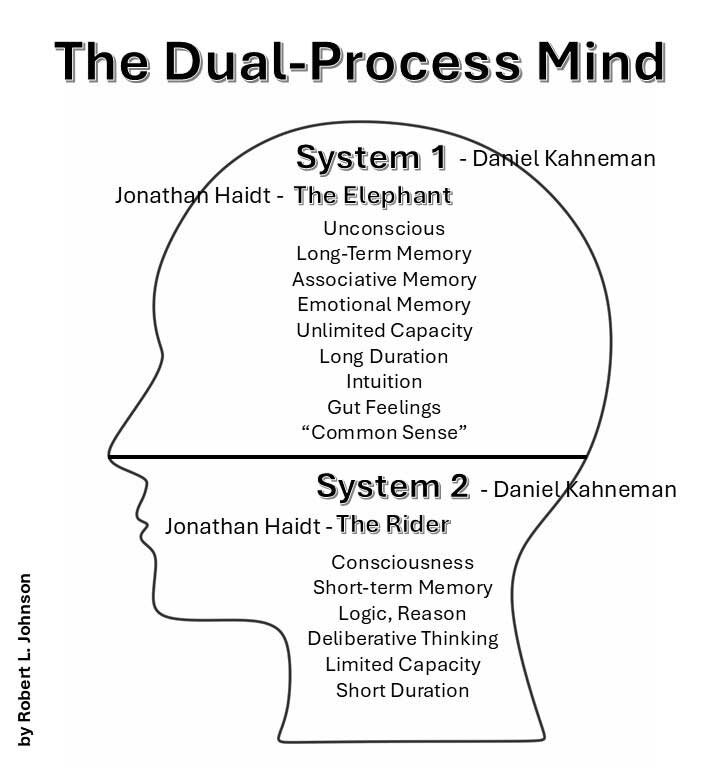
By acknowledging the role of these psychological factors, behavioral finance helps explain real-world market events that are puzzles for traditional finance, such as why stock prices can swing so dramatically or why bubbles form and burst.
Now, let's review these foundational concepts.
What is the core assumption that separates traditional finance from behavioral finance?
The idea that our ability to make perfectly logical decisions is limited by our cognitive capacity, available information, and time constraints is known as:
By understanding that our decisions are shaped by these very human limitations and emotions, we can begin to see why we make the financial choices we do. Next, we'll start to explore the specific biases that result from this process.