Beginner's German Language Course
German Alphabet and Pronunciation
The German Alphabet
Getting started with German is simpler than you might think. The German alphabet uses the same 26 letters as English, so you already have a huge head start. The key difference lies in how a few of these letters are pronounced, plus four special characters you'll need to learn.
| Letter | German Name | Pronunciation Guide (English) |
|---|---|---|
| A a | Ah | Like the 'a' in "father" |
| B b | Beh | Like the 'b' in "bed" |
| C c | Tseh | Like "tsay" |
| D d | Deh | Like the 'd' in "day" |
| E e | Eh | Like the 'e' in "get" |
| F f | Eff | Like the 'f' in "fun" |
| G g | Geh | Like the 'g' in "go" |
| H h | Hah | Like the 'h' in "hat" |
| I i | Ih | Like the 'ee' in "see" |
| J j | Yot | Like the 'y' in "yes" |
| K k | Kah | Like the 'k' in "kit" |
| L l | El | Like the 'l' in "love" |
| M m | Em | Like the 'm' in "mom" |
| N n | En | Like the 'n' in "no" |
| O o | Oh | Like the 'o' in "open" |
| P p | Peh | Like the 'p' in "pen" |
| Q q | Kuh | Like "coo" |
| R r | Er | Guttural 'r', from the back of the throat |
| S s | Es | Like the 's' in "sun" |
| T t | Teh | Like the 't' in "top" |
| U u | Uh | Like the 'oo' in "moon" |
| V v | Fau | Like the 'f' in "fan" |
| W w | Veh | Like the 'v' in "van" |
| X x | Iks | Like the 'x' in "box" |
| Y y | Ypsilon | Like the 'u' in "super" (French 'u') |
| Z z | Tsett | Like 'ts' in "cats" |
The Special Characters
Beyond the standard alphabet, German has three vowels with an Umlaut (two dots on top) and a unique consonant called the Eszett or "sharp S."
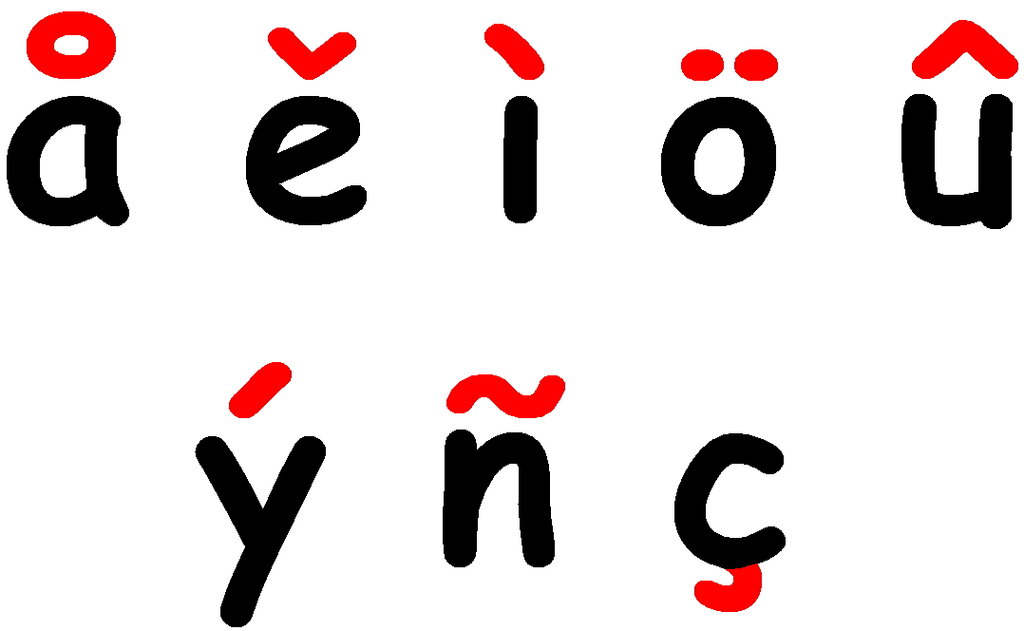
The umlauts change the sound of the vowels a, o, and u:
- ä (Ah-Umlaut): Sounds like the 'e' in "bed." For example, Männer (men).
- ö (Oh-Umlaut): This sound has no direct English equivalent. Try saying "earn" while rounding your lips as if you were going to say "oh." An example is schön (beautiful).
- ü (Uh-Umlaut): This is another sound tricky for English speakers. Say "ee" as in "see," but round your lips tightly like you're whistling. You can hear it in the word für (for).
The final special character is the ß (Eszett). It simply represents a sharp "ss" sound, like in the English word "hiss." You typically see it after a long vowel or a diphthong. For instance, Straße (street). If you can't type ß, you can always write "ss" instead.
Pronunciation Building Blocks
A few key rules will help you sound out most German words correctly. Let's start with vowels. German vowels can be long or short. A vowel is usually long if it's followed by a single consonant or an 'h'. It's short if it's followed by two or more consonants.
Consonants are mostly straightforward, but watch out for these common differences:
- v is pronounced like an 'f'. The word Vater (father) sounds like "Fah-ter."
- w is pronounced like a 'v'. The word Wasser (water) sounds like "Vah-sser."
- z is pronounced like 'ts'. The word Zeit (time) sounds like "Tsait."
- s at the beginning of a syllable is pronounced like a 'z'. Sonne (sun) sounds like "Zon-neh."
- ch has two sounds. After a, o, u, or au, it's a harsh, throaty sound like in the Scottish "loch." Think of the word Bach (stream). After other vowels or consonants, it's a softer sound, like a hissing cat. You hear this in ich (I).
Diphthongs are pairs of vowels that create a single sound. They are very consistent in German:
- ei, ai, ey, ay all sound like the English word "eye." Example: mein (my).
- au sounds like the "ow" in "how." Example: Haus (house).
- eu, äu sound like the "oy" in "boy." Example: neu (new).
Finding the Rhythm
Finally, let's talk about stress. In most German words with two or more syllables, the stress falls on the first syllable. Think of AP-fel (apple) or WO-che (week).
There are exceptions, of course. Words with inseparable prefixes like be-, ge-, er-, or ver- are stressed on the second syllable: be-KOMM-en (to receive). But for now, stressing the first syllable is a great rule of thumb.
Getting a feel for these sounds is the first major step. Practice them, listen to native speakers, and don't be afraid to make mistakes.
Now, let's test what you've learned.
What are the two dots placed over the vowels a, o, and u in German called?
How is the letter 'w' in a German word like Wasser (water) pronounced?
With this foundation, you're ready to start building your German vocabulary.