Beginner Watercolour Landscapes
Essential Tools
Your Watercolour Toolkit
Before you can paint, you need the right tools. With watercolour, your success depends on a team of three key players: paper, paint, and brushes. Unlike other mediums, watercolour relies on a delicate balance with water, so your materials are not just helpful, they are essential for controlling the outcome.
Let’s start with the foundation of your painting: the paper. Standard printer paper or sketch pads won't work here. They can't handle water and will buckle and tear. Watercolour paper is specifically designed to absorb water evenly.
There are two main types you'll encounter. Cellulose paper is made from wood pulp and is more affordable, making it fine for practice. However, professional-grade paper is 100% cotton. It's more durable and absorbent, which gives you more time to work with the paint and prevents the paper from warping. Even as a beginner, starting with cotton paper can save you a lot of frustration.
Paper also has a weight, measured in grams per square metre (gsm) or pounds (lb). A good starting point is 300gsm (140 lb). This thickness provides a sturdy surface that can take a good amount of water without buckling too much. You'll also see terms like on paper pads, which refers to the texture of the paper. Cold-press has a slight texture, or 'tooth', making it a great all-rounder for most techniques.
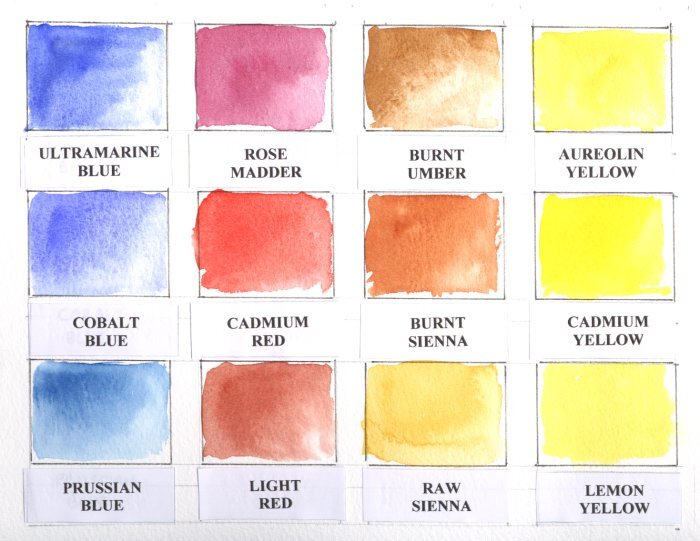
Choosing Your Colours
Watercolour paint comes in two main forms: pans and tubes.
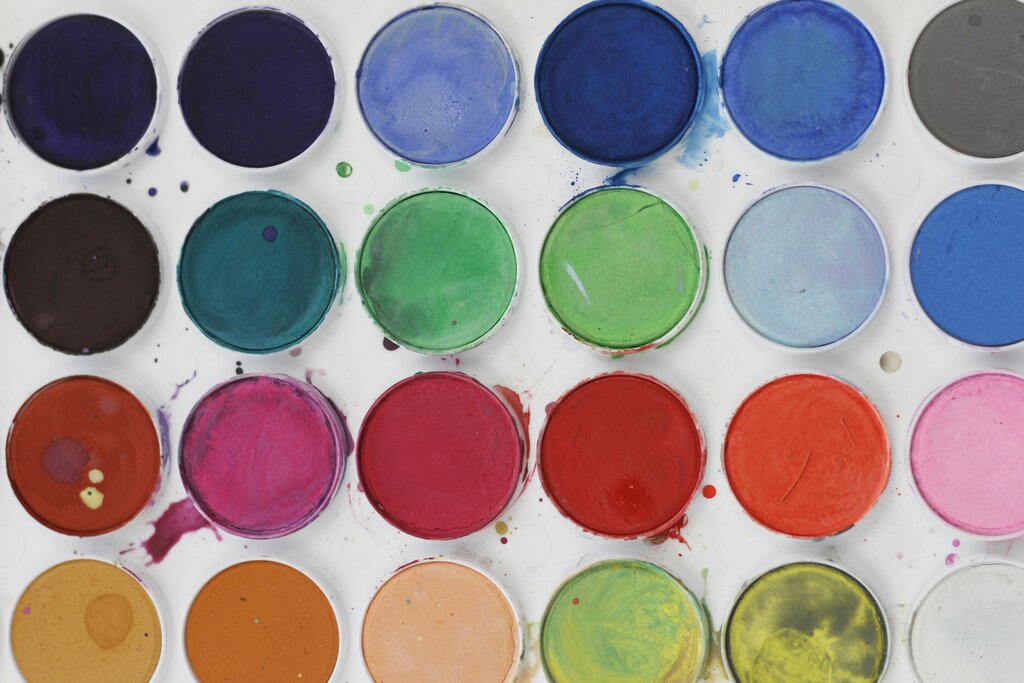
Pans are small, solid cakes of dry paint that you activate with a wet brush. They are often sold in portable sets that include a built-in palette for mixing. Pans are great for beginners because they are tidy, convenient for travel, and make it easy to control how much paint you use.
Tubes contain a thick, paste-like paint. You squeeze a small amount onto a palette and mix it with water. Tube paints offer very rich, vibrant colours and are ideal for creating large, consistent washes of colour. While you can let them dry on a palette and re-wet them later, they are best used fresh.
A good quality student-grade pan set is a perfect way to start. It will give you a wide range of colours to experiment with. You may also encounter paints, which look similar but behave differently.
Brushes and Workspace
You don’t need a huge collection of brushes. Three basic shapes will cover most of your needs: a round, a flat, and a wash brush. A medium-sized round brush (like a size 8 or 10) is versatile for both lines and broader strokes. A flat brush is good for sharp edges and even washes. A larger wash brush, sometimes called a mop brush, holds a lot of water and is perfect for covering large areas, like a sky.
Brushes are made from either natural hair (like squirrel or sable) or synthetic fibres. Synthetic brushes are more affordable, durable, and easier to clean, making them an excellent choice for beginners. Pay attention to the metal part that holds the bristles, known as the — it should be securely attached to the handle.
Finally, set up your workspace. You’ll need a palette for mixing colours. If your pan set doesn't have one, a simple ceramic plate or tile works perfectly. It’s also crucial to have two containers of water. Use one for rinsing paint from your brushes and the other for clean water to mix with your paints. This simple habit keeps your colours bright and prevents them from becoming muddy.
Keep a roll of paper towels or a natural sponge nearby. You'll use it to blot excess water from your brushes, lift paint from the paper to create highlights, and clean up spills. A simple, organised space makes the painting process much more enjoyable.
Now that you know the essential tools, let's check your understanding.
Why is 100% cotton paper often recommended for watercolour painting, even for beginners?
Which form of watercolour paint comes as solid cakes in a portable set, making it ideal for beginners and for painting on the go?
With these supplies, you're ready to start exploring the unique and rewarding world of watercolour painting.