Beginner Piano Mastery
Posture and Positioning
Setting the Stage
You know what notes to play and when to play them. Now, let's connect that knowledge to the physical instrument. Proper posture isn't about looking professional; it's the foundation for control, power, and endurance. Think of it as the alignment that lets your musical ideas flow effortlessly from your mind to your fingertips.
Start with your bench. Its position is more important than you might think. Sit on the front half of the bench, not all the way back. This gives you stability while allowing your upper body to move freely.
Your distance should allow you to comfortably reach the highest and lowest keys you need to play without leaning or straining. A good starting point is to sit far enough back that your elbows are slightly in front of your torso when your hands are on the keys.
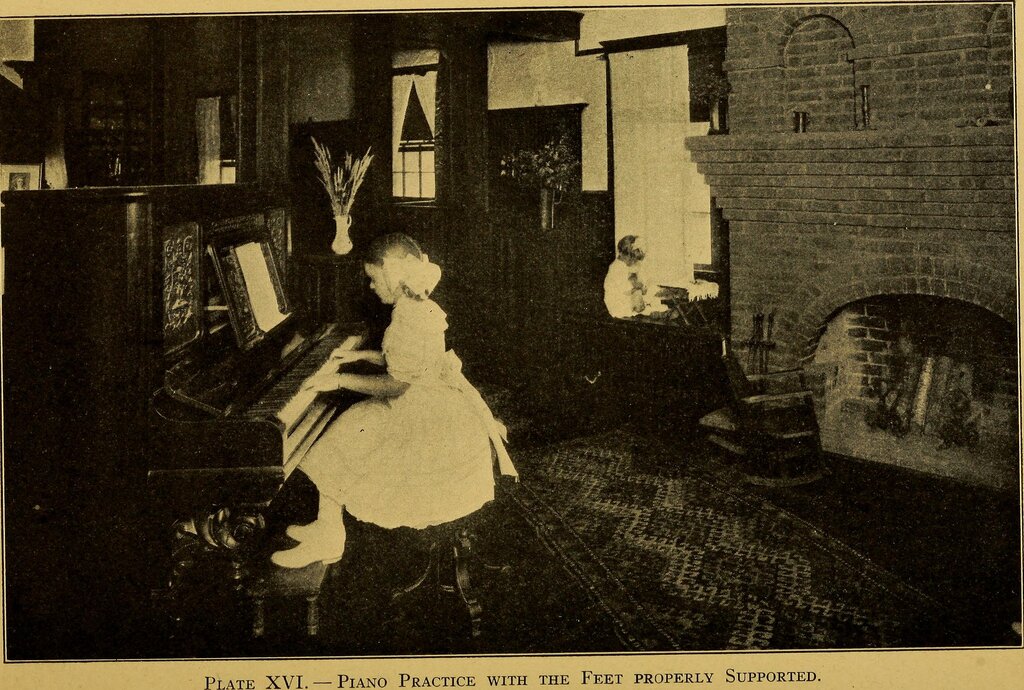
Your back should be straight but not rigid. Imagine a string gently pulling the crown of your head upward, elongating your spine. Your shoulders should be relaxed and down, not hunched up by your ears. Finally, place your feet flat on the floor, about shoulder-width apart. This creates a stable base, freeing your arms and hands to focus on playing.
Your Hands and Fingers
Before we touch the keys, let's establish a universal system for referring to our fingers. In piano, your fingers are numbered 1 through 5, starting with the thumb. This numbering is standard in sheet music, so memorizing it is essential.
| Finger | Number |
|---|---|
| Thumb | 1 |
| Index | 2 |
| Middle | 3 |
| Ring | 4 |
| Pinky | 5 |
Now, for hand shape. Let your hands hang loosely at your sides. Notice the natural curve of your fingers. That’s the shape you want to bring to the keyboard. It's often described as holding a ball. Your fingers should be curved, with the tips of your fingers making contact with the keys, not the flat pads.
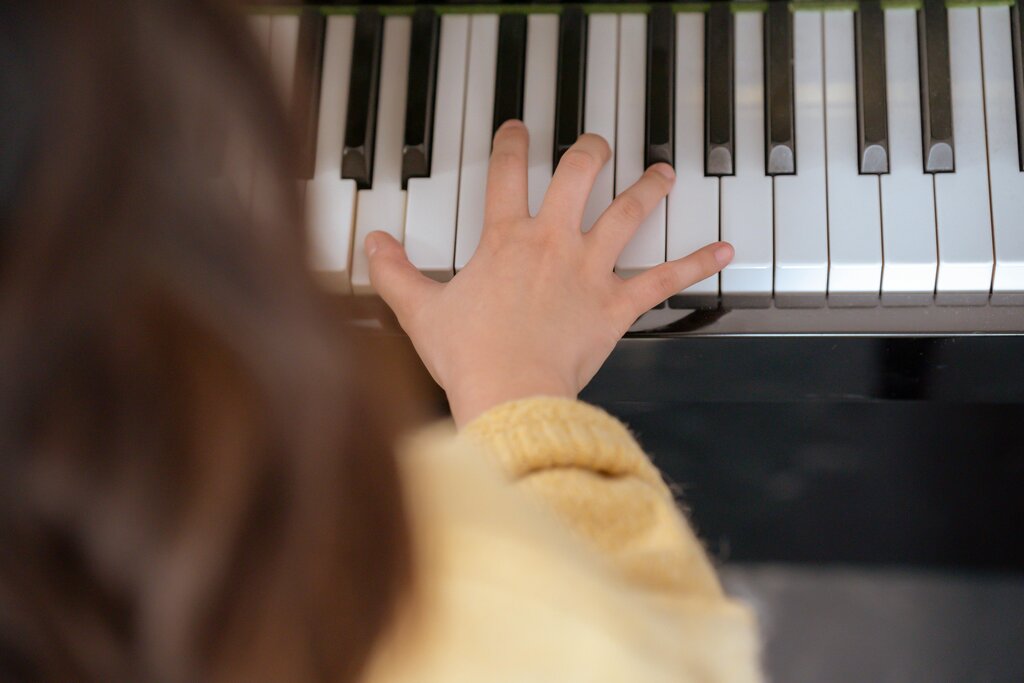
A common mistake is allowing the joint closest to the fingertip to collapse inward. Keep these joints firm. This shape provides the structure needed to transfer weight efficiently from your arm into the key. You're not just pushing with your fingers; you're letting the natural arm weight do the work. This is the secret to producing a rich, full tone without fatigue.
The Role of the Wrist
Your wrist is the shock absorber. It should be flexible and level with your hand, neither sagging below the keys nor bent sharply upward. A stiff wrist creates tension that travels up your arm, limiting your speed and leading to strain.
To feel this, let your hand go completely limp and shake it out. That feeling of looseness is what you should aim for, even during the most demanding passages.
This physical foundation—your posture, hand shape, and relaxed wrist—is what allows you to execute the musical concepts you already know. Dynamics become a function of how much arm weight you release into the key. Articulation, like staccato or legato, is controlled by the precise movements of your flexible wrist and fingers. Without this physical setup, you're fighting the instrument. With it, you're working with it.
What is the recommended position on the piano bench for a player?
In standard piano fingering, which finger is designated as number 1?
With this physical framework in place, you're ready to translate musical ideas into sound more effectively and comfortably than ever before.