Beginner Piano Fundamentals
Piano Basics
Getting to Know the Keyboard
Take a look at a piano keyboard. You'll see a repeating pattern of white and black keys. The black keys are grouped in sets of two and three. This pattern is your map to finding any note.
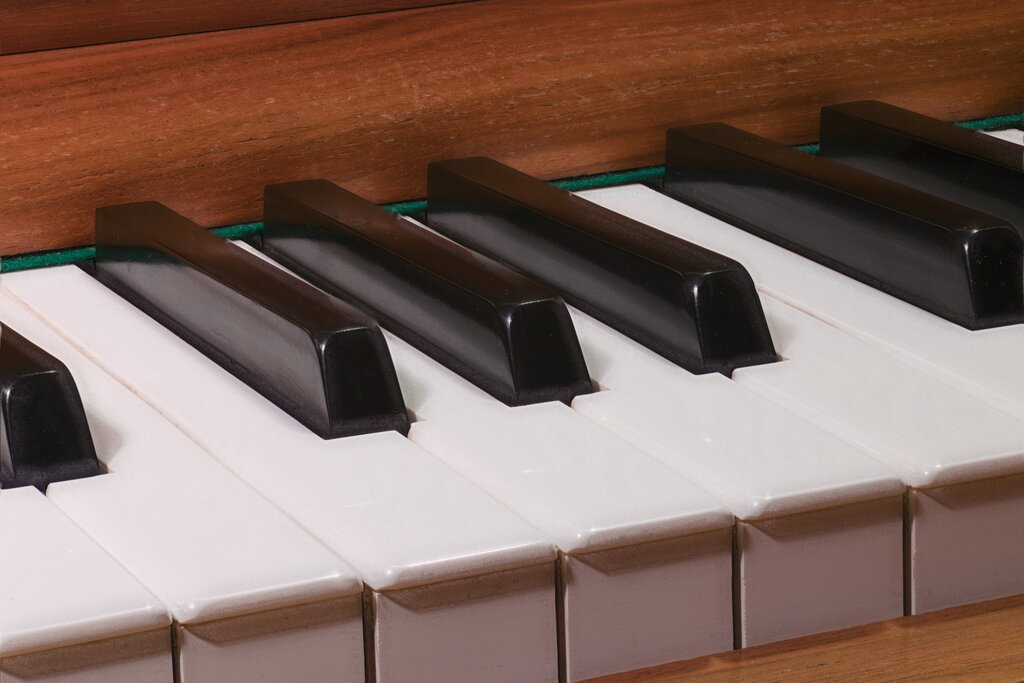
Let's find the note C. Look for any group of two black keys. The white key immediately to the left of that group is C. Every white key to the left of a two-black-key group is a C. Try finding all the C's on your keyboard.
The white key just to the left of the group of two black keys is always C.
Once you find C, the rest of the white keys are easy. They follow the musical alphabet: C, D, E, F, G, A, B. After B, the pattern repeats with the next C. The note just to the right of C is D, then E, and so on.
What is an Octave
You've probably noticed that the note names C, D, E, F, G, A, B repeat several times across the keyboard. The distance between one note and the next note with the same name is called an octave. For example, the distance from one C to the next C is an octave.
octave
noun
The interval between two musical notes, where one has twice the frequency of the other. On a keyboard, it's the span from one key to the next key with the same letter name.
An octave contains all seven unique white keys and all five unique black keys. Playing the same note in different octaves produces a similar sound, just at a higher or lower pitch. Understanding octaves helps you find your way around the 88 keys of a full piano.
Your Posture at the Piano
One of the most important fundamental ideas when playing the piano is posture.
How you sit affects everything: your comfort, your control over the keys, and your ability to play for longer periods without getting tired or sore. Let's get it right from the start.
First, find the center of the piano. This is usually near a keyhole or the brand name on the piano. The C key closest to this point is called Middle C. Sit on your bench so you are centered on Middle C.
Adjust the bench height. Your forearms should be roughly parallel to the floor when your hands are on the keys. If your wrists are bent up or down, you need to adjust your height. Your elbows should be slightly in front of your body.
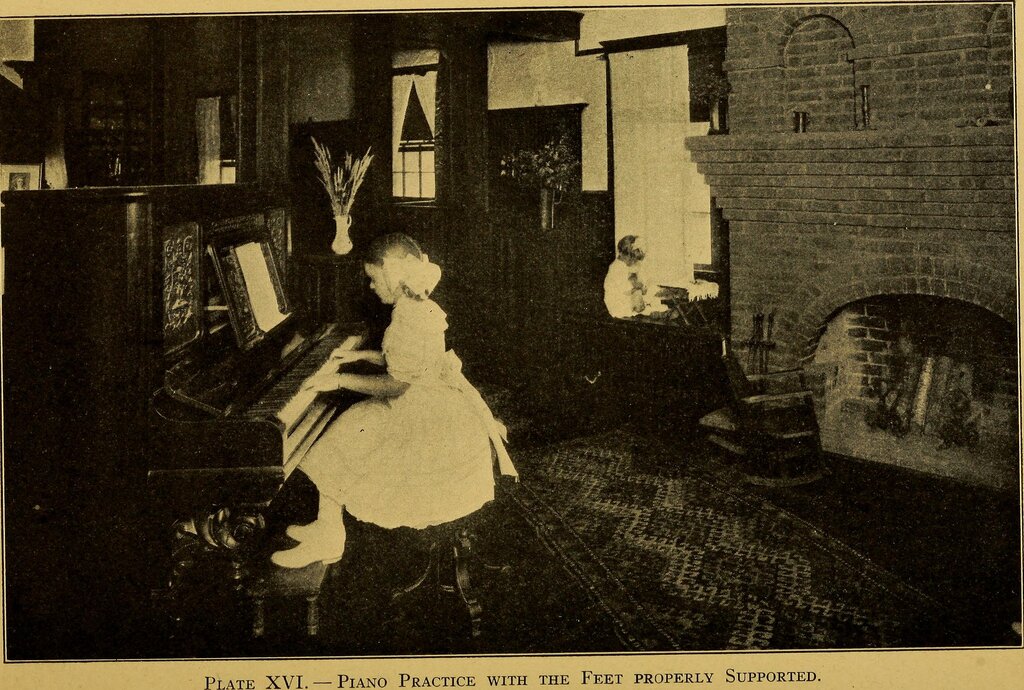
Sit on the front half of the bench, not all the way back. This allows for better balance and freedom of movement. Keep your back straight but relaxed, and place both feet flat on the floor. If your feet don't reach, use a small stool or some books for support.
Hand Position and Finger Numbers
Just like posture, how you hold your hands is critical. A good hand position makes playing easier and helps prevent strain.
Let your hands hang loosely at your sides. Notice the natural curve of your fingers. That’s the shape you want to maintain when you place your hands on the keyboard. Imagine you're holding a ball. Your fingers should be curved, and your knuckles should form a gentle arch. Your wrist should be level, not drooping below the keys or bent upward.
Keep your fingers curved and your wrists level and relaxed.
To make learning easier, pianists number the fingers on each hand from 1 to 5. This system is universal in piano music.
| Finger | Number |
|---|---|
| Thumb | 1 |
| Index Finger | 2 |
| Middle Finger | 3 |
| Ring Finger | 4 |
| Pinky | 5 |
This numbering is the same for both your left and right hands. Memorizing these numbers is essential, as they will guide you on which fingers to use for different notes and passages as you start to play songs.
Now that you know your way around the keyboard and how to sit properly, let's test your knowledge.
How can you locate the note 'C' on a piano keyboard?
When sitting at the piano, your bench height should be adjusted so that your forearms are __________.
With these fundamentals in place, you have a solid foundation for your piano journey.