Beginner Piano Essentials
Piano Topography
The Keyboard's Pattern
Sit down at a piano and you'll see a long row of white and black keys. It might seem intimidating, but there's a simple, repeating pattern at play. Look closer at the black keys. You'll notice they aren't spaced out evenly. Instead, they come in groups of two, then a group of three, then two, then three, all the way up and down the keyboard.
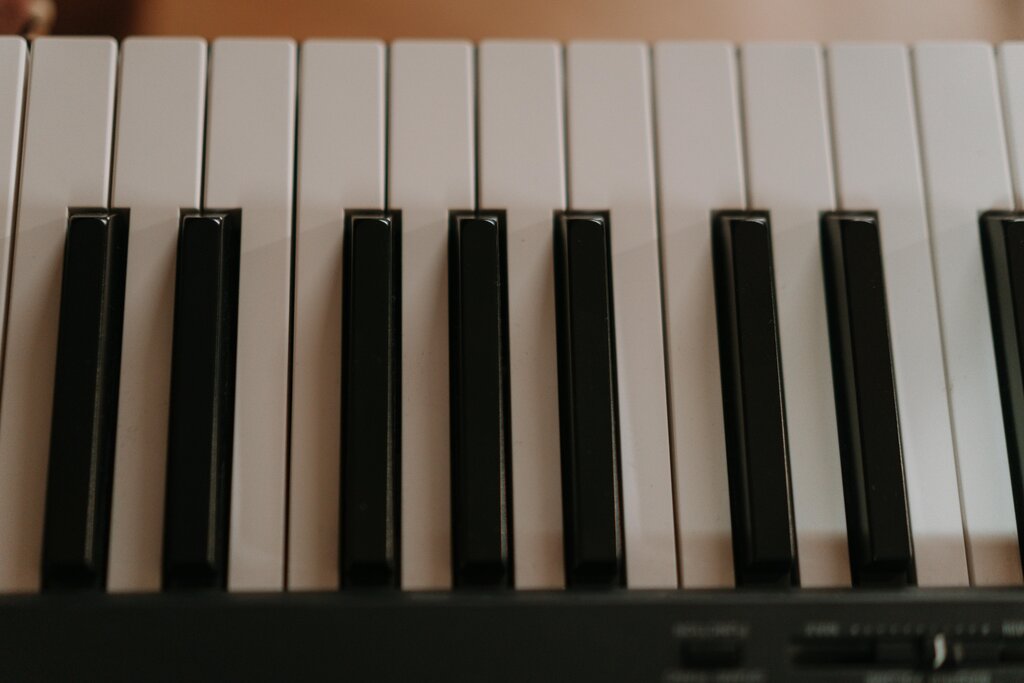
This pattern is your map. Once you recognize these groups, you can never get lost. Every single white key's identity is determined by its position next to these black key groups. Let's use them as our landmarks.
The Musical Alphabet
Music uses just seven letters for its notes: A, B, C, D, E, F, and G. That's it. Once you get to G, the cycle starts over again with A. This repeats over and over across the piano keys, moving from lower-sounding notes on the left to higher-sounding notes on the right.
The pattern is always the same: A-B-C-D-E-F-G, then A-B-C-D-E-F-G, and so on.
Finding Your Way
Now, let's combine the black key pattern with the musical alphabet. Find any group of two black keys. The white key immediately to the left of that group is always a C.
Once you've found C, the next white keys to the right follow the alphabet. The key between the two black keys is D, and the key to the right of the two black keys is E.
Next, find a group of three black keys. The white key to the immediate left of this group is always an F.
Think of it this way: the front door of the 'two-key house' is C, and the front door of the 'three-key house' is F.
From F, you can find the rest of the notes. G is the white key between the first and second black keys in the three-key group. A is between the second and third black keys. And B is the white key to the immediate right of the whole group of three.
| Landmark | Note Location |
|---|---|
| Group of 2 Black Keys | C is to the left. |
| D is in the middle. | |
| E is to the right. | |
| Group of 3 Black Keys | F is to the left. |
| G is after the first black key. | |
| A is after the second black key. | |
| B is to the right. |
Your Home Base: Middle C
With all these repeating notes, pianists need an anchor point to orient themselves. That anchor is . It's not special because of its sound, but because of its location. On most pianos and keyboards, it's the C closest to the very center. If your piano has a brand name written on the fallboard (the part that covers the keys), Middle C is often located right around there.
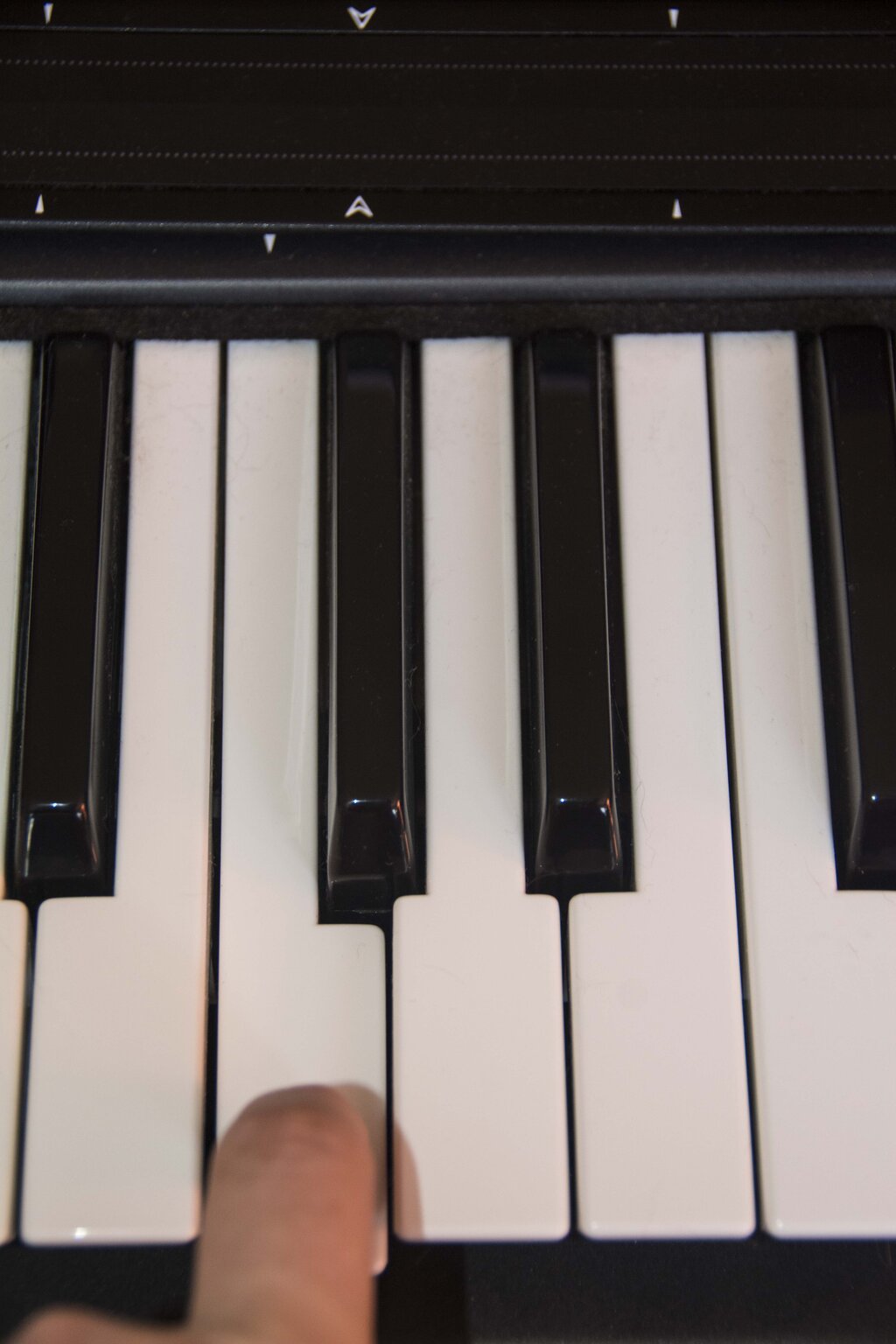
Finding Middle C is your first real task as a pianist. Sit down, find the C closest to the middle, and place your thumb on it. This is your home base. From here, you can navigate to any other note on the keyboard using the patterns you just learned.
How are the black keys on a piano keyboard typically grouped?
The white key located immediately to the left of any group of two black keys is always which note?
Knowing the layout of the keyboard is the first and most crucial step. Spend some time just finding notes. Say their names out loud as you press them. This simple practice builds a mental map that will soon become second nature.