Beginner Korean Language Essentials
Mastering Hangul
Meet Hangul, the Korean Alphabet
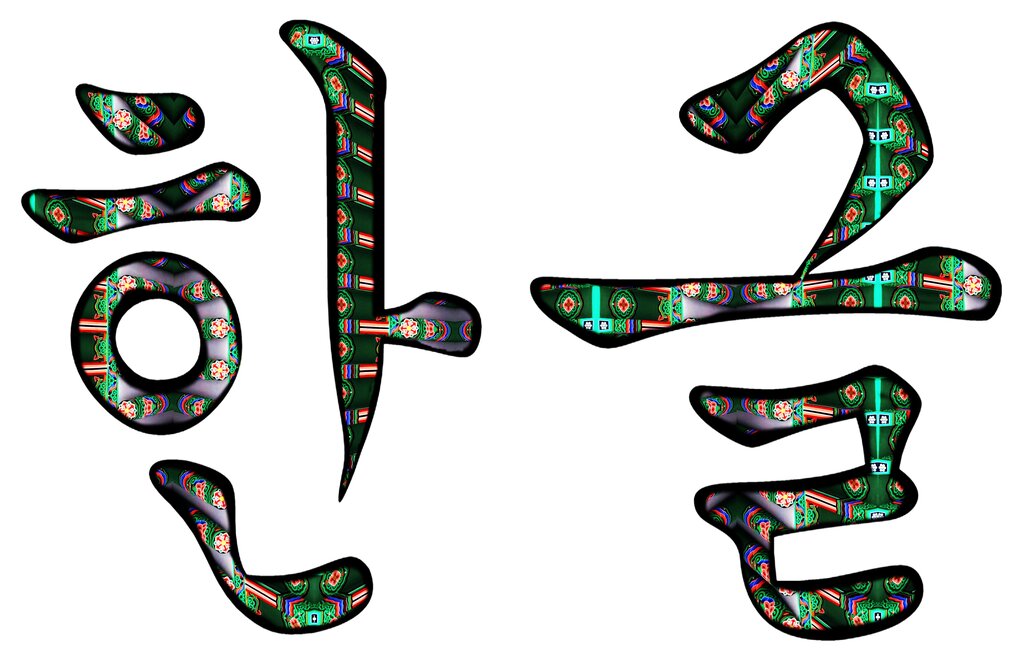
Learning Korean starts with its alphabet, Hangul (한글). Unlike writing systems that evolved over centuries, Hangul was intentionally created in the 15th century under the rule of King Sejong the Great to be as logical and easy to learn as possible. It’s a phonetic alphabet, meaning each character corresponds to a specific sound. This makes it incredibly efficient. You can learn the basics in just a few hours.
The Basic Consonants
There are 14 basic consonants in Hangul. What makes them so brilliant is that many of the shapes are designed to look like the position of your mouth or tongue when you make the sound. This provides a natural visual cue for pronunciation.
For example, the character for the 'g' sound, ㄱ, mimics the shape of the back of the tongue raised to touch the roof of the mouth.
Let's look at the basic set. We'll use English approximations for the sounds. Keep in mind that these are just starting points, and the actual Korean sounds can be slightly different.
| Character | Sound (Approx.) | Description |
|---|---|---|
| ㄱ | g / k | A soft 'g' like in 'go', sometimes a 'k' sound. |
| ㄴ | n | Just like the 'n' in 'nose'. Shape shows tongue touching the upper gums. |
| ㄷ | d / t | A soft 'd' like in 'dog', sometimes a 't' sound. |
| ㄹ | r / l | A sound between an 'r' and 'l'. It's a light flap of the tongue. |
| ㅁ | m | Just like the 'm' in 'mom'. The square shape represents the closed mouth. |
| ㅂ | b / p | A soft 'b' like in 'boy', sometimes a 'p' sound. |
| ㅅ | s | Like the 's' in 'sit'. The shape resembles a tooth. |
| ㅇ | ng / silent | Silent at the beginning of a syllable, but an 'ng' sound like in 'sing' at the end. |
| ㅈ | j | A soft 'j' sound, like in 'jam'. |
| ㅊ | ch | A stronger, aspirated 'ch' sound like in 'chart'. |
| ㅋ | k | An aspirated 'k' sound, like in 'key'. |
| ㅌ | t | An aspirated 't' sound, like in 'top'. |
| ㅍ | p | An aspirated 'p' sound, like in 'pop'. |
| ㅎ | h | Just like the 'h' in 'hat'. |
The Basic Vowels
There are 10 basic vowels, and their design is based on three simple components: a vertical line (ㅣ) representing a standing person, a horizontal line (ㅡ) representing the flat earth, and a short stroke (originally a dot •) representing the sun in the heavens. Combining these creates all the vowel sounds.
| Character | Sound (Approx.) | Description |
|---|---|---|
| ㅏ | a | 'ah' sound, as in 'father'. |
| ㅑ | ya | 'yah' sound, as in 'yacht'. |
| ㅓ | eo | 'uh' sound, as in 'some'. |
| ㅕ | yeo | 'yuh' sound, similar to the start of 'young'. |
| ㅗ | o | 'oh' sound, as in 'boat'. |
| ㅛ | yo | 'yoh' sound, as in 'yo-yo'. |
| ㅜ | u | 'oo' sound, as in 'moon'. |
| ㅠ | yu | 'yoo' sound, as in 'you'. |
| ㅡ | eu | A sound with no direct English equivalent. Like 'uh' in 'tuh', but with lips spread wide. |
| ㅣ | i | 'ee' sound, as in 'feet'. |
Building Syllable Blocks
Unlike English where letters are written in a straight line, Hangul characters are grouped into syllable blocks. Each block always contains one syllable and must have at least one consonant and one vowel. The placement of the letters depends on the shape of the vowel.
- Vertical Vowels (ㅣ, ㅏ, ㅑ, ㅓ, ㅕ): These are placed to the right of the initial consonant.
- Horizontal Vowels (ㅡ, ㅜ, ㅠ, ㅗ, ㅛ): These are placed below the initial consonant.
Remember the consonant ㅇ? It acts as a silent placeholder when a syllable starts with a vowel sound. For example, the 'ah' sound is written 아, not just ㅏ.
Let's see it in action. To write the syllable 'ga', you combine the consonant ㄱ (g) with the vertical vowel ㅏ (a).
The consonant ㄱ is on the left, and the vowel ㅏ is on the right.
Now for 'go'. You combine the consonant ㄱ (g) with the horizontal vowel ㅗ (o).
The consonant ㄱ is on top, and the vowel ㅗ is below it.
This block structure is one of the most unique and fundamental features of Hangul.
Mastering Stroke Order
Just like in many other writing systems, writing Hangul characters in the correct stroke order is important. It helps make your writing neat, legible, and faster. The rules are simple and intuitive.
- Top to bottom
- Left to right
For example, to write the consonant ㄱ (g), you draw one horizontal stroke from left to right, and then one vertical stroke from top to bottom, without lifting your pen. To write the vowel ㅏ (a), you first draw the long vertical stroke (top to bottom), and then the short horizontal stroke (left to right).
By learning these basic consonants, vowels, and how to combine them into blocks, you have the foundational tools to read and write any word in Korean. It's a system designed for clarity and simplicity.
Who is credited with the creation of Hangul?
What is the design principle behind many of the basic Hangul consonants?