Beginner Japanese Language Skills
Japanese Writing Systems
The Three Writing Systems
When you first look at a Japanese sentence, you might notice a mix of different character styles. That’s because Japanese uses three distinct scripts, often all in the same sentence: Hiragana, Katakana, and Kanji.
Think of them as different tools for different jobs. Hiragana and Katakana are phonetic, meaning each character represents a sound, much like the letters of the English alphabet. Kanji, on the other hand, are characters that represent whole words or ideas. Learning to read and write in Japanese means getting comfortable with all three.
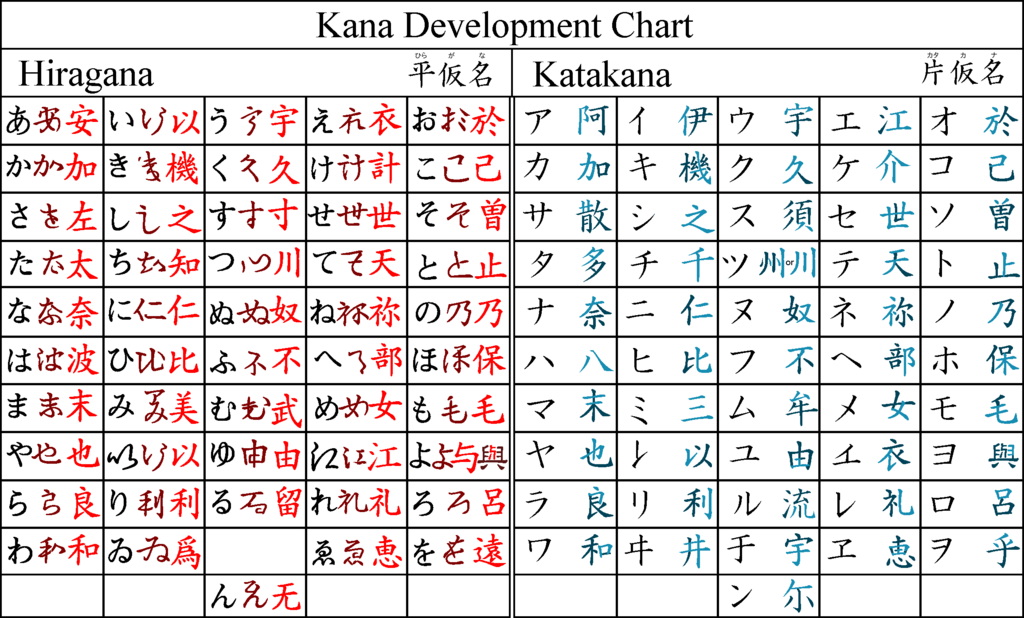
Don't worry, it's not as complicated as it sounds. We'll start with the two foundational phonetic scripts, known collectively as kana.
Hiragana The Foundation
Hiragana (ひらがな) is the first script every Japanese child learns. Its characters have a rounded, flowing appearance and form the backbone of the language. Hiragana is used for native Japanese words, verb endings, grammatical particles, and anything that doesn't have a common Kanji.
Each Hiragana character represents a syllable, like 'ka', 'shi', or 'o'. Because it's a phonetic system representing every sound in Japanese, you could technically write the entire language in Hiragana.
| a | i | u | e | o | |
|---|---|---|---|---|---|
| - | あ | い | う | え | お |
| k | か | き | く | け | こ |
| s | さ | し | す | せ | そ |
| t | た | ち | つ | て | と |
| n | な | に | ぬ | ね | の |
| h | は | ひ | ふ | へ | ほ |
| m | ま | み | む | め | も |
| y | や | ゆ | よ | ||
| r | ら | り | る | れ | ろ |
| w | わ | を | |||
| n | ん |
This chart, called the gojūon (literally "fifty sounds"), shows the basic Hiragana characters. Notice the pattern: vowels on the top row, consonants down the first column.
We can modify these basic sounds by adding small marks. A double dash mark called dakuten ( ゛) typically voices the consonant sound (k → g, s → z, t → d, h → b). A small circle called handakuten ( ゜) changes 'h' sounds to 'p' sounds. For example, は (ha) becomes ば (ba) with a dakuten, and ぱ (pa) with a handakuten.
Katakana The Sharp Script
Next up is Katakana (カタカナ). It represents the exact same set of sounds as Hiragana, but its characters look different—they're more angular and sharp. Think of it like the difference between lowercase and uppercase letters in English; they represent the same letters but are used in different contexts.
Katakana's main job is to write foreign loanwords, like 'computer' (コンピューター, konpyūtā) or 'coffee' (コーヒー, kōhī). It’s also used for foreign names, company names, onomatopoeia (sound words), and for adding emphasis to a word, similar to using italics.
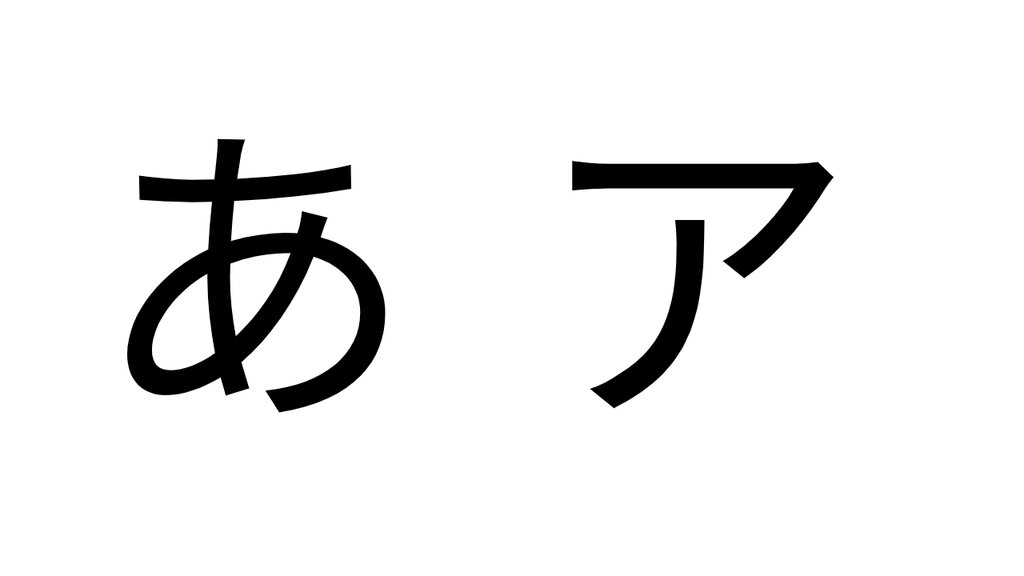
Since Hiragana and Katakana cover the same sounds, if you know one, you already know the pronunciation for the other. You just need to learn a new set of characters.
Here is the gojūon chart for Katakana. See if you can spot characters that look similar to their Hiragana counterparts.
| a | i | u | e | o | |
|---|---|---|---|---|---|
| - | ア | イ | ウ | エ | オ |
| k | カ | キ | ク | ケ | コ |
| s | サ | シ | ス | セ | ソ |
| t | タ | チ | ツ | テ | ト |
| n | ナ | ニ | ヌ | ネ | ノ |
| h | ハ | ヒ | フ | ヘ | ホ |
| m | マ | ミ | ム | メ | モ |
| y | ヤ | ユ | ヨ | ||
| r | ラ | リ | ル | レ | ロ |
| w | ワ | ヲ | |||
| n | ン |
Kanji Characters with Meaning
Finally, we have Kanji (漢字). These are characters borrowed from Chinese, and unlike kana, they represent ideas and meanings, not just sounds. A single kanji can be a complete word, or it can combine with other kanji to form new words. For example, the kanji for 'water' is 水.
So why use Kanji if you can write everything in Hiragana? Using only Hiragana would make sentences long and difficult to read, as Japanese doesn't use spaces between words. Kanji help break up sentences and make the meaning clear instantly.
For example, the sentence 「わたしはねこがすきです」 (watashi wa neko ga suki desu) means "I like cats." Written with Kanji, it becomes 「私は猫が好きです」. The core words 'I' (私) and 'cat' (猫) are instantly recognizable.
Most Kanji have at least two types of readings: a Japanese reading (kun'yomi) and a Chinese-derived reading (on'yomi). The correct one to use depends on the context and whether the Kanji is used alone or with others. Don't worry about memorizing thousands of them now. Learning starts with the most common ones.
| Kanji | Meaning | Example Word | Reading |
|---|---|---|---|
| 日 | sun, day | 日本 (Japan) | ni-hon |
| 本 | book, origin | 日本 (Japan) | ni-hon |
| 人 | person | 日本人 (Japanese person) | ni-hon-jin |
| 大 | big, large | 大学 (university) | dai-gaku |
| 学 | study | 大学 (university) | dai-gaku |
Notice how 日本 combines 'sun' and 'origin' to mean Japan. Adding 人 (person) makes it 日本人, or 'Japanese person'. This building-block nature is a key part of the language.
That's the big picture of Japan's writing systems. The next step is to start memorizing the Hiragana characters, which will open the door to reading and writing basic Japanese.
What are the three distinct scripts that form the Japanese writing system?
Which script is primarily used for foreign loanwords, such as 'computer' (コンピューター)?