Beginner Greek Language and Culture
Greek Alphabet
Meet the Greek Alphabet
Ready to start your journey into Greek? The first step is learning the alphabet. It might look intimidating, but you'll probably recognize more than you think. The Greek alphabet is an ancestor of the Latin alphabet used for English, and many of its letters are used in math, science, and fraternities.
There are 24 letters in total. Let's get to know them.
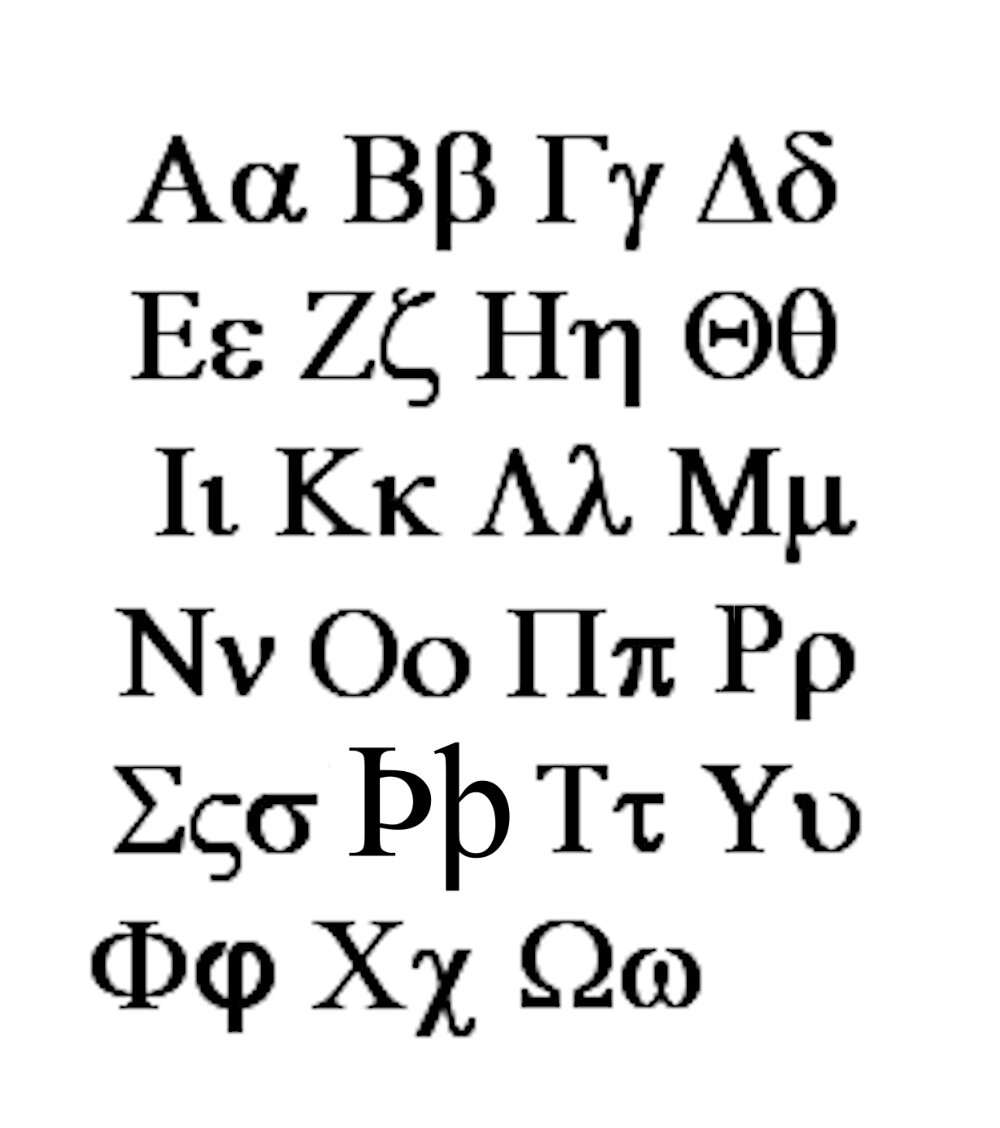
The best way to learn them is to break them down into groups. We’ll start with the ones that look and sound a lot like letters you already know.
Familiar Faces
This first group of letters should look very familiar. Their shapes are nearly identical to letters in the English alphabet, and they make similar sounds. Pay close attention to the letter names, as those are new.
| Uppercase | Lowercase | Name | Pronunciation |
|---|---|---|---|
| Α | α | Alpha | 'a' as in father |
| Β | β | Beta | 'v' as in vase |
| Ε | ε | Epsilon | 'e' as in get |
| Ζ | ζ | Zeta | 'z' as in zoo |
| Ι | ι | Iota | 'ee' as in feet |
| Κ | κ | Kappa | 'k' as in kitten |
| Μ | μ | Mu | 'm' as in mother |
| Ν | ν | Nu | 'n' as in nice |
| Ο | ο | Omicron | 'o' as in pot |
| Τ | τ | Tau | 't' as in talk |
Notice that Beta (β) is pronounced with a 'v' sound, not a 'b' sound. This is a common point of confusion for English speakers.
False Friends
Now for the tricky ones. These letters look like English letters, but they represent completely different sounds. This group is small, but it's important to get them right to avoid confusion when reading.
| Uppercase | Lowercase | Name | Looks Like | Pronunciation |
|---|---|---|---|---|
| Η | η | Eta | H | 'ee' as in feet |
| Ρ | ρ | Rho | P | a rolled 'r' sound |
| Υ | υ | Upsilon | Y | 'ee' as in feet |
| Χ | χ | Chi | X | 'ch' as in loch |
Yes, Η (eta), I (iota), and Y (upsilon) all make the same 'ee' sound. Modern Greek has several ways to write this common vowel sound.
The Chi () sound doesn't really exist in English. It's a guttural sound made in the back of your throat, similar to the 'ch' in the Scottish word loch or the German Bach.
The Newcomers
The final group of letters will likely be brand new to you. Take your time learning their shapes and sounds. Many of these are famous symbols you might recognize from mathematics, like pi and omega.
| Uppercase | Lowercase | Name | Pronunciation |
|---|---|---|---|
| Γ | γ | Gamma | 'gh' like a gargle, or 'y' before ε, η, ι, υ |
| Δ | δ | Delta | 'th' as in the |
| Θ | θ | Theta | 'th' as in think |
| Λ | λ | Lambda | 'l' as in lamp |
| Ξ | ξ | Xi | 'ks' as in fox |
| Π | π | Pi | 'p' as in pie |
| Σ | σ / ς | Sigma | 's' as in snake |
| Φ | φ | Phi | 'f' as in fun |
| Ψ | ψ | Psi | 'ps' as in lapse |
| Ω | ω | Omega | 'o' as in pot |
You might have noticed Sigma has two lowercase forms: σ and ς.
Use σ at the beginning or in the middle of a word. Use ς only when it is the very last letter of a word. For example, the word for "earthquake" is σεισμός (seismós). The first 's' uses σ and the final 's' uses ς.
The majority of Greek pronunciation is phonetic, meaning that what you see is what you pronounce, making it surprisingly learner-friendly.
Now that you've seen all the letters, let's test your knowledge.
The Greek letter Beta (β) is pronounced like the...
Which of these letters looks like an English letter, but makes a completely different sound?
Great work. Learning a new alphabet is a big step. Keep practicing recognizing the letters and their sounds, and you'll be reading Greek words in no time.