Beginner French Language Basics
French Alphabet
The Building Blocks
The French alphabet uses the same 26 letters as the English alphabet. This is great news, as you don't have to learn a new set of characters. However, the names of the letters are quite different, and knowing them is the first step to spelling words out loud and understanding native speakers.

Let's go through each letter and its French name. Pay close attention to the pronunciation hints. They're your guide to sounding out the alphabet like a local.
| Letter | French Name | Pronunciation (like the English word...) |
|---|---|---|
| A | a | ah (like in 'father') |
| B | bé | bay |
| C | cé | say |
| D | dé | day |
| E | e | uh (like 'uh-oh') |
| F | effe | eff |
| G | gé | zhay (like the 's' in 'pleasure') |
| H | hache | ash |
| I | i | ee (like in 'see') |
| J | ji | zhee (like the 's' in 'pleasure') |
| K | ka | kah |
| L | elle | ell |
| M | emme | emm |
| N | enne | enn |
| O | o | oh |
| P | pé | pay |
| Q | qu | koo |
| R | erre | air (with a gargling sound in the back of the throat) |
| S | esse | ess |
| T | té | tay |
| U | u | (no English equivalent; purse your lips like you're whistling and say 'ee') |
| V | vé | vay |
| W | double vé | DOO-bluh vay |
| X | ixe | eeks |
| Y | i grec | ee-GREK ('Greek i') |
| Z | zède | zed |
Accents Change Everything
While the letters are the same, French uses accent marks, or diacritics, to change a letter's sound. Think of them as signposts for pronunciation. They aren't optional decorations; they are a core part of the spelling and meaning of a word.
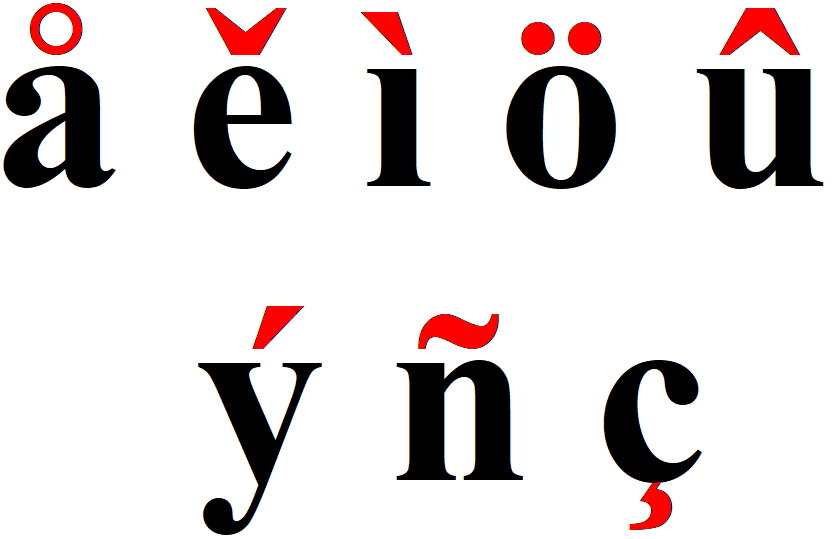
Here are the five most common accent marks you'll encounter.
| Accent | Name | Example | What it does |
|---|---|---|---|
| ´ | accent aigu | é | Makes an 'ay' sound, as in café. Only appears on the letter E. |
| ` | accent grave | à, è, ù | On 'a' and 'u', it distinguishes words. On 'e', it makes an 'eh' sound, as in mère. |
| ˆ | accent circonflexe | â, ê, î, ô, û | Can appear on any vowel. It slightly lengthens the vowel sound. |
| ¨ | tréma | ï, ü | Placed over the second of two vowels to show they are pronounced separately, like in naïf. |
| ¸ | cédille | ç | Only appears on the letter C. It softens the 'c' to an 's' sound before a, o, or u, as in français. |
Sounds You Won't Hear in English
Some French sounds can be tricky because they don't have a direct equivalent in English. The most famous are the nasal vowels. These are produced by passing air through both the nose and the mouth. You don't close off your mouth with your tongue or lips like you do for the English 'n' or 'm' sounds. The vowel itself gets a nasal quality.
To get a feel for nasal sounds, try saying "huh" but pinch your nose. That's getting close to the French sound in words like un.
Here are some common examples:
one
year
we
Another classic challenge is the French 'r'. Unlike the English 'r', which is pronounced in the front of the mouth, the French 'r' is made in the back of the throat. It's similar to the sound you make when gargling, but much softer.
Finally, the French 'u' sound is distinct. To make it, start by saying the English 'ee' sound. While holding that sound, round your lips tightly as if you're about to whistle. The sound that comes out is the French 'u', as in the word tu (you).
Common Hurdles for Learners
One of the biggest adjustments for English speakers is the prevalence of silent letters in French. Final consonants are often not pronounced. For example, in the words trop (too much), chaud (hot), and ils parlent (they speak), the final 'p', 'd', and 'nt' are all silent.
Don't let this discourage you! There are patterns to it. For instance, the final consonants 'c', 'r', 'f', and 'l' are often pronounced. A good mnemonic for this is the word CaReFuL.
When in doubt, it's often safer to leave the last letter of a word silent.
You'll also notice that French speakers often link words together in a way that can be confusing at first. This is called liaison. It happens when a word ending in a normally silent consonant is followed by a word beginning with a vowel. The silent consonant is then pronounced to create a smooth transition between the two words.
For example, les (the) is pronounced 'lay'. Amis (friends) is pronounced 'a-mee'. But when you say les amis (the friends), the silent 's' from les links to amis, making the phrase sound like 'lay-za-mee'.
Let's review the main ideas.
Time for a quick check on what you've learned.
How does the French alphabet compare to the English alphabet?
What is the primary role of accent marks (diacritics) in written French?
Getting comfortable with the alphabet and its unique sounds is the bedrock of learning French. With this foundation, you're ready to start building words and sentences.